Copper Magazine · Issue 145 · A free PS Audio publication
Issue 145 TRUE-LIFE ROCK TALES

Whistling While You Work

Whistling While You Work

As I step off my elevator, I hear music coming from my end of the hallway. It’s really loud and I soon realize that it is coming from my apartment. As I unlock my door and open it, I get a healthy blast of rock music. I quickly enter and turn it off. It only took a moment for me to deduce that my Whistle Switch sound-activated on/off switch was the instigator.

It had been on the market before a similar device called the Clapper, which everyone knows from those silly “Clap on! Clap off!” TV commercials. (The Clapper was introduced in 1984 and is still sold today!) I had seen an advertisement on television that featured the on/off gadget.

I thought this device was the cat’s meow and bought it straight away. It was fun, impressing my guests and myself in my Manhattan apartment by squeezing the whistle, sometimes referred to as the “cricket,” which turned the lights on or off. Eventually I hooked it up to my Scott amplifier and Fisher AM/FM tuner and therein lay the problem. It seemed that in my 23-day absence, some sound had activated the Whistle Switch and my stereo system. Hence the pounding WNEW-FM 102.7 rock and roll station and the loud talking from DJs Scott Muni, and the Nightbird, Alison Steele. I wondered how long my stereo was on and how much torture I had put my poor neighbors through.

After a tour ends it takes me a little time to recover. Catching up on sleep is the most pressing issue. Then, getting healthy and cleaning out my system of whatever crap I ate or ingested while on the road. When awake I finish any tour paperwork. Usually that includes the last expense report and any travel issues like unused airline tickets and such. Then it is check writing time, and I dig into whatever bills have accumulated in my absence. Of course, I hit the bank to make any deposits or withdrawals that might be required. And lastly, I get back into the city life.

This was a great time for me, and I made good money, but because of the freelance nature of this work I was unemployed 10 to 15 weeks a year. That gave me a good amount of free time. It was a nice balance that worked for me.

At the time, in the mid-to-late 1970s, I owned a 450cc Honda four-stroke motorcycle and kept it parked in a garage a block away from my Murray Hill apartment. The garage was $35 a month and it provided the security and storage necessary because of my frequent travel. Even when in the city I do not like to leave the bike out overnight; it can be very dicey. Late after 2 am till just before sunup, motorcycle thieves would roam the city in box trucks. Working in crews of four to six people. They would cruise up and down the streets looking for opportunities to steal parked motorcycles. When they saw one and if the street was quiet enough, they would double park, hop out and lift the bike up, and put it in the back of the truck. It didn’t matter if the bike was locked up; they could break the locks later. A bike could disappear in less than a minute.
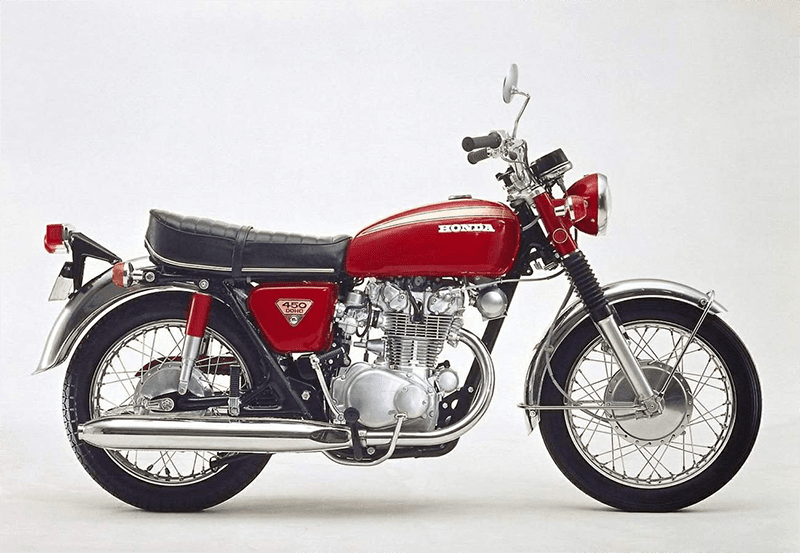
A Honda motorcycle similar to the one Ken owned.

A Honda motorcycle similar to the one Ken owned.


I usually had days off till the next tour and I did not always know when the work would start again. So, I made it a point to enjoy my free time. I could come and go as I pleased. In the warm weather I would drive out to Jones Beach on Long Island’s South Shore. On my motorcycle, it took me a brief 40 minutes and I always went on a weekday. I was so used to working on weekends and holidays that I savored the weekdays off because lines were short, and restaurants and movies were easily accessible. It is a great day trip, and the Long Island South Shore has world-class beaches that stretch from Coney Island to Montauk. There are also barrier islands like Fire Island, and the South Shore of Long Island’s beaches are some of the loveliest in the world.

Jones Beach State Park, Long Island, New York. Courtesy of Wikimedia Commons/Bjoertvedt.

Jones Beach State Park, Long Island, New York. Courtesy of Wikimedia Commons/Bjoertvedt.


A motorcycle is great transportation in the city, and it sure does beat the traffic. Street parking is a breeze because you can park between cars and never have to feed the parking meters. Driving around New York City is akin to riding through 35 villages. Some of them have an ethnic tone to them. There is Chinatown, Little Italy, Koreatown, Murray Hill, Gramercy, the Flatiron District, the East Village, Greenwich Village, Spanish Harlem, Harlem, and Washington Heights. Just to mention a few.

More than a few nights a week I would drive up Third Avenue to Dr. Generosity’s (aka Doctor G’s). It was a cool pub on 73rd Street and Second Avenue, and I would find parking right in front. A few times I had seen tennis star Arthur Ashe walking in that neighborhood. I supposed he lived around there. The last time I saw him I asked him how he was feeling. It was spontaneous on my part because I had heard the recent news of his diagnosis of HIV. He said he was fine, with a small smile and a nod.

Many times, I would be joined at Dr. G’s by Jim Kellem (one of the “two Jims” I would sometimes work with at Creative Management Associates, CMA). It was a fun place for beers and their food was pretty good. Around midnight Dr. G’s would start to thin out, and quite a few of those nights Jim and I would ride over to Central Park. Sometimes we were accompanied by a couple of young women. There is a smooth asphalt one-way wide road that circles the inside of the Park. The East Drive section goes from 59th Street and wanders up on the east side’s  Fifth Avenue border past the reservoir, then down a curvy hill to the 110 Street exits in Harlem. Then the road continues back downtown and is now called the West Drive, going back up the hill on the west side of the park and more or less hugging Central Park West down past the boat lake and straying just east of the Tavern on the Green down to 59th Street, one big, elongated circle. It is just over seven miles long. in the evening, police barricades were put up so no cars could enter.

Our motorcycles had no problem going around the East 72nd Street barricade. Jim and I would fly along the road as fast as we could go. The ladies quickly learned to hang on to us tightly. It reminded me of the old Steeplechase ride in Coney Island. We did this for years and never saw a soul. In fact, to this day I’ve never gotten a speeding ticket on any of my motorcycles. Even today, I still bicycle around the city and last summer I went electric, buying an all-terrain fat tire e-bike that is a joy. It’s perfect for city traffic and nowadays I even wear a helmet.

Biking, 2020s style: Ken's Ecotric E-bike.

Biking, 2020s style: Ken’s Ecotric E-bike.


After a while of not touring, my decompression turns into the longing to get back out on the road. As the fates have it, a tour always shows up.

I get a call that Tony Orlando needs a road manager. I am not thrilled; it isn’t rock, but I make a point of checking out all potential opportunities. One never knows what one will find. I make an appointment to meet with him in his dressing room at the Copacabana the next day at 4pm. I show up and the backstage security guard ushers me up to Tony’s second floor dressing room. All dressing rooms tend to look like haphazard spaces with various pieces of unmatched furniture thrown together. Probably, I assume because the occupancy changes so frequently.

The guard points me to a chair in the smaller outer room of the larger dressing room, which has big mirrors with lights surrounding each one of them. The door is open, and I can see Tony sitting in front of the mirrors with his shirt off. Yup, it’s Tony Orlando all right, and surprisingly he has a healthy amount of body hair. He is talking to someone who is out of my line of sight. In mid-conversation he glances my way while he is engaged with this other person. I must wait, and that is fine with me.

In about 20 minutes Tony stands up, puts on a shirt and says goodbye to the fella he is talking to. Tony walks him out and then comes into the room I am in and sits down about 8 feet away. After introductions he asks me questions about my work history and my experience. We get into an interview style of conversation. He asks me things like, “how would you feel about sharing a room with the sound man?” My answer is, “okay, but I will be carrying your money, and do you think it is wise for me to share a room with anyone?” I can tell he hasn’t thought about that, and by the looks of things he does not like the image it presents. I can see he is thinking about the cost of an extra room, and that is understandable. Unfortunately, or perhaps fortunately, that seemed to put a damper on the interview. We were not clicking. We finished up the interview and he thanked me for coming. I knew I wasn’t getting the job and I was fine with that.

A few days later Bruce Sachs, one of my best friends and my partner from the productions of the Peace Parade and Superstar, the Original Touring Company shows, was hired as Tony Orlando’s road manager and he stayed with Tony for over two years. Bruce told me it was a good gig and he and Tony worked well together. Bruce liked him.


Knock three times if you remember who this is! Tony Orlando surrounded by Dawn: Telma Hopkins and Joyce Vincent Wilson, 1974.

Knock three times if you remember who this is! Tony Orlando surrounded by Dawn: Telma Hopkins and Joyce Vincent Wilson, 1974.


Jim Kellem arranged an interview for me with actor Joel Grey. We met at the CMA building and used an empty office for the interview. He asked me if I could sew, and I said I could. It didn’t seem like he believed me. Then he asked if I could iron, and I said I could, and again he seemed skeptical. I started thinking that maybe this was more like a butler position and maybe I did not want this job. Finally, Joel asked me if I was an actor and I said, “no, of course not.” He did not believe me and said that if I took the job with him, I would then quit when I got an acting job. Of course, that would not be the case, but he seemed convinced and that was that. I think he was just using that excuse not to hire me. I was relieved – it seemed like working for him would be a tedious experience.

Then another so-called opportunity came up. An executive from Columbia Records was hiring a road manager for Mick Jagger. At least that was what I was told. This guy, going by the name of Ray Renaire, was describing the job and started coming on to me. As nicely as possible I told him that I was not interested in that, and suddenly, the interview was over. Well, okay, I thought, that was weird, and a waste of my time.

These three interviews didn’t happen all in a row, but they happened. But soon, I was working again, and before I hit the road, I made sure to uninstall the Whistle Switch and put it in my small tool kit under the sink.

More from Issue 145

View All Articles in Issue 145

Search Copper Magazine

Favorites From T.H.E. Show SoCal 2026 by Cam Martin Oct 05, 2026 #235 Singer/Songwriter John David Schrader: On the Need to Create, Part Two by Joe Caplan Oct 05, 2026 #235 A Life in High-End Audio: The Roy Hall Interview, Part Two by Frank Doris Oct 05, 2026 #235 Grammy-Winning Producer, Songwriter, and Guitarist John Leventhal Goes Instrumental With National Drift by Ray Chelstowski Oct 05, 2026 #235 From Swimming Pool to New Listening Room—to Founding an Accidental Audio Company by Gilles Laferrière Oct 05, 2026 #235 The Vinyl Beat’s Size Matters Edition by Rudy Radelic Oct 05, 2026 #235 The Sublime Complexities of Nature by B. Jan Montana Oct 05, 2026 #235 How to Play In a Rock Band, 28: Growing Older and Dealing With It by Frank Doris Oct 05, 2026 #235 Young Rascals: From Bar Band to Stardom by Wayne Robins Oct 05, 2026 #235 Duncan Sheik: In Memoriam by Ray Chelstowski Oct 05, 2026 #235 From The Listening Chair: The Meze Audio 105 Silva Headphones by Howard Kneller Oct 05, 2026 #235 Checking Out Some NOLA Loudspeakers – and Some Thoughts About Audio Writing by Frank Doris Oct 05, 2026 #235 The Kanazawa Phonograph Museum: Music from a Time Capsule by Sebastian Polcyn Oct 05, 2026 #235 PS Audio in the News by PS Audio Staff Oct 05, 2026 #235 From The Audiophile’s Guide: Making the Most Critical Choice by Paul McGowan Oct 05, 2026 #235 Evolutionary Growth by Frank Doris Oct 05, 2026 #235 Speed Racer by Peter Xeni Oct 05, 2026 #235 Happy Halloween! by James Schrimpf Oct 05, 2026 #234 A Life in High-End Audio: The Roy Hall Interview, Part One by Frank Doris Sep 07, 2026 #234 Jason Greenlaw Offers His Personal Perspective on Jazz Guitar in Vantage Point by Frank Doris Sep 07, 2026 #234 Transcendent Phoenix: Lucina Yue Brings the Ancient Konghou Into Modern Times by Frank Doris Sep 07, 2026 #234 We Must All Follow Our Bliss by B. Jan Montana Sep 07, 2026 #234 How to Play in a Rock Band, 27: Leveling Up by Frank Doris Sep 07, 2026 #234 Ross Valory: Traveling Into New Musical Territory With All of the Above by Ray Chelstowski Sep 07, 2026 #234 Singer/Songwriter John David Schrader: On the Need to Create by Joe Caplan Sep 07, 2026 #234 The People Who Make Audio Happen: More From T.H.E. Show SoCal 2026 by Harris Fogel Sep 07, 2026 #234 The Vinyl Beat Digs Into the Gadget Box by Rudy Radelic Sep 07, 2026 #234 The Rolling Stones: Foreign Tongues Spoken Loud by Wayne Robins Sep 07, 2026 #234 Musical Moments by Rich Isaacs Sep 07, 2026 #234 Rags for Solo Piano and a Dog: David Chesky's Ragtime Music for the Modern Age by Frankly Speaking Sep 07, 2026 #234 HIGH END 2026, Vienna: Here to Stay by Carsten Barnbeck Sep 07, 2026 #234 From The Audiophile’s Guide: The Two Main Types of Loudpeakers – Box and Panel by Paul McGowan Sep 07, 2026 #234 Letting it Slide by Frank Doris Sep 07, 2026 #234 PS Audio in the News by PS Audio Staff Sep 07, 2026 #234 Long Playing by Peter Xeni Sep 07, 2026 #234 La Mer by B. Jan Montana Sep 07, 2026 #233 A Report From The Total Hi-Fi Experience Show SoCal 2026 by B. Jan Montana Aug 03, 2026 #233 Bluegrass Meets Country, Folk, Jazz and More in All That We Carried by The Squid City Slingers by Frank Doris Aug 03, 2026 #233 Corey Glover and One Tribe Nation: A Variegated Musical Collective by Ray Chelstowski Aug 03, 2026 #233 Excursions with Clive: The Late Clive Davis, A Personal History by Wayne Robins Aug 03, 2026 #233 AI, Art, and Music: A Conversation With Synthography Art by Joe Caplan Aug 03, 2026 #233 New American Symphonies: A Rediscovered Gem and a Vital Contemporary Work by Frank Doris Aug 03, 2026 #233 The Vinyl Beat: Genesis, the Dave Clark Five, Antonio Carlos Jobim and More by Rudy Radelic Aug 03, 2026 #233 How to Play in a Rock Band, 26: When It's Time to Record Your Music by Frank Doris Aug 03, 2026 #233 More From T.H.E. Show 2026, and the People Who Made it Happen by Harris Fogel Aug 03, 2026 #233 Underappreciated Artists, Part Three: Icehouse by Rich Isaacs Aug 03, 2026 #233 The Surprisingly Rich and Varied Music of Somalia by Steve Kindig Aug 03, 2026

Whistling While You Work

Whistling While You Work

As I step off my elevator, I hear music coming from my end of the hallway. It’s really loud and I soon realize that it is coming from my apartment. As I unlock my door and open it, I get a healthy blast of rock music. I quickly enter and turn it off. It only took a moment for me to deduce that my Whistle Switch sound-activated on/off switch was the instigator.

It had been on the market before a similar device called the Clapper, which everyone knows from those silly “Clap on! Clap off!” TV commercials. (The Clapper was introduced in 1984 and is still sold today!) I had seen an advertisement on television that featured the on/off gadget.

I thought this device was the cat’s meow and bought it straight away. It was fun, impressing my guests and myself in my Manhattan apartment by squeezing the whistle, sometimes referred to as the “cricket,” which turned the lights on or off. Eventually I hooked it up to my Scott amplifier and Fisher AM/FM tuner and therein lay the problem. It seemed that in my 23-day absence, some sound had activated the Whistle Switch and my stereo system. Hence the pounding WNEW-FM 102.7 rock and roll station and the loud talking from DJs Scott Muni, and the Nightbird, Alison Steele. I wondered how long my stereo was on and how much torture I had put my poor neighbors through.

After a tour ends it takes me a little time to recover. Catching up on sleep is the most pressing issue. Then, getting healthy and cleaning out my system of whatever crap I ate or ingested while on the road. When awake I finish any tour paperwork. Usually that includes the last expense report and any travel issues like unused airline tickets and such. Then it is check writing time, and I dig into whatever bills have accumulated in my absence. Of course, I hit the bank to make any deposits or withdrawals that might be required. And lastly, I get back into the city life.

This was a great time for me, and I made good money, but because of the freelance nature of this work I was unemployed 10 to 15 weeks a year. That gave me a good amount of free time. It was a nice balance that worked for me.

At the time, in the mid-to-late 1970s, I owned a 450cc Honda four-stroke motorcycle and kept it parked in a garage a block away from my Murray Hill apartment. The garage was $35 a month and it provided the security and storage necessary because of my frequent travel. Even when in the city I do not like to leave the bike out overnight; it can be very dicey. Late after 2 am till just before sunup, motorcycle thieves would roam the city in box trucks. Working in crews of four to six people. They would cruise up and down the streets looking for opportunities to steal parked motorcycles. When they saw one and if the street was quiet enough, they would double park, hop out and lift the bike up, and put it in the back of the truck. It didn’t matter if the bike was locked up; they could break the locks later. A bike could disappear in less than a minute.

A Honda motorcycle similar to the one Ken owned.

A Honda motorcycle similar to the one Ken owned.


I usually had days off till the next tour and I did not always know when the work would start again. So, I made it a point to enjoy my free time. I could come and go as I pleased. In the warm weather I would drive out to Jones Beach on Long Island’s South Shore. On my motorcycle, it took me a brief 40 minutes and I always went on a weekday. I was so used to working on weekends and holidays that I savored the weekdays off because lines were short, and restaurants and movies were easily accessible. It is a great day trip, and the Long Island South Shore has world-class beaches that stretch from Coney Island to Montauk. There are also barrier islands like Fire Island, and the South Shore of Long Island’s beaches are some of the loveliest in the world.

Jones Beach State Park, Long Island, New York. Courtesy of Wikimedia Commons/Bjoertvedt.

Jones Beach State Park, Long Island, New York. Courtesy of Wikimedia Commons/Bjoertvedt.


A motorcycle is great transportation in the city, and it sure does beat the traffic. Street parking is a breeze because you can park between cars and never have to feed the parking meters. Driving around New York City is akin to riding through 35 villages. Some of them have an ethnic tone to them. There is Chinatown, Little Italy, Koreatown, Murray Hill, Gramercy, the Flatiron District, the East Village, Greenwich Village, Spanish Harlem, Harlem, and Washington Heights. Just to mention a few.

More than a few nights a week I would drive up Third Avenue to Dr. Generosity’s (aka Doctor G’s). It was a cool pub on 73rd Street and Second Avenue, and I would find parking right in front. A few times I had seen tennis star Arthur Ashe walking in that neighborhood. I supposed he lived around there. The last time I saw him I asked him how he was feeling. It was spontaneous on my part because I had heard the recent news of his diagnosis of HIV. He said he was fine, with a small smile and a nod.

Many times, I would be joined at Dr. G’s by Jim Kellem (one of the “two Jims” I would sometimes work with at Creative Management Associates, CMA). It was a fun place for beers and their food was pretty good. Around midnight Dr. G’s would start to thin out, and quite a few of those nights Jim and I would ride over to Central Park. Sometimes we were accompanied by a couple of young women. There is a smooth asphalt one-way wide road that circles the inside of the Park. The East Drive section goes from 59th Street and wanders up on the east side’s  Fifth Avenue border past the reservoir, then down a curvy hill to the 110 Street exits in Harlem. Then the road continues back downtown and is now called the West Drive, going back up the hill on the west side of the park and more or less hugging Central Park West down past the boat lake and straying just east of the Tavern on the Green down to 59th Street, one big, elongated circle. It is just over seven miles long. in the evening, police barricades were put up so no cars could enter.

Our motorcycles had no problem going around the East 72nd Street barricade. Jim and I would fly along the road as fast as we could go. The ladies quickly learned to hang on to us tightly. It reminded me of the old Steeplechase ride in Coney Island. We did this for years and never saw a soul. In fact, to this day I’ve never gotten a speeding ticket on any of my motorcycles. Even today, I still bicycle around the city and last summer I went electric, buying an all-terrain fat tire e-bike that is a joy. It’s perfect for city traffic and nowadays I even wear a helmet.

Biking, 2020s style: Ken's Ecotric E-bike.

Biking, 2020s style: Ken’s Ecotric E-bike.


After a while of not touring, my decompression turns into the longing to get back out on the road. As the fates have it, a tour always shows up.

I get a call that Tony Orlando needs a road manager. I am not thrilled; it isn’t rock, but I make a point of checking out all potential opportunities. One never knows what one will find. I make an appointment to meet with him in his dressing room at the Copacabana the next day at 4pm. I show up and the backstage security guard ushers me up to Tony’s second floor dressing room. All dressing rooms tend to look like haphazard spaces with various pieces of unmatched furniture thrown together. Probably, I assume because the occupancy changes so frequently.

The guard points me to a chair in the smaller outer room of the larger dressing room, which has big mirrors with lights surrounding each one of them. The door is open, and I can see Tony sitting in front of the mirrors with his shirt off. Yup, it’s Tony Orlando all right, and surprisingly he has a healthy amount of body hair. He is talking to someone who is out of my line of sight. In mid-conversation he glances my way while he is engaged with this other person. I must wait, and that is fine with me.

In about 20 minutes Tony stands up, puts on a shirt and says goodbye to the fella he is talking to. Tony walks him out and then comes into the room I am in and sits down about 8 feet away. After introductions he asks me questions about my work history and my experience. We get into an interview style of conversation. He asks me things like, “how would you feel about sharing a room with the sound man?” My answer is, “okay, but I will be carrying your money, and do you think it is wise for me to share a room with anyone?” I can tell he hasn’t thought about that, and by the looks of things he does not like the image it presents. I can see he is thinking about the cost of an extra room, and that is understandable. Unfortunately, or perhaps fortunately, that seemed to put a damper on the interview. We were not clicking. We finished up the interview and he thanked me for coming. I knew I wasn’t getting the job and I was fine with that.

A few days later Bruce Sachs, one of my best friends and my partner from the productions of the Peace Parade and Superstar, the Original Touring Company shows, was hired as Tony Orlando’s road manager and he stayed with Tony for over two years. Bruce told me it was a good gig and he and Tony worked well together. Bruce liked him.


Knock three times if you remember who this is! Tony Orlando surrounded by Dawn: Telma Hopkins and Joyce Vincent Wilson, 1974.

Knock three times if you remember who this is! Tony Orlando surrounded by Dawn: Telma Hopkins and Joyce Vincent Wilson, 1974.


Jim Kellem arranged an interview for me with actor Joel Grey. We met at the CMA building and used an empty office for the interview. He asked me if I could sew, and I said I could. It didn’t seem like he believed me. Then he asked if I could iron, and I said I could, and again he seemed skeptical. I started thinking that maybe this was more like a butler position and maybe I did not want this job. Finally, Joel asked me if I was an actor and I said, “no, of course not.” He did not believe me and said that if I took the job with him, I would then quit when I got an acting job. Of course, that would not be the case, but he seemed convinced and that was that. I think he was just using that excuse not to hire me. I was relieved – it seemed like working for him would be a tedious experience.

Then another so-called opportunity came up. An executive from Columbia Records was hiring a road manager for Mick Jagger. At least that was what I was told. This guy, going by the name of Ray Renaire, was describing the job and started coming on to me. As nicely as possible I told him that I was not interested in that, and suddenly, the interview was over. Well, okay, I thought, that was weird, and a waste of my time.

These three interviews didn’t happen all in a row, but they happened. But soon, I was working again, and before I hit the road, I made sure to uninstall the Whistle Switch and put it in my small tool kit under the sink.

0 comments

Leave a comment

0 Comments

Your avatar

Loading comments...

🗑️ Delete Comment

Enter moderator password to delete this comment:

✏️ Edit Comment

Enter your email to verify ownership: