COPPER

A PS Audio Publication

Issue 149 • Free Online Magazine

Issue 149 STREAMING SESSIONS

Stream of Consciousness: Better Sound From My Computer Audio, Part Three

Stream of Consciousness: Better Sound From My Computer Audio, Part Three

In Part One (Issue 147) and Part Two (Issue 148), Russ looked at routing the audio from a computer through an external DAC for better sound, and using a third-party music management program, (in his case, Emby), to greatly increase the accessibility we have to music when stored on a NAS (network attached storage) or other drive, which can change the filenames of music tracks to make them harder to find). In this installment, Russ seeks out good values in streaming audio services for sampling future digital music purchases.

In researching further ways to get the most out of our computer-based music libraries, two things occurred to me: first, how wonderful it would be able to stream an audio service to my network that offers good value for money, and second, to be able to find a suitable piece of equipment that would allow you to have voice-activation control in accessing and playing music.

Rather than bore you with comparison tables which list all the various prices and streaming services available, I’ll just note that at the time of writing, one particular streaming service stands out for me both in terms of quality while also offering amazing value for money. If someone were to offer you a lossless streaming service, which also allowed you to download albums from a vast array of high-quality recordings so that you can play them off-line, would you be interested? You may feel that streaming is not really your preferred way of listening to music and that you would always rather play your backed-up music from your library. If you know what you like and don’t fancy the monthly or annual subscription fees of Amazon Music HD, Tidal, Roon, Spotify or others, that is completely understandable. I have felt that way for a long time.

As time has progressed, so has technology, and along with it I have begun to explore the wider field of what is on the table from digital streaming. Back in the day, I would budget myself a certain amount of cash each week for how many CDs and records I would go into the store and physically buy. This is where my current digital library of music now lives, in ripped digital form on an NAS. I thought this was quite advanced and modern until I subsequently discovered the Amazon Music Unlimited Single Device Plan.

(I need to state that I do not work for Amazon, am not an affiliate or a reseller of their products, and have no personal investment in their company, and this article is purely from a personal end-user perspective.) The Amazon Music Unlimited Single Device Plan gives subscribers access to streaming lossless music at Ultra HD standard to a single Echo, Echo Dot, Fire TV or similar device for free on their 90-day trial after which the service reverts to 96-320 kbps for the princely sum of £3.99 per month here in the UK and $3.99 for the USA. (That’s less than three quid in the UK!) If you then upgrade to their £7.99 per month tariff you gain their Ultra HD service (but you may also select the HD or standard options for playback within that tariff).
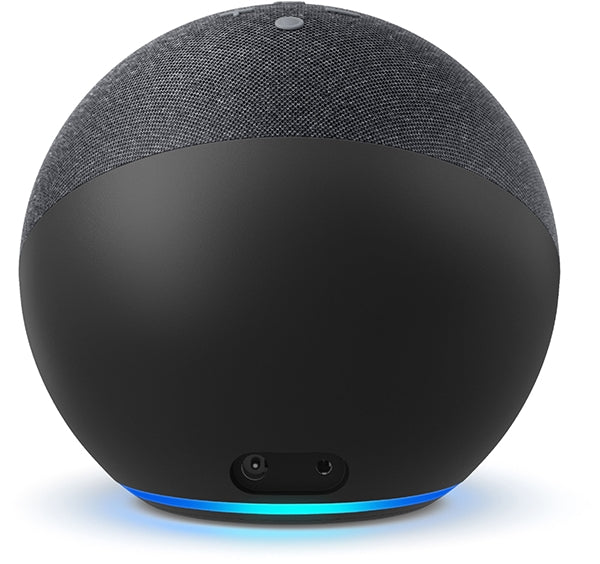
Amazon Echo, one of a number of devices that is compatible with the Amazon Music Unlimited Single Device Plan. Amazon Echo, one of a number of devices that is compatible with the Amazon Music Unlimited Single Device Plan.

For me, I feel this represents a real sweet spot both in terms of accessibility to a huge library of streaming music, and at a high-enough quality of resolution that is competitive among its peers. Tidal, as a contrasting example, charges $9.99 for their 320kbps service. The Amazon Unlimited HD (High Definition) service plan allows access to 75 million songs at up to 850 Kbps, at 16-bit resolution and 44.1kHz (or CD-quality). As an alternative, Amazon Ultra HD offers 7 million songs at 3,730 Kbps, and 24-bit/192 kHz for $9.99 per month or $7.99 if you are an Amazon Prime member.

This is especially significant because as of March 2021, the HD offering is now included without the prior £5 GBP surcharge, which I believe was also retracted in the US, and makes for a fiercely competitive offering. (Note that these subscriptions replace your standard Prime music playing service, if you have one.) I also like the Amazon Unlimited service because many albums are of recordings made from original masters. Interestingly and by way of comparison, Tidal charges $19.99 for their 1,411 Kbps FLAC plan.

So, in short, if you are content to stream to only one Amazon device such as a basic Echo Dot, you can do so and connect it to your audio system’s auxiliary input, and then stream millions of albums, and under your very own voice command. I’m not suggesting you must be permanently content with this level of fidelity, but it is nonetheless exceptional in terms of the sheer diversity of music available for you to explore, and then purchase what you desire at whatever quality of resolution you prefer to listen to.

I like the value of the Amazon Unlimited streaming service because it offers you a wide panorama of music to sample for a reasonable price, whether entire albums or individual tracks. (We’ve all bought albums with duff songs on an otherwise pleasant collection of music!)

One example of an album I discovered and have enjoyed immensely for chilling out to is The Inner Urge by the band of the same name, released on March 25, 2018. The band includes by Alexander Price (guitar, violin) Michael Garbett (vibraphone, percussion) Andrew Koss (bass, synthesizer (and Jesse Griffith (drums). It’s a melodic jazz rock and ambient album with interesting synth sounds and playing, and relaxing soundscapes. It’s a great new musical discovery to relax to after a stressful day. The point is, though, that I would never have found it if it were not for the Amazon Music Unlimited service widening out my awareness to find something I now love to listen to. I’m confident you too can enjoy a similar experience and find new musical loves that you end up only wishing you had discovered sooner so that it could have been part of your musical diet for more years.


One caveat to be aware of with Amazon Music Unlimited is what actually constitutes a “download” or not in the conventional sense of the term. I always think of a download as something that sits on your hard drive somewhere after you’ve downloaded it. However, if you “download” an Amazon track to your PC’s desktop, what you actually get is a link to a file on the Amazon cloud server that enables you to play the track from the server – not a downloaded song that you then physically own. So, don’t spend any time looking for your music files buried in your PC, tablet or mobile phone’s music folder or similar, because it won’t be there.

At the time of writing this, downloads (in the traditional sense of the term which implies a physically present music file) are not available as part of the Amazon Unlimited or Amazon Prime services for PC or Mac. It’s not permitted to physically download to a local device due to licensing rights.  Amazon customer service explained to me that for PC, any purchased downloaded music files must be played via another app. Your purchased files go by default into your My Music folder on your computer, where you then choose a suitable app to play the files. Windows Media Player is native to PC but does not sync your music file across different hardware such as your mobile devices or tablets. In other words, within the PC format, there is not a native music player that will synchronize and play that music file across different hardware devices.

The Mac system, however, does have a native app – iTunes, and it stores music in a normal music folder. iTunes links your downloaded track from its stored file location to the native player, and allows you to access the file from your iPhone or Apple tablet when using iTunes on those devices.

Although this may be common knowledge, what is less-known is that Amazon may be working on a native music player for PC to provide a similar synchronizing function. On pressing them further, they would neither confirm nor deny that this is in the pipeline, but it would seem to be a smart move that would popularize easier accessibility to Amazon-purchased music for PC owners wishing to access their music on additional devices. Perhaps it may be derived from their Music Installer app, but I guess we’ll have to wait and see.

So, no, you cannot truly download and “own” millions of songs for $3.99 per month, as some advertising terminology would lead you to believe. Perhaps I’m showing my age, but I don’t care. The benefits – good sound quality and easy access via voice command – far outweigh this.

You also get a generous 90-day trial period, which includes being able to try the service with multiple devices, but once you choose the Amazon Music Unlimited Single Device Plan, you have to settle on one single device for which you can use the service.

In a future issue we will examine some ways of accessing and playing our digital streamed music on a high-end audio system by using a tablet or phone and even via voice command, rather than needing a TV or monitor display, Enter the ride of the headless audio warrior!

For help regarding additional Amazon music services, please click on this link.

Header image courtesy of Pexels.com/cottonbro.


More from Issue 149

View All Articles in Issue 149

Search Copper Magazine

#227 Seth Lewis Gets in the Groove With Take a Look Around: a Tribute to the Meters by Frank Doris Feb 02, 2026 #227 Passport to Sound: May Anwar’s Audio Learning Experience for Young People by Frank Doris Feb 02, 2026 #227 Conjectures on Cosmic Consciousness by B. Jan Montana Feb 02, 2026 #227 The Big Takeover Turns 45 by Wayne Robins Feb 02, 2026 #227 Music and Chocolate: On the Sensory Connection by Joe Caplan Feb 02, 2026 #227 Singer/Songwriter Chris Berardo: Getting Wilder All the Time by Ray Chelstowski Feb 02, 2026 #227 The Earliest Stars of Country Music, Part One by Jeff Weiner Feb 02, 2026 #227 The Vinyl Beat Goes Down to Tijuana (By Way of Los Angeles), Part Two by Rudy Radelic Feb 02, 2026 #227 How to Play in a Rock Band, 20: On the Road With Blood, Sweat & Tears’ Guitarist Gabe Cummins by Frank Doris Feb 02, 2026 #227 From The Audiophile’s Guide: Audio Specs and Measuring by Paul McGowan Feb 02, 2026 #227 Our Brain is Always Listening by Peter Trübner Feb 02, 2026 #227 PS Audio in the News by PS Audio Staff Feb 02, 2026 #227 The Listening Chair: Sleek Style and Sound From the Luxman L3 by Howard Kneller Feb 02, 2026 #227 The Los Angeles and Orange County Audio Society Celebrates Its 32nd Anniversary, Honoring David and Sheryl Lee Wilson and Bernie Grundman by Harris Fogel Feb 02, 2026 #227 Back to My Reel-to-Reel Roots, Part 26: Half Full – Not Half Empty, Redux by Ken Kessler Feb 02, 2026 #227 That's What Puzzles Us... by Frank Doris Feb 02, 2026 #227 Record-Breaking by Peter Xeni Feb 02, 2026 #227 The Long and Winding Road by B. Jan Montana Feb 02, 2026 #226 JJ Murphy’s Sleep Paralysis is a Genre-Bending Musical Journey Through Jazz, Fusion and More by Frank Doris Jan 05, 2026 #226 Stewardship by Consent by B. Jan Montana Jan 05, 2026 #226 Food, Music, and Sensory Experience: An Interview With Professor Jonathan Zearfoss of the Culinary Institute of America by Joe Caplan Jan 05, 2026 #226 Studio Confidential: A Who’s Who of Recording Engineers Tell Their Stories by Frank Doris Jan 05, 2026 #226 Pilot Radio is Reborn, 50 Years Later: Talking With CEO Barak Epstein by Frank Doris Jan 05, 2026 #226 The Vinyl Beat Goes Down to Tijuana (By Way of Los Angeles), Part One by Rudy Radelic Jan 05, 2026 #226 Capital Audiofest 2025: Must-See Stereo, Part Two by Frank Doris Jan 05, 2026 #226 My Morning Jacket’s Carl Broemel and Tyler Ramsey Collaborate on Their Acoustic Guitar Album, Celestun by Ray Chelstowski Jan 05, 2026 #226 The People Who Make Audio Happen: CanJam SoCal 2025, Part Two by Harris Fogel Jan 05, 2026 #226 How to Play in a Rock Band, 19: Touring Can Make You Crazy, Part One by Frank Doris Jan 05, 2026 #226 Linda Ronstadt Goes Bigger by Wayne Robins Jan 05, 2026 #226 From The Audiophile’s Guide: Active Room Correction and Digital Signal Processing by Paul McGowan Jan 05, 2026 #226 PS Audio in the News by Frank Doris Jan 05, 2026 #226 Back to My Reel-to-Reel Roots, Part 25: Half-Full, Not Empty by Ken Kessler Jan 05, 2026 #226 Happy New Year! by Frank Doris Jan 05, 2026 #226 Turn It Down! by Peter Xeni Jan 05, 2026 #226 Ghost Riders by James Schrimpf Jan 05, 2026 #226 A Factory Tour of Audio Manufacturer German Physiks by Markus "Marsu" Manthey Jan 04, 2026 #225 Capital Audiofest 2025: Must-See Stereo, Part One by Frank Doris Dec 01, 2025 #225 Otis Taylor and the Electrics Delivers a Powerful Set of Hypnotic Modern Blues by Frank Doris Dec 01, 2025 #225 A Christmas Miracle by B. Jan Montana Dec 01, 2025 #225 T.H.E. Show New York 2025, Part Two: Plenty to See, Hear, and Enjoy by Frank Doris Dec 01, 2025 #225 Underappreciated Artists, Part One: Martin Briley by Rich Isaacs Dec 01, 2025 #225 Rock and Roll is Here to Stay by Wayne Robins Dec 01, 2025 #225 A Lifetime of Holiday Record (and CD) Listening by Rudy Radelic Dec 01, 2025 #225 Little Feat: Not Saying Goodbye, Not Yet by Ray Chelstowski Dec 01, 2025 #225 How to Play in a Rock Band, Part 18: Dealing With Burnout by Frank Doris Dec 01, 2025 #225 The People Who Make Audio Happen: CanJam SoCal 2025 by Harris Fogel Dec 01, 2025 #225 Chicago’s Sonic Sanctuaries: Four Hi‑Fi Listening Bars Channeling the Jazz‑Kissa Spirit by Olivier Meunier-Plante Dec 01, 2025

Stream of Consciousness: Better Sound From My Computer Audio, Part Three

Stream of Consciousness: Better Sound From My Computer Audio, Part Three

In Part One (Issue 147) and Part Two (Issue 148), Russ looked at routing the audio from a computer through an external DAC for better sound, and using a third-party music management program, (in his case, Emby), to greatly increase the accessibility we have to music when stored on a NAS (network attached storage) or other drive, which can change the filenames of music tracks to make them harder to find). In this installment, Russ seeks out good values in streaming audio services for sampling future digital music purchases.

In researching further ways to get the most out of our computer-based music libraries, two things occurred to me: first, how wonderful it would be able to stream an audio service to my network that offers good value for money, and second, to be able to find a suitable piece of equipment that would allow you to have voice-activation control in accessing and playing music.

Rather than bore you with comparison tables which list all the various prices and streaming services available, I’ll just note that at the time of writing, one particular streaming service stands out for me both in terms of quality while also offering amazing value for money. If someone were to offer you a lossless streaming service, which also allowed you to download albums from a vast array of high-quality recordings so that you can play them off-line, would you be interested? You may feel that streaming is not really your preferred way of listening to music and that you would always rather play your backed-up music from your library. If you know what you like and don’t fancy the monthly or annual subscription fees of Amazon Music HD, Tidal, Roon, Spotify or others, that is completely understandable. I have felt that way for a long time.

As time has progressed, so has technology, and along with it I have begun to explore the wider field of what is on the table from digital streaming. Back in the day, I would budget myself a certain amount of cash each week for how many CDs and records I would go into the store and physically buy. This is where my current digital library of music now lives, in ripped digital form on an NAS. I thought this was quite advanced and modern until I subsequently discovered the Amazon Music Unlimited Single Device Plan.

(I need to state that I do not work for Amazon, am not an affiliate or a reseller of their products, and have no personal investment in their company, and this article is purely from a personal end-user perspective.) The Amazon Music Unlimited Single Device Plan gives subscribers access to streaming lossless music at Ultra HD standard to a single Echo, Echo Dot, Fire TV or similar device for free on their 90-day trial after which the service reverts to 96-320 kbps for the princely sum of £3.99 per month here in the UK and $3.99 for the USA. (That’s less than three quid in the UK!) If you then upgrade to their £7.99 per month tariff you gain their Ultra HD service (but you may also select the HD or standard options for playback within that tariff).

Amazon Echo, one of a number of devices that is compatible with the Amazon Music Unlimited Single Device Plan. Amazon Echo, one of a number of devices that is compatible with the Amazon Music Unlimited Single Device Plan.

For me, I feel this represents a real sweet spot both in terms of accessibility to a huge library of streaming music, and at a high-enough quality of resolution that is competitive among its peers. Tidal, as a contrasting example, charges $9.99 for their 320kbps service. The Amazon Unlimited HD (High Definition) service plan allows access to 75 million songs at up to 850 Kbps, at 16-bit resolution and 44.1kHz (or CD-quality). As an alternative, Amazon Ultra HD offers 7 million songs at 3,730 Kbps, and 24-bit/192 kHz for $9.99 per month or $7.99 if you are an Amazon Prime member.

This is especially significant because as of March 2021, the HD offering is now included without the prior £5 GBP surcharge, which I believe was also retracted in the US, and makes for a fiercely competitive offering. (Note that these subscriptions replace your standard Prime music playing service, if you have one.) I also like the Amazon Unlimited service because many albums are of recordings made from original masters. Interestingly and by way of comparison, Tidal charges $19.99 for their 1,411 Kbps FLAC plan.

So, in short, if you are content to stream to only one Amazon device such as a basic Echo Dot, you can do so and connect it to your audio system’s auxiliary input, and then stream millions of albums, and under your very own voice command. I’m not suggesting you must be permanently content with this level of fidelity, but it is nonetheless exceptional in terms of the sheer diversity of music available for you to explore, and then purchase what you desire at whatever quality of resolution you prefer to listen to.

I like the value of the Amazon Unlimited streaming service because it offers you a wide panorama of music to sample for a reasonable price, whether entire albums or individual tracks. (We’ve all bought albums with duff songs on an otherwise pleasant collection of music!)

One example of an album I discovered and have enjoyed immensely for chilling out to is The Inner Urge by the band of the same name, released on March 25, 2018. The band includes by Alexander Price (guitar, violin) Michael Garbett (vibraphone, percussion) Andrew Koss (bass, synthesizer (and Jesse Griffith (drums). It’s a melodic jazz rock and ambient album with interesting synth sounds and playing, and relaxing soundscapes. It’s a great new musical discovery to relax to after a stressful day. The point is, though, that I would never have found it if it were not for the Amazon Music Unlimited service widening out my awareness to find something I now love to listen to. I’m confident you too can enjoy a similar experience and find new musical loves that you end up only wishing you had discovered sooner so that it could have been part of your musical diet for more years.


One caveat to be aware of with Amazon Music Unlimited is what actually constitutes a “download” or not in the conventional sense of the term. I always think of a download as something that sits on your hard drive somewhere after you’ve downloaded it. However, if you “download” an Amazon track to your PC’s desktop, what you actually get is a link to a file on the Amazon cloud server that enables you to play the track from the server – not a downloaded song that you then physically own. So, don’t spend any time looking for your music files buried in your PC, tablet or mobile phone’s music folder or similar, because it won’t be there.

At the time of writing this, downloads (in the traditional sense of the term which implies a physically present music file) are not available as part of the Amazon Unlimited or Amazon Prime services for PC or Mac. It’s not permitted to physically download to a local device due to licensing rights.  Amazon customer service explained to me that for PC, any purchased downloaded music files must be played via another app. Your purchased files go by default into your My Music folder on your computer, where you then choose a suitable app to play the files. Windows Media Player is native to PC but does not sync your music file across different hardware such as your mobile devices or tablets. In other words, within the PC format, there is not a native music player that will synchronize and play that music file across different hardware devices.

The Mac system, however, does have a native app – iTunes, and it stores music in a normal music folder. iTunes links your downloaded track from its stored file location to the native player, and allows you to access the file from your iPhone or Apple tablet when using iTunes on those devices.

Although this may be common knowledge, what is less-known is that Amazon may be working on a native music player for PC to provide a similar synchronizing function. On pressing them further, they would neither confirm nor deny that this is in the pipeline, but it would seem to be a smart move that would popularize easier accessibility to Amazon-purchased music for PC owners wishing to access their music on additional devices. Perhaps it may be derived from their Music Installer app, but I guess we’ll have to wait and see.

So, no, you cannot truly download and “own” millions of songs for $3.99 per month, as some advertising terminology would lead you to believe. Perhaps I’m showing my age, but I don’t care. The benefits – good sound quality and easy access via voice command – far outweigh this.

You also get a generous 90-day trial period, which includes being able to try the service with multiple devices, but once you choose the Amazon Music Unlimited Single Device Plan, you have to settle on one single device for which you can use the service.

In a future issue we will examine some ways of accessing and playing our digital streamed music on a high-end audio system by using a tablet or phone and even via voice command, rather than needing a TV or monitor display, Enter the ride of the headless audio warrior!

For help regarding additional Amazon music services, please click on this link.

Header image courtesy of Pexels.com/cottonbro.


0 comments

Leave a comment

0 Comments

Your avatar

Loading comments...

🗑️ Delete Comment

Enter moderator password to delete this comment:

✏️ Edit Comment

Enter your email to verify ownership: