COPPER

A PS Audio Publication

Issue 152 • Free Online Magazine

Issue 152 True-Life Rock Tales

Dangerfield’s

Dangerfield’s

Jim Kellem, a talent agent from CMA (Creative Management Associates) and my good buddy, invites me to join him at Patsy’s, where he is having a business dinner with Phil Silvers. Phil Silvers was a comedic actor of Russian-Jewish descent, nicknamed "The King of Chutzpah." He was best known for his starring role as Master Sergeant Ernest "Ernie" Bilko in the hit sitcom The Phil Silvers Show (1955 – 1959). In the series, platoon leader Bilko is a hysterical con man and schemer who runs the motor pool at a small Kansas US Army post. It was a show that was on the level of I Love Lucy and The Honeymooners.
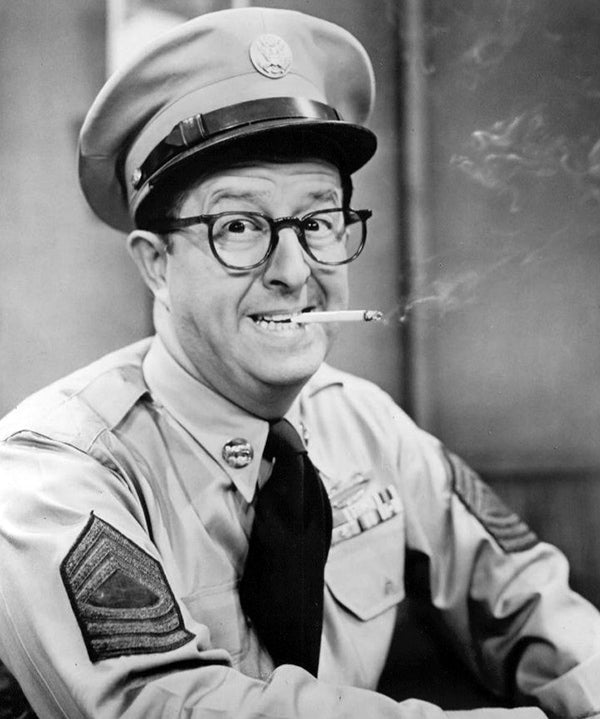
 

Phil Silvers as Sergeant Bilko. Phil Silvers as Sergeant Bilko.

“You bet! I would love to meet Sergeant Bilko,” I replied on the phone to Jim. As I walk in the restaurant, I see the two of them sitting at a table for four in the center of the room. Jim spots me and waves me over, and I sit down across from Jim with Phil Silvers on my right. Introductions are made and Phil turns back to Jim. They are talking business and I cannot hear everything, but from what I can hear, they are talking about a commercial that Phil is going to make for Chrysler, and Phil is telling Jim he wants to be paid in cash. It sounds like Phil is complaining but he is turned to his right, away from me, so I hear his tone more than his actual words. Jim is patiently listening to everything and nodding in agreement. This goes on until the waiter comes over and we order dinner. They go back to their conversation while waiting for drinks, I glance around and check out the room. I see Henny Youngman and some other celebrities.

This is Patsy’s, after all. A classic Italian restaurant founded in 1944 by Pasquale “Patsy” Scognamillo, Patsy’s Italian Restaurant has been in its current location (in the building just next to the original site) since 1954. Patsy’s has been known for years as Frank Sinatra’s favorite restaurant, and is a New York favorite for many celebrities. Many of them have come to regard Patsy’s restaurant as a discreet place to hang out in New York. It has an excellent location on West 56th Street, not far from Carnegie Hall, Lincoln Center, and the theater district. It’s not that fancy, either, but pricey, with very good food that one would expect from a restaurant of such a caliber. Almost a well-kept secret, but not really, it is open to the public.
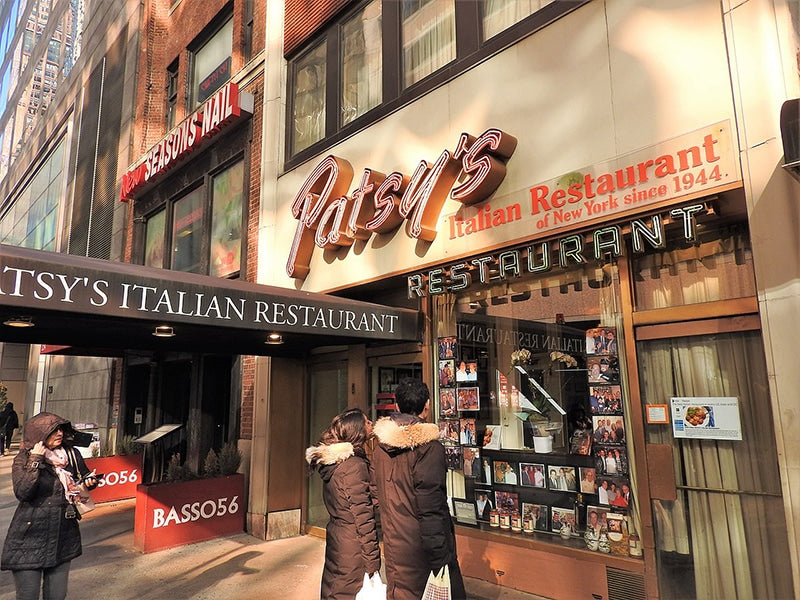
 

Patsy's. Courtesy of Wikimedia Commons/Jim.henderson. Patsy's. Courtesy of Wikimedia Commons/Jim.henderson.

After a while Henny Youngman gets up from his table and walks over. He and Phil exchange greetings and Jim introduces me. Henny asks Phil if he can join us for a moment. “Sure,” Phil says, “sit down.” Henny Youngman’s routine consisted of telling simple one-liner jokes. Known as “the King of One-Liners,” a stage performance by Youngman lasted only 15 to 20 minutes but contained dozens of jokes in rapid succession. “Take my wife… please.”

Phil and Henny chat for a moment about a mutual acquaintance and then Phil turns back to Jim, and Henny turns to me and asks, “what’s with the long hair?” I am surprised and caught off guard. “It is the style of our times,” I say. He says, “cut your hair, you look ridiculous!” I really don’t know how to reply, but he is from my parents’ generation and my father certainly would prefer that my hair was kept short, so there it is. Then he gets up and with a nod to me says goodbye to all of us.

Henny Youngman. Henny Youngman.

In the late eighties, Jim calls me from the West Coast where he now lives, and asks me for a favor. He had left CMA and moved to Los Angeles, and is now in talent management. One of his clients, Robert Schimmel, was coming to the city for an HBO comedy special taping to be hosted by Rodney Dangerfield. Jim wants me to pick Schimmel up at JFK and bring him to an apartment in the city. Then my job would be to take him to his appointments over the course of two days and bring him back to the airport to catch his flight back to Los Angeles. I know that it is customary to pick people up at the airport, but if you live in Manhattan, it is unheard of, we just don’t do that. Reason number one is that most Manhattanites don’t own cars. There are a variety of reasons for that, but I won’t bore you with the details.

I see Robert as he comes out of baggage claim and I wave to him. He walks over and gets into my car (yes, I owned one, a late-model Cadillac DeVille, a big boat of a car.) He tells me he is borrowing an apartment on 31st Street just off Third Avenue. As we are driving in from Queens, he tells me we have tickets for Rodney Dangerfield’s Broadway show that night. How cool is that? I am definitely up for it. I park my car; he takes out the keys to the apartment and we go up. It is on the second floor of a renovated walk-up, a small one bedroom. After getting him settled in we then agree that I would come back at five that evening, and we would get dinner and go to the Broadway theatre for Rodney’s show.

We get to the theatre and pick up our tickets at will call. Good seats on the side, balcony level. Rodney comes on and does his routine. Just him and a spotlight. No band or props and no problem. He is funny as all get out and the sold-out show was extremely entertaining. After the show we went backstage to see Rodney. Robert told me he was expecting us, but we should wait fifteen minutes to let the initial crowd of well-wishers clear out.

When we get to Rodney’s dressing room the door is open and Rodney waves us in. Robert says hello and introduces me. Rodney says to have a seat and there are about seven people in the room. Rodney is holding court with a bunch of fellow comedians. Everyone there looks familiar, but the names escape me. Like a roast but friendly, Rodney is cracking jokes while talking and asking and answering questions. They have all met many times before. It is a club. I keep quiet as I have nothing to say, and I am the newcomer. At one point there was something I could add to the conversation, and I spoke up. Rodney looks over towards me and says, “what a deep voice; you sound like a psychologist!” It is not a derogatory comment, but I don’t know what to say in reply so I just smile. After forty-five minutes or so Rodney says, “let’s go to the club.” Robert tells me to come along.

Outside the theatre there is a stretch limo waiting and the remaining five of us pile in. I’m still the kid so I take the jump seat. It is around midnight and there is no traffic, so it is a quick drive to Dangerfield’s.


Dangerfield's, no longer open. Photo by Paul Stafford for TravelMag.com. Dangerfield's, no longer open. Photo by Paul Stafford for TravelMag.com.

We get out and Rodney takes a key out and opens the door. I was surprised; I did not expect him to actually unlock the door. I don’t know what I expected. I always thought the club was his in name only. Many celebrities license or lend their name to clubs, restaurants, and various retail establishments. This is done for a fee or perhaps they have a percentage of ownership. The demands of touring and the time commitment to the road prevents the ongoing stewardship these establishments require. I never thought for one minute that he was actually a day-to-day owner, but the manner in which he navigates the club says he is. The five of us walk in and Rodney flicks on the lights. He tells us to go behind the bar and help ourselves to anything we want. I reach for a beer, and Rodney, standing next to me, mixes a drink. He says to me, “put the beer down. You can have a drink like the rest of us!”

We all settle into a big round table at the front of the club near the stage. We are chit chatting and I ask Rodney if he lives near here, and he says “yes, I live nearby, close to Sutton Place.” Everything is very relaxed and pleasant. Then, Rodney stands up and starts doing his shtick. It is not the Broadway show’s material, but different. I can’t say how special that moment felt to me. After about twenty minutes he said to Barry Sobel, “Barry, show us what you got.” He has all of us cracking up. While he is doing his bit, Rodney looks over and sees my glass is empty and whispers to me to make myself another drink. I quietly walk behind the bar and make another vodka and tonic.

Next up is Lenny Clarke, and he does about twenty minutes. This is great stuff; I am starting to think that these are their sets, and I wish I had the timing and jokes to join them. It seems so effortless and easy for them. Of course, that is one of the requirements of stand-up comedy. It is supposed to look effortless and spontaneous. In reality it is hard work, writing and refining these monologues. Dom Irrera is up next, with different approach but hysterical, and time just flies by. It is a little after 3 am and Rodney tells Robert to do his bit. Robert says no and everyone starts good-naturedly teasing him and encouraging him to do it. Robert, realizing he was the only one left among his group of peers who hadn’t done his bit, relents. He is great, just like the rest of them. He does his story, which I had heard before (it is extremely blue), and I had a “aha” moment. It dawns on me: these guys are all going to be in Rodney’s HBO comedy special and maybe this is an impromptu run through. Or is this just what they do when they hang out? This is a group of successful professional comedians, all performing their routines for their peers, so it is a big deal. How lucky am I? What a special experience. Even though I didn’t tell a joke I felt part of the group. This was way different than hanging with musicians.

It is almost four am when we walk out of the club. Rodney’s limo is there but we are all going in different directions, so we hail some passing cabs. Robert and I jump in a taxi and head downtown. I drop him off at his 31st Street apartment and continue in the cab to my apartment on Sixteenth Street.

Wow! What a night!

I was having too good a time to remember the jokes but here’s a sampling from Rodney Dangerfield and Henny Youngman:

Rodney Dangerfield:

I could tell that my parents hated me. My bath toys were a toaster and a radio.

My wife and I were happy for twenty years. Then we met.

I went to see my doctor. “Doctor, every morning when I get up and look in the mirror… I feel like throwing up. What’s wrong with me?” He said, “I don’t know but your eyesight is perfect.”

A girl phoned me the other day and said, “Come on over. There’s nobody home.” I went over. Nobody was home.

Henny Youngman:

He has two chances of winning an argument with her, slim and none.

I looked high and low for you. I didn’t look low enough.

I enjoy talking to you. My mind needed a rest.

I said to a guy, “Do you know where Broadway is?” He said “Yes,” and walked away.

More from Issue 152

View All Articles in Issue 152

Search Copper Magazine

#227 Seth Lewis Gets in the Groove With Take a Look Around: a Tribute to the Meters by Frank Doris Feb 02, 2026 #227 Passport to Sound: May Anwar’s Audio Learning Experience for Young People by Frank Doris Feb 02, 2026 #227 Conjectures on Cosmic Consciousness by B. Jan Montana Feb 02, 2026 #227 The Big Takeover Turns 45 by Wayne Robins Feb 02, 2026 #227 Music and Chocolate: On the Sensory Connection by Joe Caplan Feb 02, 2026 #227 Singer/Songwriter Chris Berardo: Getting Wilder All the Time by Ray Chelstowski Feb 02, 2026 #227 The Earliest Stars of Country Music, Part One by Jeff Weiner Feb 02, 2026 #227 The Vinyl Beat Goes Down to Tijuana (By Way of Los Angeles), Part Two by Rudy Radelic Feb 02, 2026 #227 How to Play in a Rock Band, 20: On the Road With Blood, Sweat & Tears’ Guitarist Gabe Cummins by Frank Doris Feb 02, 2026 #227 From The Audiophile’s Guide: Audio Specs and Measuring by Paul McGowan Feb 02, 2026 #227 Our Brain is Always Listening by Peter Trübner Feb 02, 2026 #227 PS Audio in the News by PS Audio Staff Feb 02, 2026 #227 The Listening Chair: Sleek Style and Sound From the Luxman L3 by Howard Kneller Feb 02, 2026 #227 The Los Angeles and Orange County Audio Society Celebrates Its 32nd Anniversary, Honoring David and Sheryl Lee Wilson and Bernie Grundman by Harris Fogel Feb 02, 2026 #227 Back to My Reel-to-Reel Roots, Part 26: Half Full – Not Half Empty, Redux by Ken Kessler Feb 02, 2026 #227 That's What Puzzles Us... by Frank Doris Feb 02, 2026 #227 Record-Breaking by Peter Xeni Feb 02, 2026 #227 The Long and Winding Road by B. Jan Montana Feb 02, 2026 #226 JJ Murphy’s Sleep Paralysis is a Genre-Bending Musical Journey Through Jazz, Fusion and More by Frank Doris Jan 05, 2026 #226 Stewardship by Consent by B. Jan Montana Jan 05, 2026 #226 Food, Music, and Sensory Experience: An Interview With Professor Jonathan Zearfoss of the Culinary Institute of America by Joe Caplan Jan 05, 2026 #226 Studio Confidential: A Who’s Who of Recording Engineers Tell Their Stories by Frank Doris Jan 05, 2026 #226 Pilot Radio is Reborn, 50 Years Later: Talking With CEO Barak Epstein by Frank Doris Jan 05, 2026 #226 The Vinyl Beat Goes Down to Tijuana (By Way of Los Angeles), Part One by Rudy Radelic Jan 05, 2026 #226 Capital Audiofest 2025: Must-See Stereo, Part Two by Frank Doris Jan 05, 2026 #226 My Morning Jacket’s Carl Broemel and Tyler Ramsey Collaborate on Their Acoustic Guitar Album, Celestun by Ray Chelstowski Jan 05, 2026 #226 The People Who Make Audio Happen: CanJam SoCal 2025, Part Two by Harris Fogel Jan 05, 2026 #226 How to Play in a Rock Band, 19: Touring Can Make You Crazy, Part One by Frank Doris Jan 05, 2026 #226 Linda Ronstadt Goes Bigger by Wayne Robins Jan 05, 2026 #226 From The Audiophile’s Guide: Active Room Correction and Digital Signal Processing by Paul McGowan Jan 05, 2026 #226 PS Audio in the News by Frank Doris Jan 05, 2026 #226 Back to My Reel-to-Reel Roots, Part 25: Half-Full, Not Empty by Ken Kessler Jan 05, 2026 #226 Happy New Year! by Frank Doris Jan 05, 2026 #226 Turn It Down! by Peter Xeni Jan 05, 2026 #226 Ghost Riders by James Schrimpf Jan 05, 2026 #226 A Factory Tour of Audio Manufacturer German Physiks by Markus "Marsu" Manthey Jan 04, 2026 #225 Capital Audiofest 2025: Must-See Stereo, Part One by Frank Doris Dec 01, 2025 #225 Otis Taylor and the Electrics Delivers a Powerful Set of Hypnotic Modern Blues by Frank Doris Dec 01, 2025 #225 A Christmas Miracle by B. Jan Montana Dec 01, 2025 #225 T.H.E. Show New York 2025, Part Two: Plenty to See, Hear, and Enjoy by Frank Doris Dec 01, 2025 #225 Underappreciated Artists, Part One: Martin Briley by Rich Isaacs Dec 01, 2025 #225 Rock and Roll is Here to Stay by Wayne Robins Dec 01, 2025 #225 A Lifetime of Holiday Record (and CD) Listening by Rudy Radelic Dec 01, 2025 #225 Little Feat: Not Saying Goodbye, Not Yet by Ray Chelstowski Dec 01, 2025 #225 How to Play in a Rock Band, Part 18: Dealing With Burnout by Frank Doris Dec 01, 2025 #225 The People Who Make Audio Happen: CanJam SoCal 2025 by Harris Fogel Dec 01, 2025 #225 Chicago’s Sonic Sanctuaries: Four Hi‑Fi Listening Bars Channeling the Jazz‑Kissa Spirit by Olivier Meunier-Plante Dec 01, 2025

Dangerfield’s

Dangerfield’s

Jim Kellem, a talent agent from CMA (Creative Management Associates) and my good buddy, invites me to join him at Patsy’s, where he is having a business dinner with Phil Silvers. Phil Silvers was a comedic actor of Russian-Jewish descent, nicknamed "The King of Chutzpah." He was best known for his starring role as Master Sergeant Ernest "Ernie" Bilko in the hit sitcom The Phil Silvers Show (1955 – 1959). In the series, platoon leader Bilko is a hysterical con man and schemer who runs the motor pool at a small Kansas US Army post. It was a show that was on the level of I Love Lucy and The Honeymooners.


Phil Silvers as Sergeant Bilko. Phil Silvers as Sergeant Bilko.

“You bet! I would love to meet Sergeant Bilko,” I replied on the phone to Jim. As I walk in the restaurant, I see the two of them sitting at a table for four in the center of the room. Jim spots me and waves me over, and I sit down across from Jim with Phil Silvers on my right. Introductions are made and Phil turns back to Jim. They are talking business and I cannot hear everything, but from what I can hear, they are talking about a commercial that Phil is going to make for Chrysler, and Phil is telling Jim he wants to be paid in cash. It sounds like Phil is complaining but he is turned to his right, away from me, so I hear his tone more than his actual words. Jim is patiently listening to everything and nodding in agreement. This goes on until the waiter comes over and we order dinner. They go back to their conversation while waiting for drinks, I glance around and check out the room. I see Henny Youngman and some other celebrities.

This is Patsy’s, after all. A classic Italian restaurant founded in 1944 by Pasquale “Patsy” Scognamillo, Patsy’s Italian Restaurant has been in its current location (in the building just next to the original site) since 1954. Patsy’s has been known for years as Frank Sinatra’s favorite restaurant, and is a New York favorite for many celebrities. Many of them have come to regard Patsy’s restaurant as a discreet place to hang out in New York. It has an excellent location on West 56th Street, not far from Carnegie Hall, Lincoln Center, and the theater district. It’s not that fancy, either, but pricey, with very good food that one would expect from a restaurant of such a caliber. Almost a well-kept secret, but not really, it is open to the public.


Patsy's. Courtesy of Wikimedia Commons/Jim.henderson. Patsy's. Courtesy of Wikimedia Commons/Jim.henderson.

After a while Henny Youngman gets up from his table and walks over. He and Phil exchange greetings and Jim introduces me. Henny asks Phil if he can join us for a moment. “Sure,” Phil says, “sit down.” Henny Youngman’s routine consisted of telling simple one-liner jokes. Known as “the King of One-Liners,” a stage performance by Youngman lasted only 15 to 20 minutes but contained dozens of jokes in rapid succession. “Take my wife… please.”

Phil and Henny chat for a moment about a mutual acquaintance and then Phil turns back to Jim, and Henny turns to me and asks, “what’s with the long hair?” I am surprised and caught off guard. “It is the style of our times,” I say. He says, “cut your hair, you look ridiculous!” I really don’t know how to reply, but he is from my parents’ generation and my father certainly would prefer that my hair was kept short, so there it is. Then he gets up and with a nod to me says goodbye to all of us.

Henny Youngman. Henny Youngman.

In the late eighties, Jim calls me from the West Coast where he now lives, and asks me for a favor. He had left CMA and moved to Los Angeles, and is now in talent management. One of his clients, Robert Schimmel, was coming to the city for an HBO comedy special taping to be hosted by Rodney Dangerfield. Jim wants me to pick Schimmel up at JFK and bring him to an apartment in the city. Then my job would be to take him to his appointments over the course of two days and bring him back to the airport to catch his flight back to Los Angeles. I know that it is customary to pick people up at the airport, but if you live in Manhattan, it is unheard of, we just don’t do that. Reason number one is that most Manhattanites don’t own cars. There are a variety of reasons for that, but I won’t bore you with the details.

I see Robert as he comes out of baggage claim and I wave to him. He walks over and gets into my car (yes, I owned one, a late-model Cadillac DeVille, a big boat of a car.) He tells me he is borrowing an apartment on 31st Street just off Third Avenue. As we are driving in from Queens, he tells me we have tickets for Rodney Dangerfield’s Broadway show that night. How cool is that? I am definitely up for it. I park my car; he takes out the keys to the apartment and we go up. It is on the second floor of a renovated walk-up, a small one bedroom. After getting him settled in we then agree that I would come back at five that evening, and we would get dinner and go to the Broadway theatre for Rodney’s show.

We get to the theatre and pick up our tickets at will call. Good seats on the side, balcony level. Rodney comes on and does his routine. Just him and a spotlight. No band or props and no problem. He is funny as all get out and the sold-out show was extremely entertaining. After the show we went backstage to see Rodney. Robert told me he was expecting us, but we should wait fifteen minutes to let the initial crowd of well-wishers clear out.

When we get to Rodney’s dressing room the door is open and Rodney waves us in. Robert says hello and introduces me. Rodney says to have a seat and there are about seven people in the room. Rodney is holding court with a bunch of fellow comedians. Everyone there looks familiar, but the names escape me. Like a roast but friendly, Rodney is cracking jokes while talking and asking and answering questions. They have all met many times before. It is a club. I keep quiet as I have nothing to say, and I am the newcomer. At one point there was something I could add to the conversation, and I spoke up. Rodney looks over towards me and says, “what a deep voice; you sound like a psychologist!” It is not a derogatory comment, but I don’t know what to say in reply so I just smile. After forty-five minutes or so Rodney says, “let’s go to the club.” Robert tells me to come along.

Outside the theatre there is a stretch limo waiting and the remaining five of us pile in. I’m still the kid so I take the jump seat. It is around midnight and there is no traffic, so it is a quick drive to Dangerfield’s.


Dangerfield's, no longer open. Photo by Paul Stafford for TravelMag.com. Dangerfield's, no longer open. Photo by Paul Stafford for TravelMag.com.

We get out and Rodney takes a key out and opens the door. I was surprised; I did not expect him to actually unlock the door. I don’t know what I expected. I always thought the club was his in name only. Many celebrities license or lend their name to clubs, restaurants, and various retail establishments. This is done for a fee or perhaps they have a percentage of ownership. The demands of touring and the time commitment to the road prevents the ongoing stewardship these establishments require. I never thought for one minute that he was actually a day-to-day owner, but the manner in which he navigates the club says he is. The five of us walk in and Rodney flicks on the lights. He tells us to go behind the bar and help ourselves to anything we want. I reach for a beer, and Rodney, standing next to me, mixes a drink. He says to me, “put the beer down. You can have a drink like the rest of us!”

We all settle into a big round table at the front of the club near the stage. We are chit chatting and I ask Rodney if he lives near here, and he says “yes, I live nearby, close to Sutton Place.” Everything is very relaxed and pleasant. Then, Rodney stands up and starts doing his shtick. It is not the Broadway show’s material, but different. I can’t say how special that moment felt to me. After about twenty minutes he said to Barry Sobel, “Barry, show us what you got.” He has all of us cracking up. While he is doing his bit, Rodney looks over and sees my glass is empty and whispers to me to make myself another drink. I quietly walk behind the bar and make another vodka and tonic.

Next up is Lenny Clarke, and he does about twenty minutes. This is great stuff; I am starting to think that these are their sets, and I wish I had the timing and jokes to join them. It seems so effortless and easy for them. Of course, that is one of the requirements of stand-up comedy. It is supposed to look effortless and spontaneous. In reality it is hard work, writing and refining these monologues. Dom Irrera is up next, with different approach but hysterical, and time just flies by. It is a little after 3 am and Rodney tells Robert to do his bit. Robert says no and everyone starts good-naturedly teasing him and encouraging him to do it. Robert, realizing he was the only one left among his group of peers who hadn’t done his bit, relents. He is great, just like the rest of them. He does his story, which I had heard before (it is extremely blue), and I had a “aha” moment. It dawns on me: these guys are all going to be in Rodney’s HBO comedy special and maybe this is an impromptu run through. Or is this just what they do when they hang out? This is a group of successful professional comedians, all performing their routines for their peers, so it is a big deal. How lucky am I? What a special experience. Even though I didn’t tell a joke I felt part of the group. This was way different than hanging with musicians.

It is almost four am when we walk out of the club. Rodney’s limo is there but we are all going in different directions, so we hail some passing cabs. Robert and I jump in a taxi and head downtown. I drop him off at his 31st Street apartment and continue in the cab to my apartment on Sixteenth Street.

Wow! What a night!

I was having too good a time to remember the jokes but here’s a sampling from Rodney Dangerfield and Henny Youngman:

Rodney Dangerfield:

I could tell that my parents hated me. My bath toys were a toaster and a radio.

My wife and I were happy for twenty years. Then we met.

I went to see my doctor. “Doctor, every morning when I get up and look in the mirror… I feel like throwing up. What’s wrong with me?” He said, “I don’t know but your eyesight is perfect.”

A girl phoned me the other day and said, “Come on over. There’s nobody home.” I went over. Nobody was home.

Henny Youngman:

He has two chances of winning an argument with her, slim and none.

I looked high and low for you. I didn’t look low enough.

I enjoy talking to you. My mind needed a rest.

I said to a guy, “Do you know where Broadway is?” He said “Yes,” and walked away.

0 comments

Leave a comment

0 Comments

Your avatar

Loading comments...

🗑️ Delete Comment

Enter moderator password to delete this comment:

✏️ Edit Comment

Enter your email to verify ownership: