COPPER

A PS Audio Publication

Issue 142 • Free Online Magazine

Issue 142 WAYNE'S WORDS

A Southern California Musical Primer – Your Tour Guides: Los Lobos

A Southern California Musical Primer – Your Tour Guides: Los Lobos

This morning I woke up with an earworm that just won’t let go. Fortunately, it is a pleasant one: the song “Sail On, Sailor.” It was originally on the Beach Boys’ 1973 Holland album, from the band’s intriguing trio of early 1970s albums that also included Sunflower and Surf’s Up.

But it was not the Beach Boys version that resonated: it was Los Lobos, from their new album Native Sons (New West Records). Aside from the title song, all of the tracks are covers of Southern California music, from ocean to inner city, from Sunset Strip to the band’s deep roots in Chicano East LA. The band still maintains all of its original members: David Hidalgo, Louie Perez, Jr., Cesar Rosas, Conrad Lozano, and Steve Berlin, a relative latecomer who moved over from the Blasters in 1984. Would you believe me if I told you that the band was formed in 1942 with these same musicians? Of course not. It only seems that way, and Native Sons is the “proof” of that fiction. They actually formed circa 1973, which is nearly 50 years ago. They’re recorded 17 studio albums, according to their current label, and as always, their music contains multitudes.


Los Lobos Native Sons album cover.

They started performing in the neighborhood, quinceañeras and sweet sixteens, wedding parties and backyard barbecues: no style left unplayed. They were tight to begin with on their debut for Slash Records, How Will the Wolf Survive? (there were previous smaller indie releases going back to the 1970s), and a perfect fit with labelmates the Blasters, and X, also local LA bands with omnivorous musical tastes. They loosened up along the way to achieve the unclassifiable on albums such as Kiko (1992), which still sounds like it was released tomorrow, and Tin Can Trust (2010), which likewise never seems to age. Though they have won Grammys, their only true commercial breakthrough was the number one 1987 soundtrack to La Bamba, the biopic about the short life of teenage Mexican-American star Ritchie Valens, who died at 17 in the 1959 plane crash that killed Buddy Holly and the Big Bopper. The first six songs of the soundtrack album are all Los Lobos doing Valens songs, as they do in the movie. A natural? They’d probably been playing “La Bamba” and “Donna” since they were 17.

In fact, though Los Lobos are magnificent songwriters, their way with covers has always made them prized on soundtracks and tribute albums. When I think “Bertha,” one of the Grateful Dead’s sturdiest songs, I think of Los Lobos’ version on the Deadicated album. They’ve even done covers records before, sometimes with guest artists: on Ride This, a generous seven-song EP from 2004, where they crush songs by (and sometimes with) artists as various as Richard Thompson’s  “Shoot Out the Lights,” Tom Waits’ “Jockey Full of Bourbon,” Elvis Costello’s “Uncomplicated,” and Rubén Blades “Patria,” all of which were refreshed by going through adaptations by Los Lobos.

Since they have been so almighty good for so very long, Los Lobos can elevate their covers just by playing them straight. That’s the takeaway for me on Native Sons, on which songs are played pretty much like the originals. This is not boring: they still sound like Los Lobos, even if they also sound like the Beach Boys’ on “Sail On, Sailor” (on the original, Blondie Chaplin sang lead); or like Jackson Browne on “Jamaica Say You Will.” As a matter of taste, it’s not my favorite, but it has a more singular purpose here: to testify to Browne’s skill as a storyteller, encouraging Louie Perez to “write from introspection.” Personal, but universal, according to the press notes.


Their take on Buffalo Springfield, a medley of Stephen Stills’ “Bluebird”/”For What It’s Worth,” reinforces their identification with the disturbances on Sunset Strip and the LAPD enforcing “loitering” and curfew laws against hippies in bell bottoms and miniskirts circa 1966, immortalized not just by Springfield but by the teen exploitation film Riot on Sunset Strip and its garage rock soundtrack. Los Lobos tries to replicate the Springfield songs, with David Hidalgo playing the guitar duel of Stills (left channel), and Neil Young (right channel).

Where I go crazy here is for the East LA garage and punk rock of opening song “Love Special Delivery” by Thee Midniters, the first East LA rock band to break through to radio with their version of “Land of 1000 Dances” and the mostly instrumental “Whittier Boulevard.” These songs defined the East LA cruising scene in the early 1960s, which was all about gussied up cars, riding slow and low to the ground. Thee Midniters provided the template for hundreds of other garage bands, who adapted “Thee” instead of “The” because it was so redolent of psychedelia. In the same vein, “Farmer John,” originally by the Premiers of nearby San Gabriel, was a garage band staple (the early Lobos played it at weddings), though the version here is based on that of the composers, L.A. 1950s R&B stalwarts Don and Dewey: Don “Sugarcane” Harris and Dewey Terry. The ballad “Misery,” one of Motown’s earliest singles, was originally done by Motown singer and songwriter Barrett Strong, famed for “Money (That’s What I Want”), and I suspect that the credited songwriter “Don Juan Mancha” is also Strong.


A long version of War’s “The World is a Ghetto” gives props that have long been missing for the seminal Los Angeles multicultural band of the 1970s, long overdue for rediscovery.

I thought some jump blues was missing the first time around until I paid attention to “Never No More” by Percy Mayfield. Though the original is late Mayfield (1962), Cesar Rosas’ pumphouse organ and Berlin’s sax bring it back to the 1940s of zoot suits and strolling dressed to the nines down Central Avenue on Saturday night. The same vibe is presented in Spanish in “Los Chuchos Suaves” by Chicano musical great Lalo Guerrero (the song is originally from 1949), with the occasional English phrase: “boogie woogie jitterbug,” in case your feet missed the message.


The connection to the Blasters is reinforced by the bopping swing of Dave Alvin’s “Flat Top Joint,” while “Where Loves Go,” an instrumental, says it’s time to tuck in the kids or kiss the neighbors goodbye at the end of a long night.

I might have liked some representation of influential LA producer/bandleader Johnny Otis, whether “Willie and the Hand Jive” or deeper catalog, or Leiber and Stoller’s work with the Robins (“Smokey Joe’s Cafe”), transitioning to the Coasters (“Down in Mexico”). Or The Olympics’ “Big Boy Pete” or so many others, or Charles McCullough and the Silks’ “Zorro” from LA’s Dootone label (a terrible record to some but a personal favorite). But then again, Leiber and Stoller’s “Framed” is one of the Los Lobos tracks on La Bamba. And there may be an album’s worth of Otis-related LA artists deep amid the Los Lobos catalog. Originals or covers, Los Lobos remains a band for all time, and for all times, and Native Sons is all that.
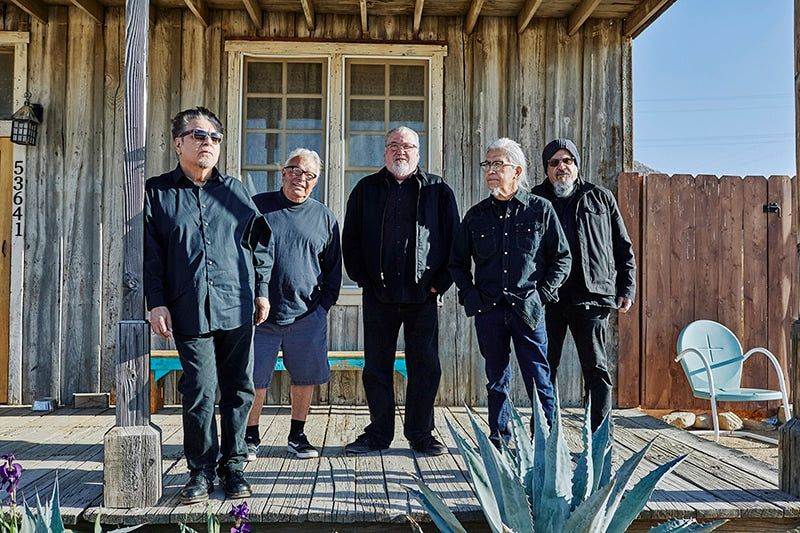
 

Los Lobos. Photo by Piero F. Giunt.
Header image: photo by Piero F. Giunt.

More from Issue 142

View All Articles in Issue 142

Search Copper Magazine

#234 A Life in High-End Audio: The Roy Hall Interview, Part One by Frank Doris Sep 07, 2026 #234 Jason Greenlaw Offers His Personal Perspective on Jazz Guitar in Vantage Point by Frank Doris Sep 07, 2026 #234 Transcendent Phoenix: Lucina Yue Brings the Ancient Konghou Into Modern Times by Frank Doris Sep 07, 2026 #234 We Must All Follow Our Bliss by B. Jan Montana Sep 07, 2026 #234 How to Play in a Rock Band, 27: Leveling Up by Frank Doris Sep 07, 2026 #234 Ross Valory: Traveling Into New Musical Territory With All of the Above by Ray Chelstowski Sep 07, 2026 #234 Singer/Songwriter John David Schrader: On the Need to Create by Joe Caplan Sep 07, 2026 #234 The People Who Make Audio Happen: More From T.H.E. Show SoCal 2026 by Harris Fogel Sep 07, 2026 #234 The Vinyl Beat Digs Into the Gadget Box by Rudy Radelic Sep 07, 2026 #234 The Rolling Stones: Foreign Tongues Spoken Loud by Wayne Robins Sep 07, 2026 #234 Musical Moments by Rich Isaacs Sep 07, 2026 #234 Rags for Solo Piano and a Dog: David Chesky's Ragtime Music for the Modern Age by Frankly Speaking Sep 07, 2026 #234 HIGH END 2026, Vienna: Here to Stay by Carsten Barnbeck Sep 07, 2026 #234 From The Audiophile’s Guide: The Two Main Types of Loudpeakers – Box and Panel by Paul McGowan Sep 07, 2026 #234 Letting it Slide by Frank Doris Sep 07, 2026 #234 PS Audio in the News by PS Audio Staff Sep 07, 2026 #234 Long Playing by Peter Xeni Sep 07, 2026 #234 La Mer by B. Jan Montana Sep 07, 2026 #233 A Report From The Total Hi-Fi Experience Show SoCal 2026 by B. Jan Montana Aug 03, 2026 #233 Bluegrass Meets Country, Folk, Jazz and More in All That We Carried by The Squid City Slingers by Frank Doris Aug 03, 2026 #233 Corey Glover and One Tribe Nation: A Variegated Musical Collective by Ray Chelstowski Aug 03, 2026 #233 Excursions with Clive: The Late Clive Davis, A Personal History by Wayne Robins Aug 03, 2026 #233 AI, Art, and Music: A Conversation With Synthography Art by Joe Caplan Aug 03, 2026 #233 New American Symphonies: A Rediscovered Gem and a Vital Contemporary Work by Frank Doris Aug 03, 2026 #233 The Vinyl Beat: Genesis, the Dave Clark Five, Antonio Carlos Jobim and More by Rudy Radelic Aug 03, 2026 #233 How to Play in a Rock Band, 26: When It's Time to Record Your Music by Frank Doris Aug 03, 2026 #233 More From T.H.E. Show 2026, and the People Who Made it Happen by Harris Fogel Aug 03, 2026 #233 Underappreciated Artists, Part Three: Icehouse by Rich Isaacs Aug 03, 2026 #233 The Surprisingly Rich and Varied Music of Somalia by Steve Kindig Aug 03, 2026 #233 A Remarkable Discographic Legacy: The LP Recordings of the Basel Symphony Orchestra by Stephan Haberthür Aug 03, 2026 #233 From The Audiophile’s Guide: The Importance of Loudspeakers by Paul McGowan Aug 03, 2026 #233 From Swimming Pool to New Listening Room: A Conversation with Norman Varney of AV RoomService by Gilles Laferrière Aug 03, 2026 #233 PS Audio in the News by PS Audio Staff Aug 03, 2026 #233 Audio Jewelry by Peter Xeni Aug 03, 2026 #233 Enrich Your Life by Frank Doris Aug 03, 2026 #233 The Searcher by James Schrimpf Aug 03, 2026 #232 What came first: Art or Music? A Conversation With Artist Jose Acosta by Joe Caplan Jul 06, 2026 #232 Blow By Blow: The Jeff Beck Story: An Insightful Book About a Guitar Icon by Ray Chelstowski Jul 06, 2026 #232 Creed Over Camaraderie? by B. Jan Montana Jul 06, 2026 #232 Chronicles of a Sound Pilgrim at the 2026 Montreal Audiofest by Hugues Morin Jul 06, 2026 #232 The Vinyl Beat: Summer Grooves by Rudy Radelic Jul 06, 2026 #232 Hibbing Hillbilly Dylan's Acoustic Rock by Wayne Robins Jul 06, 2026 #232 Quad Quads and Plasmatronics Tweeters: An Extraordinary System Comes to Life by Frank Doris Jul 06, 2026 #232 In Praise of Live Music, Once Again by Ted Shafran Jul 06, 2026 #232 Allnic Audio’s L-9000 Preamplifier: Design and Engineering Innovation by Howard Kneller Jul 06, 2026 #232 “Best Of” Lists and Rage Bait: Enough Already by Frank Doris Jul 06, 2026 #232 Quick Takes: Bud Shank, Paulo Almeida, Jakob Dreyer, Tim Eriksen and Peter Irvine by Frank Doris Jul 06, 2026

A Southern California Musical Primer – Your Tour Guides: Los Lobos

A Southern California Musical Primer – Your Tour Guides: Los Lobos

This morning I woke up with an earworm that just won’t let go. Fortunately, it is a pleasant one: the song “Sail On, Sailor.” It was originally on the Beach Boys’ 1973 Holland album, from the band’s intriguing trio of early 1970s albums that also included Sunflower and Surf’s Up.

But it was not the Beach Boys version that resonated: it was Los Lobos, from their new album Native Sons (New West Records). Aside from the title song, all of the tracks are covers of Southern California music, from ocean to inner city, from Sunset Strip to the band’s deep roots in Chicano East LA. The band still maintains all of its original members: David Hidalgo, Louie Perez, Jr., Cesar Rosas, Conrad Lozano, and Steve Berlin, a relative latecomer who moved over from the Blasters in 1984. Would you believe me if I told you that the band was formed in 1942 with these same musicians? Of course not. It only seems that way, and Native Sons is the “proof” of that fiction. They actually formed circa 1973, which is nearly 50 years ago. They’re recorded 17 studio albums, according to their current label, and as always, their music contains multitudes.


Los Lobos Native Sons album cover.

They started performing in the neighborhood, quinceañeras and sweet sixteens, wedding parties and backyard barbecues: no style left unplayed. They were tight to begin with on their debut for Slash Records, How Will the Wolf Survive? (there were previous smaller indie releases going back to the 1970s), and a perfect fit with labelmates the Blasters, and X, also local LA bands with omnivorous musical tastes. They loosened up along the way to achieve the unclassifiable on albums such as Kiko (1992), which still sounds like it was released tomorrow, and Tin Can Trust (2010), which likewise never seems to age. Though they have won Grammys, their only true commercial breakthrough was the number one 1987 soundtrack to La Bamba, the biopic about the short life of teenage Mexican-American star Ritchie Valens, who died at 17 in the 1959 plane crash that killed Buddy Holly and the Big Bopper. The first six songs of the soundtrack album are all Los Lobos doing Valens songs, as they do in the movie. A natural? They’d probably been playing “La Bamba” and “Donna” since they were 17.

In fact, though Los Lobos are magnificent songwriters, their way with covers has always made them prized on soundtracks and tribute albums. When I think “Bertha,” one of the Grateful Dead’s sturdiest songs, I think of Los Lobos’ version on the Deadicated album. They’ve even done covers records before, sometimes with guest artists: on Ride This, a generous seven-song EP from 2004, where they crush songs by (and sometimes with) artists as various as Richard Thompson’s  “Shoot Out the Lights,” Tom Waits’ “Jockey Full of Bourbon,” Elvis Costello’s “Uncomplicated,” and Rubén Blades “Patria,” all of which were refreshed by going through adaptations by Los Lobos.

Since they have been so almighty good for so very long, Los Lobos can elevate their covers just by playing them straight. That’s the takeaway for me on Native Sons, on which songs are played pretty much like the originals. This is not boring: they still sound like Los Lobos, even if they also sound like the Beach Boys’ on “Sail On, Sailor” (on the original, Blondie Chaplin sang lead); or like Jackson Browne on “Jamaica Say You Will.” As a matter of taste, it’s not my favorite, but it has a more singular purpose here: to testify to Browne’s skill as a storyteller, encouraging Louie Perez to “write from introspection.” Personal, but universal, according to the press notes.


Their take on Buffalo Springfield, a medley of Stephen Stills’ “Bluebird”/”For What It’s Worth,” reinforces their identification with the disturbances on Sunset Strip and the LAPD enforcing “loitering” and curfew laws against hippies in bell bottoms and miniskirts circa 1966, immortalized not just by Springfield but by the teen exploitation film Riot on Sunset Strip and its garage rock soundtrack. Los Lobos tries to replicate the Springfield songs, with David Hidalgo playing the guitar duel of Stills (left channel), and Neil Young (right channel).

Where I go crazy here is for the East LA garage and punk rock of opening song “Love Special Delivery” by Thee Midniters, the first East LA rock band to break through to radio with their version of “Land of 1000 Dances” and the mostly instrumental “Whittier Boulevard.” These songs defined the East LA cruising scene in the early 1960s, which was all about gussied up cars, riding slow and low to the ground. Thee Midniters provided the template for hundreds of other garage bands, who adapted “Thee” instead of “The” because it was so redolent of psychedelia. In the same vein, “Farmer John,” originally by the Premiers of nearby San Gabriel, was a garage band staple (the early Lobos played it at weddings), though the version here is based on that of the composers, L.A. 1950s R&B stalwarts Don and Dewey: Don “Sugarcane” Harris and Dewey Terry. The ballad “Misery,” one of Motown’s earliest singles, was originally done by Motown singer and songwriter Barrett Strong, famed for “Money (That’s What I Want”), and I suspect that the credited songwriter “Don Juan Mancha” is also Strong.


A long version of War’s “The World is a Ghetto” gives props that have long been missing for the seminal Los Angeles multicultural band of the 1970s, long overdue for rediscovery.

I thought some jump blues was missing the first time around until I paid attention to “Never No More” by Percy Mayfield. Though the original is late Mayfield (1962), Cesar Rosas’ pumphouse organ and Berlin’s sax bring it back to the 1940s of zoot suits and strolling dressed to the nines down Central Avenue on Saturday night. The same vibe is presented in Spanish in “Los Chuchos Suaves” by Chicano musical great Lalo Guerrero (the song is originally from 1949), with the occasional English phrase: “boogie woogie jitterbug,” in case your feet missed the message.


The connection to the Blasters is reinforced by the bopping swing of Dave Alvin’s “Flat Top Joint,” while “Where Loves Go,” an instrumental, says it’s time to tuck in the kids or kiss the neighbors goodbye at the end of a long night.

I might have liked some representation of influential LA producer/bandleader Johnny Otis, whether “Willie and the Hand Jive” or deeper catalog, or Leiber and Stoller’s work with the Robins (“Smokey Joe’s Cafe”), transitioning to the Coasters (“Down in Mexico”). Or The Olympics’ “Big Boy Pete” or so many others, or Charles McCullough and the Silks’ “Zorro” from LA’s Dootone label (a terrible record to some but a personal favorite). But then again, Leiber and Stoller’s “Framed” is one of the Los Lobos tracks on La Bamba. And there may be an album’s worth of Otis-related LA artists deep amid the Los Lobos catalog. Originals or covers, Los Lobos remains a band for all time, and for all times, and Native Sons is all that.


Los Lobos. Photo by Piero F. Giunt.
Header image: photo by Piero F. Giunt.

0 comments

Leave a comment

0 Comments

Your avatar

Loading comments...

🗑️ Delete Comment

Enter moderator password to delete this comment:

✏️ Edit Comment

Enter your email to verify ownership: