COPPER

A PS Audio Publication

Issue 23 • Free Online Magazine

Issue 23 FEATURED

Revenge of Son of Forgotten Artists Strikes Back!

No fear of running out of great musicians who may or may not have slipped below your radar … or never been on it. This bunch brings us up to 50.

41)     Doris Day

Doris

Like too many people not around in the 1940s, I knew Ms Day solely as an actress. My old man soon corrected that misconception with a spin of the original soundtrack LP to Love Me Or Leave Me, which I still own and cherish. Goodness, what a voice! What control! Day would drift in and out of my playlists during my lifetime, but an encounter with her version of “I’ll See You In My Dreams” leapfrogged her over nearly every distaff warbler in my library. Yes, even beyond Ella, Julie and Nancy. “Que Sera, Sera” may be her signature tune, but you owe it to yourself to hear the now-ancient mono material and the staggering stereo releases from the 1960s. Start with Show Time from 1960, and pick up one of the bargain sets of her late-1940s work with Les Brown. Apparently, by 1947, she was the highest-paid female vocalist on the planet. Trust me: she was worth every penny.

42)     Sam & Dave

Soul_Men_(Sam_&_Dave_album_-_cover_art)

Otis vs Marvin, “James Brown is the Godfather”, Sam Cooke, “Wicked” Wilson Pickett, Isaac Hayes, Solomon Burke – there are so many soul giants with a claim to being the greatest, if a greatest there must be. For me, the quintessential soul act was Sam & Dave, and on so many levels that I don’t have to stretch to make their case: Stax label sound (gutsier than Motown), the greatest backing bands of all time (Booker T & the MGs, The Mar-Keys), material by Porter and Hayes, and their inimitable call-and-response, straight-outta-gospel delivery so clearly from the heart that they live up to the title of their biggest hit, but in plural: “Soul Man.” Among the masterpieces are “Hold On, I’m Comin’”, “You Don’t Know What You Mean to Me”, “I Thank You”, and a dozen more. Along with the Beatles, Buddy Holly, Howard Tate and the Buffalo Springfield, the music I want to be listening to during my last days on earth. How much do I love this duo? Enough to name our son “Samuel David”.

43)     Kevin Ayers

Kevin ayers

An unlikely choice for me, given that I am not predisposed toward any of the genres even remotely associated with prog-rock, jazz-rock or, especially, Artsy-Fartsy British Eccentric Rock. As Ayers was a founding member of Soft Machine, was part of the “Canterbury Scene” and was an early supporter of Mike Oldfield, pre-Tubular Bells, he should have ticked all the wrong boxes. But this is a more personal choice than most because, when I moved to the UK in ’72, I had a room in a B&B in Canterbury next door to his sister, Kate. She introduced me to the hippie answer to Noel Coward and I was hooked immediately, and eventually to Kevin himself – who lived up to the persona with great theatricality. Start with his fourth solo, Bananamour, for a taste of British whimsy, with sublime sound quality, too – a no-brainer for those who love the Bonzo Dog Doo-Dah Band, or, indeed, the aforementioned Coward. Nearly all of Ayers’ solo LPs featured musicianship of the highest order, especially the titles on Harvest and Island, and – in the context of this webzine – glorious sound.

44)     Squeeze

Squeeze

Peripherally related to Ayers in sheer Englishness, though writing pop and rock classics rather than dabbling with the avant-garde or “post-modern music hall”, Squeeze also was (and remains) as thoroughly, unapologetically British as the Kinks. Despite emerging during the tail-end of the punk era, Squeeze’s attitude is more closely aligned with 1960s British Invasion brands, British “kitchen sink” drama and the trials and tribulations of the English working class, than with punk per se. Channeling the aforementioned Kinks, the Beatles and other maestros from the previous decade, Squeeze added a post-punk vibrancy, while Difford’s and Tilbrook’s compositions have been favorably compared to Lennon and McCartney. Once you’ve listened to the original version of the oft-covered “Tempted”, with the great Paul Carrack on vocals, you’ll know why.

45)     Keely Smith

Overshadowed by her jokey collaboration with Louis Prima, where she played straight to his clowning, Smith categorically deserves to be grouped with the very best of the interpreters of the Great American Songbook. Respected by no less than Sinatra, Smith is easily recognized by a teeny vestige of her southern accent that came through whenever she had to sing words such as “I” or “my”: they emerge as “Ah” or “mah”. It adds unique character to a school of vocalists who some find almost interchangeable: Smith is as distinctive as Peggy Lee. Even when being teased by Prima and occasionally struggling to keep a straight face, she managed to sing with clarity, authority, feeling and, yes, wit. By all means, wallow in the delight of the Prima-Smith duets, but do not miss her solo releases. You will be staggered.

46)     Willy DeVille and Mink Deville

Those of you who read my scribbling in Hi-Fi News will know that one of my references for assessing hi-fi is DeVille’s “Assassin of Love”. Produced by Mark Knopfler, it has as much activity in its groove as any a stereo test record, and the reactions to it at this year’s hi-fi shows during my demos were all of the where-can-I-get-a-copy? variety. I first got hooked on DeVille’s rich, soulful vocals when he was fronting Mink DeVille, a group that arrived during the punk era and was as out-of-step with that aberration as was Tom Petty & the Heartbreakers. Mink DeVille paid homage to street-corner music and Latino roots sounds with the same passion as did Zappa with doo-wop, only DeVille played it straight and created a run of albums that sound like an alternate-universe score to West Side Story. His solos embraced other genres, while the albums of his final years were imbued with the spirit of New Orleans. Willy, thanks for so many hours of sheer musical bliss. RIP.

47)     Rick Derringer
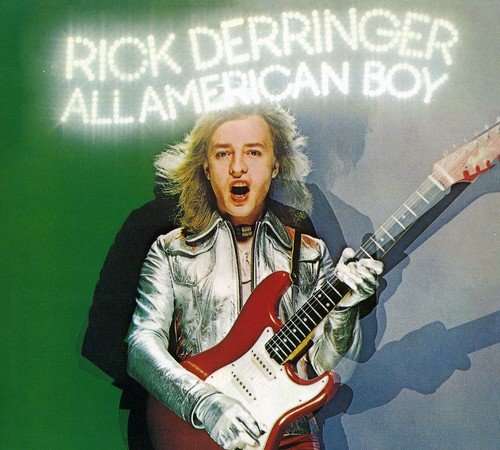
Derringer

Like many baby boomers, I first heard Derringer when he was in the McCoys, and I was in a little band that – yes – just had to cover “Hang On, Sloopy”. As sharp as they were, the McCoys could only contain this incendiary guitarist for so long. Working with the astounding Johnny Winter in Johnny Winter And…, with Johnny’s brother Edgar in White Trash and carving out a varied solo career, Derringer became one of those journeymen guitarists who spices up albums with exceptional playing. His guest spots range from Todd Rundgren to Steely Dan to Alice Cooper to Cyndi Lauper to Kiss to Ringo Starr, and he’s a seasoned producer. But the killer has to be his solo debut, <All American Boy>, worth owning just for the best-ever take of “Rock’n’Roll, Hoochie Koo.” Play it loud.

48)     Roy Wood and the Move

Move

Another British eccentric, Roy Wood sent out mixed signals. He looked like a freaky, demonic hippie of the Arthur Brown variety, but the music he made owed more to Brian Wilson than to Aleister Crowley. With the Move, he crafted Top 40-friendly hits that undermined the band’s hipness at home, and I didn’t realize how disrespected they were until I emigrated to the UK: Rich Colburn had turned me on to them when we were in college in Maine, the band ironically enjoying underground status in the USA. Spinal Tap surely would have admired “Brontosaurus”, while the antics of their management conspired to ruin the band’s finances and credibility. After forming and then leaving ELO, Wood produced a series of eclectic albums – solo and with his other band, Wizzard – that probably never threatened the US charts, but his star shone brightly during the glam era in the UK. He delivered hits that celebrated the rock of the Beach Boys, the Monkees, the Merry-Go-Round and other American purveyors of sunshine pop. Start with Mustard, a completely self-performed/recorded masterpiece and wonder how he slipped past your consciousness … if, that is, you adore well-crafted pop music.

49)     Trudy Richards

trudy

A mystery woman, this torch singer could turn the warmest and fuzziest of Broadway tunes into intense, in-your-face declarations of love. She recorded but one album for Capitol in the 1950s, which apparently enjoys cult status in Japan, before retiring. I discovered her because of track on Capitol Records compilations honoring the composers of the Great American Songbook. It was immediately clear to me that she was of the caliber of Keely Smith. Her version of “Let’s Do It” would surely have had  Cole Porter grinning from ear-to-ear, for it is the most salacious take I’ve ever heard of a classic from the Great American Songbook. “A Wonderful Guy”, “Can’t Help Lovin’ That Man” – imagine the devastatingly sexy Julie London without any inhibitions and that’s the sound of Trudy Richards. Redefines “torch singer”.

50)     Wilson Phillips

Just as the Move was disrespected by the British, so has Wilson Phillips been treated like dirt. Nepotism may have gotten them a few rungs up the ladder, but talent will out, and wow, can these ladies sing! If you can turn off your hip-o-meter for a few minutes and just listen to their interpretations of myriad or their Left Coast rock treasures, as well as their renditions of their parents’ hits and their own original compositions, you’ll find that the trio is as polished and musical as any “girl group” of the genre’s 1960s heyday. No, they don’t challenge the Supremes or the Shirelles, but I’d gladly place them on the same shelf as the Shangri-Las or the Cookies, and they have the added benefit of releases with stellar sound quality rather than AM-radio-friendly compression. If you must, file them under “Guilty Pleasures”, next to the Dave Clark Five, Herman’s Hermits or early Lesley Gore, but try them again with an open mind.

More from Issue 23

View All Articles in Issue 23

Search Copper Magazine

#231 Piano Prodigy Jude Kofie Releases His Debut Album On Octave Records by Frank Doris Jun 01, 2026 #231 Underappreciated Artists, Part Two: City Boy by Rich Isaacs Jun 01, 2026 #231 Music and the Art of Creation: Talking With Saxophonist Rob Scheps by Joe Caplan Jun 01, 2026 #231 How to Play in a Rock Band, 24: Further Adventures at the 2026 Montauk Music Festival by Frank Doris Jun 01, 2026 #231 Courtney Barnett: Creature of Habit by Wayne Robins Jun 01, 2026 #231 Angine de Poitrine: Interstellar Guitar Rock Saviors Headed for Late-Night TV Pop Stardom? by Mark Lepage Jun 01, 2026 #231 My Impressions of AXPONA 2026, Part One by Frank Doris Jun 01, 2026 #231 2026 La Jolla Concours d'Elegance: Another Aesthetic Feast by B. Jan Montana Jun 01, 2026 #231 Country Music Icon Jo Dee Messina’s Bridges: A New Beginning by Ray Chelstowski Jun 01, 2026 #231 The Luxury Dispatch Hosts a Video Podcast With Ken Kessler by Ken Kessler Jun 01, 2026 #231 The Vinyl Beat: Tracking in the Motor City by Rudy Radelic Jun 01, 2026 #231 Lots of Fun With DSP: The Ferrum Audio WANDLA DAC and Its Tube Mode by Frank Doris Jun 01, 2026 #231 From The Audiophile's Guide: Digital Source Components and Streaming Audio by Paul McGowan Jun 01, 2026 #231 Onkyo’s Monster M-510 power amplifier by The Staff at Just Audio Jun 01, 2026 #231 PS Audio in the News by PS Audio Staff Jun 01, 2026 #231 Naming Convention by Peter Xeni Jun 01, 2026 #231 Les Invisibles by Frank Doris Jun 01, 2026 #231 Wildlife Scene by James Schrimpf Jun 01, 2026 #230 Camaraderie by B. Jan Montana May 04, 2026 #230 AXPONA 2026: A Family Gathering by Paul McGowan May 04, 2026 #230 Pianist Ryan Benthall Explores Jazz Realms and Far Beyond With Divine Sky by Frank Doris May 04, 2026 #230 The Vinyl Beat in AXPONA-Land by Rudy Radelic May 04, 2026 #230 Teddy Thompson’s Musical Growth Deepens With Never Be the Same by Ray Chelstowski May 04, 2026 #230 More Fun in the Sun: Florida Audio Expo, Part Two by Frank Doris May 04, 2026 #230 CanJam NYC 2026 Show Report: Heady Sound, Part Two by Frank Doris and Harris Fogel May 04, 2026 #230 Sonic Youth On Murray Street by Wayne Robins May 04, 2026 #230 Graffeo Coffee: A Symphony of Sensory Experience by Joe Caplan May 04, 2026 #230 The Saul Authority: The Story of Hi-Fi Pioneer Saul Marantz by Olivier Meunier-Plante May 04, 2026 #230 How to Play in a Rock Band, 23: Encounters With Famous Musicians, Part Two by Frank Doris May 04, 2026 #230 An Outlier in the Rack: A Vintage BIC Beam Box by The Staff at Just Audio May 04, 2026 #230 PS Audio in the News by PS Audio Staff May 04, 2026 #230 A Cautionary Tale by Rich Isaacs May 04, 2026 #230 Reel-to-Reel Roots, Part 33 (Revised): Ken Kessler Reports On the 2026 (British) AudioJumble by Ken Kessler May 04, 2026 #230 Text Messaging by Frank Doris May 04, 2026 #230 The Audiophile Rat Race by Peter Xeni May 04, 2026 #230 On the Rocks by Rich Isaacs May 04, 2026 #229 The Earliest Stars of Country Music, Part Three by Jeff Weiner Apr 06, 2026 #229 The Healing Power of Music and Sound at the Omega Institute by Joe Caplan Apr 06, 2026 #229 CanJam NYC 2026 Show Report: Heady Sound, Part One by Frank Doris Apr 06, 2026 #229 Florida Audio Expo 2026: Warming Up to High-End Audio, Part One by Frank Doris Apr 06, 2026 #229 Quick Takes: Anne Bisson, Sam Morrison, The Velvet Underground, and the Stooges by Frank Doris Apr 06, 2026 #229 The Vinyl Beat: New Arrivals, and Old Audio Show Demo Scores to Settle by Rudy Radelic Apr 06, 2026 #229 Harvard Gets a High-End Audio Education by Frank Doris Apr 06, 2026 #229 No Country for Old Knees by B. Jan Montana Apr 06, 2026 #229 How To Play in A Rock Band, 22: Encounters With Famous Musicians, Part 1 by Frank Doris Apr 06, 2026 #229 The Soulful Grooves of Guinea-Bissau by Steve Kindig Apr 06, 2026 #229 Four-Hand Piano Performance at Its Finest by Stephan Haberthür Apr 06, 2026

Revenge of Son of Forgotten Artists Strikes Back!

No fear of running out of great musicians who may or may not have slipped below your radar … or never been on it. This bunch brings us up to 50.

41)     Doris Day

Doris

Like too many people not around in the 1940s, I knew Ms Day solely as an actress. My old man soon corrected that misconception with a spin of the original soundtrack LP to Love Me Or Leave Me, which I still own and cherish. Goodness, what a voice! What control! Day would drift in and out of my playlists during my lifetime, but an encounter with her version of “I’ll See You In My Dreams” leapfrogged her over nearly every distaff warbler in my library. Yes, even beyond Ella, Julie and Nancy. “Que Sera, Sera” may be her signature tune, but you owe it to yourself to hear the now-ancient mono material and the staggering stereo releases from the 1960s. Start with Show Time from 1960, and pick up one of the bargain sets of her late-1940s work with Les Brown. Apparently, by 1947, she was the highest-paid female vocalist on the planet. Trust me: she was worth every penny.

42)     Sam & Dave

Soul_Men_(Sam_&_Dave_album_-_cover_art)

Otis vs Marvin, “James Brown is the Godfather”, Sam Cooke, “Wicked” Wilson Pickett, Isaac Hayes, Solomon Burke – there are so many soul giants with a claim to being the greatest, if a greatest there must be. For me, the quintessential soul act was Sam & Dave, and on so many levels that I don’t have to stretch to make their case: Stax label sound (gutsier than Motown), the greatest backing bands of all time (Booker T & the MGs, The Mar-Keys), material by Porter and Hayes, and their inimitable call-and-response, straight-outta-gospel delivery so clearly from the heart that they live up to the title of their biggest hit, but in plural: “Soul Man.” Among the masterpieces are “Hold On, I’m Comin’”, “You Don’t Know What You Mean to Me”, “I Thank You”, and a dozen more. Along with the Beatles, Buddy Holly, Howard Tate and the Buffalo Springfield, the music I want to be listening to during my last days on earth. How much do I love this duo? Enough to name our son “Samuel David”.

43)     Kevin Ayers

Kevin ayers

An unlikely choice for me, given that I am not predisposed toward any of the genres even remotely associated with prog-rock, jazz-rock or, especially, Artsy-Fartsy British Eccentric Rock. As Ayers was a founding member of Soft Machine, was part of the “Canterbury Scene” and was an early supporter of Mike Oldfield, pre-Tubular Bells, he should have ticked all the wrong boxes. But this is a more personal choice than most because, when I moved to the UK in ’72, I had a room in a B&B in Canterbury next door to his sister, Kate. She introduced me to the hippie answer to Noel Coward and I was hooked immediately, and eventually to Kevin himself – who lived up to the persona with great theatricality. Start with his fourth solo, Bananamour, for a taste of British whimsy, with sublime sound quality, too – a no-brainer for those who love the Bonzo Dog Doo-Dah Band, or, indeed, the aforementioned Coward. Nearly all of Ayers’ solo LPs featured musicianship of the highest order, especially the titles on Harvest and Island, and – in the context of this webzine – glorious sound.

44)     Squeeze

Squeeze

Peripherally related to Ayers in sheer Englishness, though writing pop and rock classics rather than dabbling with the avant-garde or “post-modern music hall”, Squeeze also was (and remains) as thoroughly, unapologetically British as the Kinks. Despite emerging during the tail-end of the punk era, Squeeze’s attitude is more closely aligned with 1960s British Invasion brands, British “kitchen sink” drama and the trials and tribulations of the English working class, than with punk per se. Channeling the aforementioned Kinks, the Beatles and other maestros from the previous decade, Squeeze added a post-punk vibrancy, while Difford’s and Tilbrook’s compositions have been favorably compared to Lennon and McCartney. Once you’ve listened to the original version of the oft-covered “Tempted”, with the great Paul Carrack on vocals, you’ll know why.

45)     Keely Smith

Overshadowed by her jokey collaboration with Louis Prima, where she played straight to his clowning, Smith categorically deserves to be grouped with the very best of the interpreters of the Great American Songbook. Respected by no less than Sinatra, Smith is easily recognized by a teeny vestige of her southern accent that came through whenever she had to sing words such as “I” or “my”: they emerge as “Ah” or “mah”. It adds unique character to a school of vocalists who some find almost interchangeable: Smith is as distinctive as Peggy Lee. Even when being teased by Prima and occasionally struggling to keep a straight face, she managed to sing with clarity, authority, feeling and, yes, wit. By all means, wallow in the delight of the Prima-Smith duets, but do not miss her solo releases. You will be staggered.

46)     Willy DeVille and Mink Deville

Those of you who read my scribbling in Hi-Fi News will know that one of my references for assessing hi-fi is DeVille’s “Assassin of Love”. Produced by Mark Knopfler, it has as much activity in its groove as any a stereo test record, and the reactions to it at this year’s hi-fi shows during my demos were all of the where-can-I-get-a-copy? variety. I first got hooked on DeVille’s rich, soulful vocals when he was fronting Mink DeVille, a group that arrived during the punk era and was as out-of-step with that aberration as was Tom Petty & the Heartbreakers. Mink DeVille paid homage to street-corner music and Latino roots sounds with the same passion as did Zappa with doo-wop, only DeVille played it straight and created a run of albums that sound like an alternate-universe score to West Side Story. His solos embraced other genres, while the albums of his final years were imbued with the spirit of New Orleans. Willy, thanks for so many hours of sheer musical bliss. RIP.

47)     Rick Derringer

Derringer

Like many baby boomers, I first heard Derringer when he was in the McCoys, and I was in a little band that – yes – just had to cover “Hang On, Sloopy”. As sharp as they were, the McCoys could only contain this incendiary guitarist for so long. Working with the astounding Johnny Winter in Johnny Winter And…, with Johnny’s brother Edgar in White Trash and carving out a varied solo career, Derringer became one of those journeymen guitarists who spices up albums with exceptional playing. His guest spots range from Todd Rundgren to Steely Dan to Alice Cooper to Cyndi Lauper to Kiss to Ringo Starr, and he’s a seasoned producer. But the killer has to be his solo debut, <All American Boy>, worth owning just for the best-ever take of “Rock’n’Roll, Hoochie Koo.” Play it loud.

48)     Roy Wood and the Move

Move

Another British eccentric, Roy Wood sent out mixed signals. He looked like a freaky, demonic hippie of the Arthur Brown variety, but the music he made owed more to Brian Wilson than to Aleister Crowley. With the Move, he crafted Top 40-friendly hits that undermined the band’s hipness at home, and I didn’t realize how disrespected they were until I emigrated to the UK: Rich Colburn had turned me on to them when we were in college in Maine, the band ironically enjoying underground status in the USA. Spinal Tap surely would have admired “Brontosaurus”, while the antics of their management conspired to ruin the band’s finances and credibility. After forming and then leaving ELO, Wood produced a series of eclectic albums – solo and with his other band, Wizzard – that probably never threatened the US charts, but his star shone brightly during the glam era in the UK. He delivered hits that celebrated the rock of the Beach Boys, the Monkees, the Merry-Go-Round and other American purveyors of sunshine pop. Start with Mustard, a completely self-performed/recorded masterpiece and wonder how he slipped past your consciousness … if, that is, you adore well-crafted pop music.

49)     Trudy Richards

trudy

A mystery woman, this torch singer could turn the warmest and fuzziest of Broadway tunes into intense, in-your-face declarations of love. She recorded but one album for Capitol in the 1950s, which apparently enjoys cult status in Japan, before retiring. I discovered her because of track on Capitol Records compilations honoring the composers of the Great American Songbook. It was immediately clear to me that she was of the caliber of Keely Smith. Her version of “Let’s Do It” would surely have had  Cole Porter grinning from ear-to-ear, for it is the most salacious take I’ve ever heard of a classic from the Great American Songbook. “A Wonderful Guy”, “Can’t Help Lovin’ That Man” – imagine the devastatingly sexy Julie London without any inhibitions and that’s the sound of Trudy Richards. Redefines “torch singer”.

50)     Wilson Phillips

Just as the Move was disrespected by the British, so has Wilson Phillips been treated like dirt. Nepotism may have gotten them a few rungs up the ladder, but talent will out, and wow, can these ladies sing! If you can turn off your hip-o-meter for a few minutes and just listen to their interpretations of myriad or their Left Coast rock treasures, as well as their renditions of their parents’ hits and their own original compositions, you’ll find that the trio is as polished and musical as any “girl group” of the genre’s 1960s heyday. No, they don’t challenge the Supremes or the Shirelles, but I’d gladly place them on the same shelf as the Shangri-Las or the Cookies, and they have the added benefit of releases with stellar sound quality rather than AM-radio-friendly compression. If you must, file them under “Guilty Pleasures”, next to the Dave Clark Five, Herman’s Hermits or early Lesley Gore, but try them again with an open mind.

0 comments

Leave a comment

0 Comments

Your avatar

Loading comments...

🗑️ Delete Comment

Enter moderator password to delete this comment:

✏️ Edit Comment

Enter your email to verify ownership: