COPPER

A PS Audio Publication

Issue 83 • Free Online Magazine

Issue 83 TRADING EIGHTS

Marian McPartland: Eight Great Tracks

Britain still had a few more months of World War I to endure when Margaret Marian Turner was born in Slough, England in 1918. By the time World War II came around, she was a skilled enough jazz pianist – she’d obsessed over Fats Waller and Count Basie in her teens – to join the USO. While touring for the troops, she met her husband, Chicago cornetist Jimmy McPartland, at an after-show jam session in Belgium.

Still, there was nothing remotely likely about her becoming a jazz star. But she did it. Even more than her fifty-plus recordings, her importance to other musicians can be measured by the nine honorary doctorates and many awards she received over the decades.

Her playing? Elegant, yet courageous. Her charm, intellect, and curiosity are as obvious in her music-making as they are in her personality. Jazz fans got to know her well, thanks to the National Public Radio show Marian McPartland’s Piano Jazz, which she hosted from 1978-2011. She died in 2013.

Please enjoy the beauty, bravery, and brains of these tracks by Marian McPartland.

  1. “Paper Moon”

    The Magnificent Marian McPartland
    Savoy
    1952

    McPartland signed with Savoy records in 1951 with her trio, which at the time included Max Wayne on bass and Mousie Alexander on drums. Their regular gigs around New York, particularly at the Hickory House in New York, attracted the attention of some big-league players, particularly Duke Ellington, who was determined to help her career.

    It’s not hard to understand why the Duke was so impressed. This early version of “Paper Moon” is a study in nuanced dynamics, a rare skill likely owed to McPartland’s classical training. She uses subtle changes in pressure on the piano keys to shape phrases and subphrases. In these early years, her improvisation tends to be busy but effortless.


    1. “For All We Know”

      After Dark
      Capitol
      1956

      McPartland loved to build on the trio sound by adding instruments and attempting different styles. Here she brings in Lucien Schmit on cello and Betty Glamann on harp.

      The “after dark” in the album’s title seems to evoke an upscale cocktail lounge, so the cello and harp are meant to give the arrangement a sense of classy atmosphere. The cello adds an interesting richness; I’d be happier without the harp, but it was the taste of a certain set.

      “For All We Know” is a 1934 standard that would have been known from Nat King Cole’s recording. McPartland’s classical chops are even more obvious here. (Pardon the static on this rare capture.)


      1. “I Can Cook Too”

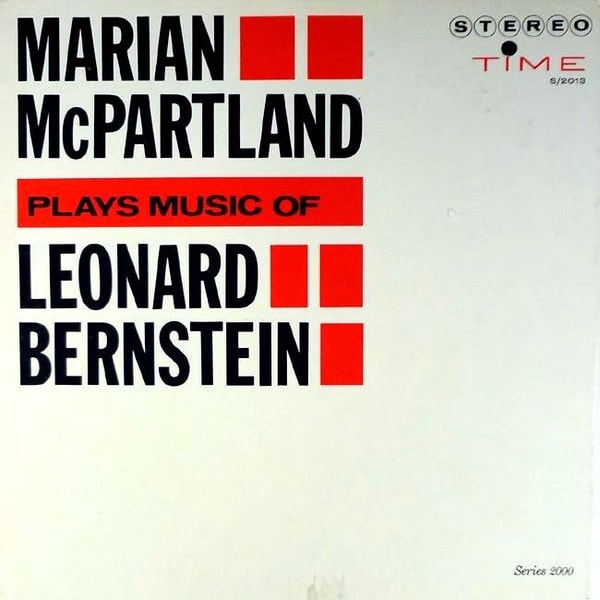
        Marian McPartland Plays Music of Leonard Bernstein
        Time
        1960

        Like many jazz instrumentalists, McPartland gravitated toward tunes that were originally sung. This up-tempo song from On the Town demonstrates that McPartland could handle a harder swing and didn’t always go for soft-edged arrangements. While the Comden and Green lyrics are frenetically funny, McPartland goes for more of a smirk than a guffaw in this instrumental version.

        This is just the trio, now with Ben Tucker on bass and Jake Hanna on drums. The condensed, chordal texture McPartland uses to introduce the melody makes it all the more glorious when she opens up into improv at 0:31.


        1. “Sweet and Lovely”

          Bossa Nova + Soul
          Time
          1963

          The combination of jazz and samba called bossa nova really took off in the 1960s, and McPartland jumped on board the trend. She brought in Ralph Dorsey (probably best known for his later work with Lou Donaldson) to man the congas, to which she added her own bebop-tinged dissonances. As for the trio, Ben Tucker is still on bass, and Dave Bailey plays drums.

          McPartland’s approach to the hip new sound was to apply smooth samba-inspired syncopations to preexisting North American standards, in this case a tune from 1931. McPartland’s solo starting at 1:08 sounds like a lazy wander along the beach until you realize how complicated it is.


          1. “Things Ain’t What They Used to Be”

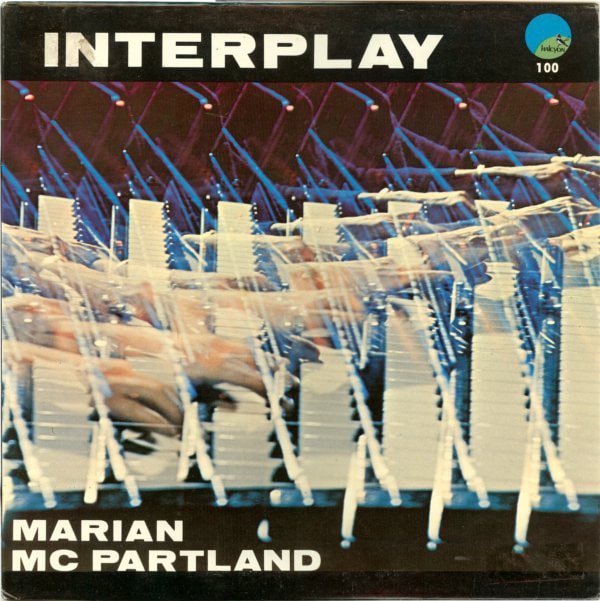
            Interplay
            Halcyon
            1969

            With the help of a couple of friends, McPartland founded Halcyon Records. This was one of their first releases.

            It’s an unusual combo: piano and bass, but no drums! The bassist is Linc Milliman, a sought-after gig and session musician who’d spent several years with the Maynard Ferguson Big Band. While the track list includes a few McPartland originals (rare up to this point) and the recent Glen Campbell hit “By the Time I Get to Phoenix,” it’s the Ellington classic “Things Ain’t What They Used to Be” that stands out.

            And don’t you just long to find more Milliman recordings after hearing his sly, dexterous pizzicato in this number?


            1. “Four-in-Hand Blues”

              Elegant Piano
              Halcyon
              1970

              Here’s another example of an album dedicated to unusual instrumentation: one- and two- piano tracks without a rhythm section, featuring fellow master Teddy Wilson. He was only a few years older than McPartland, although his recording career had started much earlier.

              They co-wrote this A-side cut for the record. With such spare instrumentation, there’s nowhere to hide. You can sense them listening and responding to each other.

              “Four-in-Hand Blues” starts at 10:38.


              1. “I’ll Remember April”

                Now’s the Time
                Halcyon
                1977

                Not surprisingly, McPartland was a staunch advocate of getting more women involved in jazz. To that end, she put together this all-female quintet for her own label and recorded it at a live gig. Joining McPartland are Vi Redd on alto sax, Lynn Milano on bass, Dottie Dodgion on drums, and Mary Osborne on guitar.

                Although they didn’t take that next step of performing music by women composers, the all-male-written tracklist is excellent, including this standard by Gene Vincent De Paul. The quintet takes “I’ll Remember April” at an energetic clip, driven on by Redd with a push from Dodgion’s hi-hat. And look out for that 32-bar Mary Osborne solo at 2:25! McPartland, the cordial host, stays in the background until 3:50, when she turns descending arpeggiated chords into an artform.


                1. “Willow Weep for Me”

                  Live at Maybeck Recital Hall, Volume Nine
                  Concord
                  1991

                  The Maybeck Recital Hall in Berkeley, CA, was the venue for a large series of live jazz records on Concord, of which this is the ninth. The whole album is solo McPartland, who leaves no doubt that her chops are at full power at age 73, and her musical intellect is enhanced by her decades of experience.

                  [I love the late Marian McPartland, both her persona and her playing. You may find this  brief mention of the record company she co-founded with Sherman Fairchild and Hank O’Neal of interest—Ed.]

                  More from Issue 83

                  View All Articles in Issue 83

                  Search Copper Magazine

                  #231 Piano Prodigy Jude Kofie Releases His Debut Album On Octave Records by Frank Doris Jun 01, 2026 #231 Underappreciated Artists, Part Two: City Boy by Rich Isaacs Jun 01, 2026 #231 Music and the Art of Creation: Talking With Saxophonist Rob Scheps by Joe Caplan Jun 01, 2026 #231 How to Play in a Rock Band, 24: Further Adventures at the 2026 Montauk Music Festival by Frank Doris Jun 01, 2026 #231 Courtney Barnett: Creature of Habit by Wayne Robins Jun 01, 2026 #231 Angine de Poitrine: Interstellar Guitar Rock Saviors Headed for Late-Night TV Pop Stardom? by Mark Lepage Jun 01, 2026 #231 My Impressions of AXPONA 2026, Part One by Frank Doris Jun 01, 2026 #231 2026 La Jolla Concours d'Elegance: Another Aesthetic Feast by B. Jan Montana Jun 01, 2026 #231 Country Music Icon Jo Dee Messina’s Bridges: A New Beginning by Ray Chelstowski Jun 01, 2026 #231 The Luxury Dispatch Hosts a Video Podcast With Ken Kessler by Ken Kessler Jun 01, 2026 #231 The Vinyl Beat: Tracking in the Motor City by Rudy Radelic Jun 01, 2026 #231 Lots of Fun With DSP: The Ferrum Audio WANDLA DAC and Its Tube Mode by Frank Doris Jun 01, 2026 #231 From The Audiophile's Guide: Digital Source Components and Streaming Audio by Paul McGowan Jun 01, 2026 #231 Onkyo’s Monster M-510 power amplifier by The Staff at Just Audio Jun 01, 2026 #231 PS Audio in the News by PS Audio Staff Jun 01, 2026 #231 Naming Convention by Peter Xeni Jun 01, 2026 #231 Les Invisibles by Frank Doris Jun 01, 2026 #231 Wildlife Scene by James Schrimpf Jun 01, 2026 #230 Camaraderie by B. Jan Montana May 04, 2026 #230 AXPONA 2026: A Family Gathering by Paul McGowan May 04, 2026 #230 Pianist Ryan Benthall Explores Jazz Realms and Far Beyond With Divine Sky by Frank Doris May 04, 2026 #230 The Vinyl Beat in AXPONA-Land by Rudy Radelic May 04, 2026 #230 Teddy Thompson’s Musical Growth Deepens With Never Be the Same by Ray Chelstowski May 04, 2026 #230 More Fun in the Sun: Florida Audio Expo, Part Two by Frank Doris May 04, 2026 #230 CanJam NYC 2026 Show Report: Heady Sound, Part Two by Frank Doris and Harris Fogel May 04, 2026 #230 Sonic Youth On Murray Street by Wayne Robins May 04, 2026 #230 Graffeo Coffee: A Symphony of Sensory Experience by Joe Caplan May 04, 2026 #230 The Saul Authority: The Story of Hi-Fi Pioneer Saul Marantz by Olivier Meunier-Plante May 04, 2026 #230 How to Play in a Rock Band, 23: Encounters With Famous Musicians, Part Two by Frank Doris May 04, 2026 #230 An Outlier in the Rack: A Vintage BIC Beam Box by The Staff at Just Audio May 04, 2026 #230 PS Audio in the News by PS Audio Staff May 04, 2026 #230 A Cautionary Tale by Rich Isaacs May 04, 2026 #230 Reel-to-Reel Roots, Part 33 (Revised): Ken Kessler Reports On the 2026 (British) AudioJumble by Ken Kessler May 04, 2026 #230 Text Messaging by Frank Doris May 04, 2026 #230 The Audiophile Rat Race by Peter Xeni May 04, 2026 #230 On the Rocks by Rich Isaacs May 04, 2026 #229 The Earliest Stars of Country Music, Part Three by Jeff Weiner Apr 06, 2026 #229 The Healing Power of Music and Sound at the Omega Institute by Joe Caplan Apr 06, 2026 #229 CanJam NYC 2026 Show Report: Heady Sound, Part One by Frank Doris Apr 06, 2026 #229 Florida Audio Expo 2026: Warming Up to High-End Audio, Part One by Frank Doris Apr 06, 2026 #229 Quick Takes: Anne Bisson, Sam Morrison, The Velvet Underground, and the Stooges by Frank Doris Apr 06, 2026 #229 The Vinyl Beat: New Arrivals, and Old Audio Show Demo Scores to Settle by Rudy Radelic Apr 06, 2026 #229 Harvard Gets a High-End Audio Education by Frank Doris Apr 06, 2026 #229 No Country for Old Knees by B. Jan Montana Apr 06, 2026 #229 How To Play in A Rock Band, 22: Encounters With Famous Musicians, Part 1 by Frank Doris Apr 06, 2026 #229 The Soulful Grooves of Guinea-Bissau by Steve Kindig Apr 06, 2026 #229 Four-Hand Piano Performance at Its Finest by Stephan Haberthür Apr 06, 2026

                  Marian McPartland: Eight Great Tracks

                  Britain still had a few more months of World War I to endure when Margaret Marian Turner was born in Slough, England in 1918. By the time World War II came around, she was a skilled enough jazz pianist – she’d obsessed over Fats Waller and Count Basie in her teens – to join the USO. While touring for the troops, she met her husband, Chicago cornetist Jimmy McPartland, at an after-show jam session in Belgium.

                  Still, there was nothing remotely likely about her becoming a jazz star. But she did it. Even more than her fifty-plus recordings, her importance to other musicians can be measured by the nine honorary doctorates and many awards she received over the decades.

                  Her playing? Elegant, yet courageous. Her charm, intellect, and curiosity are as obvious in her music-making as they are in her personality. Jazz fans got to know her well, thanks to the National Public Radio show Marian McPartland’s Piano Jazz, which she hosted from 1978-2011. She died in 2013.

                  Please enjoy the beauty, bravery, and brains of these tracks by Marian McPartland.

                  1. “Paper Moon”

                    The Magnificent Marian McPartland
                    Savoy
                    1952

                    McPartland signed with Savoy records in 1951 with her trio, which at the time included Max Wayne on bass and Mousie Alexander on drums. Their regular gigs around New York, particularly at the Hickory House in New York, attracted the attention of some big-league players, particularly Duke Ellington, who was determined to help her career.

                    It’s not hard to understand why the Duke was so impressed. This early version of “Paper Moon” is a study in nuanced dynamics, a rare skill likely owed to McPartland’s classical training. She uses subtle changes in pressure on the piano keys to shape phrases and subphrases. In these early years, her improvisation tends to be busy but effortless.


                    1. “For All We Know”

                      After Dark
                      Capitol
                      1956

                      McPartland loved to build on the trio sound by adding instruments and attempting different styles. Here she brings in Lucien Schmit on cello and Betty Glamann on harp.

                      The “after dark” in the album’s title seems to evoke an upscale cocktail lounge, so the cello and harp are meant to give the arrangement a sense of classy atmosphere. The cello adds an interesting richness; I’d be happier without the harp, but it was the taste of a certain set.

                      “For All We Know” is a 1934 standard that would have been known from Nat King Cole’s recording. McPartland’s classical chops are even more obvious here. (Pardon the static on this rare capture.)


                      1. “I Can Cook Too”

                        Marian McPartland Plays Music of Leonard Bernstein
                        Time
                        1960

                        Like many jazz instrumentalists, McPartland gravitated toward tunes that were originally sung. This up-tempo song from On the Town demonstrates that McPartland could handle a harder swing and didn’t always go for soft-edged arrangements. While the Comden and Green lyrics are frenetically funny, McPartland goes for more of a smirk than a guffaw in this instrumental version.

                        This is just the trio, now with Ben Tucker on bass and Jake Hanna on drums. The condensed, chordal texture McPartland uses to introduce the melody makes it all the more glorious when she opens up into improv at 0:31.


                        1. “Sweet and Lovely”

                          Bossa Nova + Soul
                          Time
                          1963

                          The combination of jazz and samba called bossa nova really took off in the 1960s, and McPartland jumped on board the trend. She brought in Ralph Dorsey (probably best known for his later work with Lou Donaldson) to man the congas, to which she added her own bebop-tinged dissonances. As for the trio, Ben Tucker is still on bass, and Dave Bailey plays drums.

                          McPartland’s approach to the hip new sound was to apply smooth samba-inspired syncopations to preexisting North American standards, in this case a tune from 1931. McPartland’s solo starting at 1:08 sounds like a lazy wander along the beach until you realize how complicated it is.


                          1. “Things Ain’t What They Used to Be”

                            Interplay
                            Halcyon
                            1969

                            With the help of a couple of friends, McPartland founded Halcyon Records. This was one of their first releases.

                            It’s an unusual combo: piano and bass, but no drums! The bassist is Linc Milliman, a sought-after gig and session musician who’d spent several years with the Maynard Ferguson Big Band. While the track list includes a few McPartland originals (rare up to this point) and the recent Glen Campbell hit “By the Time I Get to Phoenix,” it’s the Ellington classic “Things Ain’t What They Used to Be” that stands out.

                            And don’t you just long to find more Milliman recordings after hearing his sly, dexterous pizzicato in this number?


                            1. “Four-in-Hand Blues”

                              Elegant Piano
                              Halcyon
                              1970

                              Here’s another example of an album dedicated to unusual instrumentation: one- and two- piano tracks without a rhythm section, featuring fellow master Teddy Wilson. He was only a few years older than McPartland, although his recording career had started much earlier.

                              They co-wrote this A-side cut for the record. With such spare instrumentation, there’s nowhere to hide. You can sense them listening and responding to each other.

                              “Four-in-Hand Blues” starts at 10:38.


                              1. “I’ll Remember April”

                                Now’s the Time
                                Halcyon
                                1977

                                Not surprisingly, McPartland was a staunch advocate of getting more women involved in jazz. To that end, she put together this all-female quintet for her own label and recorded it at a live gig. Joining McPartland are Vi Redd on alto sax, Lynn Milano on bass, Dottie Dodgion on drums, and Mary Osborne on guitar.

                                Although they didn’t take that next step of performing music by women composers, the all-male-written tracklist is excellent, including this standard by Gene Vincent De Paul. The quintet takes “I’ll Remember April” at an energetic clip, driven on by Redd with a push from Dodgion’s hi-hat. And look out for that 32-bar Mary Osborne solo at 2:25! McPartland, the cordial host, stays in the background until 3:50, when she turns descending arpeggiated chords into an artform.


                                1. “Willow Weep for Me”

                                  Live at Maybeck Recital Hall, Volume Nine
                                  Concord
                                  1991

                                  The Maybeck Recital Hall in Berkeley, CA, was the venue for a large series of live jazz records on Concord, of which this is the ninth. The whole album is solo McPartland, who leaves no doubt that her chops are at full power at age 73, and her musical intellect is enhanced by her decades of experience.

                                  [I love the late Marian McPartland, both her persona and her playing. You may find this  brief mention of the record company she co-founded with Sherman Fairchild and Hank O’Neal of interest—Ed.]

                                  0 comments

                                  Leave a comment

                                  0 Comments

                                  Your avatar

                                  Loading comments...

                                  🗑️ Delete Comment

                                  Enter moderator password to delete this comment:

                                  ✏️ Edit Comment

                                  Enter your email to verify ownership: