COPPER

A PS Audio Publication

Issue 116 • Free Online Magazine

Issue 116 EUREKA MOMENTS

Let the Good Sounds Roll

Let the Good Sounds Roll

When I was growing up having a real car stereo was almost as important as owning a solid home system, maybe more. The radios that came standard with most cars were so horrible in sound and function that a cottage industry developed of stores dedicated only to car stereos and installations. It was as if every automotive manufacturer had thrown in the towel by offering low-quality AM/FM only radios, knowing that anyone who cared about sound would rip them out anyway. I know, I’m writing about a car stereo in Copper, but good car stereos were something to aspire to, not look down upon.

Going into a car stereo store in the 1970s and 1980s was an experience that was entirely different than going to a store with home audio components. For starters, there was no way to replicate the sound of your car’s cabin when auditioning a system in the store. So, radios and speakers were mounted into vast wall displays and you had to take a leap of faith that whatever you heard and liked in the store would sound as good or better in your ride. However, more often than not, because the car interiors were so small the sound would almost always be better once installed in your car than in the showroom.

But car cabins are far from perfect audio environments. Some favor the bass. Some favor the treble. And some just rattled because the interior trim wasn’t what it is today. That said, there was nothing like pulling up to a friend’s house blasting a newly-installed system. This was something to brag about to anyone within driving distance.

I’m reminded of a few car stereos in particular that I’ll always associate with certain bands. The first was an all-Pioneer set up that my brother Brian installed himself in his 1972 Volkswagen “squareback” station wagon (in Sunkist orange). At the time, the model he chose to go with the speakers was at the high end of Pioneer’s product line. He installed some speakers up front along with two rather large ones in the bottom of the rear hatch. He remade the entire cavity where these were mounted, and put insulation between the metal frame and the face plate. This gave the speakers a cozy bottom to their sound.

Nice ride! 1972 Volkswagen “squareback.”

The car would be a regular fixture at summer beach bashes on Long Island Sound. There he would open the hatch wide so that the speakers now faced out and I can remember Steve Miller’s Book of Dreams blasting endlessly. One night it drained the battery dry and we all wondered how it hadn’t happened earlier. Somehow through sheer necessity and beach-side inspiration he and our cousins engineered a way to tap in to an actual power line so that this would never happen again. Back then everyone was at least a little bit handy and resourceful.

For you younger readers, playing music on car stereos at parties was once a pastime as American as baseball. I’m reminded of my late friend Pat. At a high school party one summer weekday night, Pat took us from the party out to the street to hear the new stereo he had installed in his 1982 Ford Fiesta. It was about midnight and he put on Little Feat’s “Fat Man in The Bathtub” from Waiting for Columbus at a volume that had to be at nine out of 10 or higher. The sound was amazing – especially the bottom – and the car didn’t seem to budge at all even though the volume was so high.


As the song unfolded every light in the neighborhood began to turn until a dad who couldn’t sleep and had an early day ahead of him came running out of a house in PJs and a robe, screaming at Pat to turn it down. Pat kept innocently asking “What? I can’t hear you. The music’s too loud!” The next day he was back in the neighborhood cranking the Dixie Dregs like nothing had happened. You can get lost in sound inside a car and Pat often did.

Car stereo cassette systems were everywhere. From Motor Sport, October 1969.

Not every car stereo of the day sounded so good. My friends the Adams brothers co-owned a 1964 Ford Fairlane. It had a little bit of pep because of its inline 6 cylinder engine. But the real muscle came from the way it looked – metallic blue with black rims and silver bullet hubs. The brothers had affixed a state troopers’ ball and whip antenna (used with a CB radio) so it had the look of a mid-1960s Canadian border highway patrol car. Inside, the car stereo was all lights. It was made by Audiovox and when you’d drive at night that little car stereo had so many flashing lights that it looked like you were sitting in the cockpit of the Space Shuttle.

However, that’s where the wonder ended, for as bright and impressive-looking as the display was, the lack of any real power from the system made songs like “Trudy” by The Charlie Daniels Band sound wafer thin. So they decided to add a boost to the system and add an amplifier, also by Audiovox, called “The Sound Exploder,” thinking that such an amp would remedy the weak sound. It had one big square power button and a pilot light. When turned on the only thing that exploded was our laughter over how little it did to change anything. Sometimes even cheap car stereos could create moments you’d never forget. [Are there any readers who had car cassette decks who didn’t have to fish out tapes that were eaten? – Ed.]

I’m something of a classic car collector. I have been fortunate enough to have acquired cars that already had the radios replaced with high-quality units. In my current classic car, a 1986 Porsche 911 Supersport, the prior owner installed what may be the best system I’ve ever seen. It’s at least the best I have ever owned.

Ray’s 1986 Porsche 911 Supersport.

The car came with a Blaupunkt in-dash unit that lasted me about a year. I had to replace it and ended up going with a Sony head unit that is perfectly fine and has modern functions like Bluetooth and Pandora. But what really sets this system apart is the two Butler Audio Tube Driver BLUE TDB 275 power amps under the front hood. Butler Audio is a company specializing in high-end home, pro and car audio vacuum tube gear. Like most tube components, the amps, rated at 2 x 75 watts (into 4 ohms, 250 watts bridged), add incredible power and warmth to the sound.

A “Sowy” car stereo…whaaa? Image courtesy of Pixabay.

When the car is started, the in-dash unit is the only power source. As the tubes warm up the system kicks into gear and the volume jumps by a good 50 percent. This comes through a pair of Focal in-door speakers that have exceptional range and clarity. The sound the system delivers is very full- bodied. Even with a car whose engine can often drown out the conversation between driver and passenger, this blend of components finds a way to cut through and present itself without piercing your ears or feeling like they’re intruding into the space. It’s as close to the warmth and range provided by the best home systems as I have heard. That’s the case whether you are listening to a disc, using Bluetooth, or the radio or a remote digital music source. Lastly, to have tube amps in a car, well in my opinion that‘s just plain cool. It’s old school in so many ways and yet with a functionality that’s very 2020.
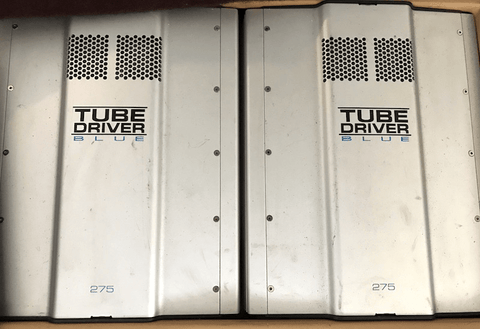
Ray’s Butler Audio TDB 275 vacuum tube power amplifiers.

Before I had to replace the Blaupunkt I hadn’t been to a car stereo store in 20 years. They’ve changed. Today, all cars come with really solid radios, and the more expensive the car, usually the more elaborate the stock sound system. They are also pretty well hidden and integrated into a car’s infotainment system – no more banks of Space Shuttle lights. They sound great and better yet – they are impossible to steal.

This mid-1970s Lear car stereo was advertised as theft-proof too.

The evolution of stock car stereos and the move away from aftermarket systems ultimately has caused the car stereo stores that are left to turn to radar and remote starter installations. Everything’s become more block and tackle, and frankly boring. (With one exception: those “sound off” competitions featuring cars loaded with thousands of watts of amplification and multiple huge speakers that create dangerous in-car decibel levels.)

None of this changes the fact that great music, often played at high volume, goes together with cars and summer like ham, eggs, and cheese. It’s perfectly defined in the classic NRBQ tune “Ridin’ In My Car.” That one-on-one experience of singing along with a favorite song played through a custom system in your own car is something entirely red, white, and blue.

There are some memories that only a car stereo can create. Fortunately for me, I have many and expect even more to show up just around that bend in the road.

More from Issue 116

View All Articles in Issue 116

Search Copper Magazine

#228 Serita’s Black Rose Duo Shakes Your Soul With a Blend of Funk, Rock, Blues and a Whole Lot More by Frank Doris Mar 02, 2026 #228 Vinyl, A Love Story by Wayne Robins Mar 02, 2026 #228 Thrill Seeker by B. Jan Montana Mar 02, 2026 #228 The Vinyl Beat: Donald Byrd, Bill Evans, Wes Montgomery, Eddie Palmieri and Frank Sinatra by Rudy Radelic Mar 02, 2026 #228 Listening to Prestige: The History of a Vitally Important Jazz Record Label by Frank Doris Mar 02, 2026 #228 How to Play in a Rock Band, 21: Touring With James Lee Stanley by Frank Doris Mar 02, 2026 #228 The NAMM 2026 Show: The Music Industry’s Premier Event by John Volanski Mar 02, 2026 #228 The Earliest Stars of Country Music, Part Two by Jeff Weiner Mar 02, 2026 #228 From The Audiophile's Guide: A Brief History of Stereophonic Sound by Paul McGowan Mar 02, 2026 #228 A Bone to Pick With Streaming Audio by Frank Doris Mar 02, 2026 #228 Blast Off With Bluesman Duke Robillard by Ray Chelstowski Mar 02, 2026 #228 A Visit to the Marten Loudspeaker Factory in Göteborg, Sweden by Ingo Schulz and Sebastian Polcyn Mar 02, 2026 #228 Pure Distortion by Peter Xeni Mar 02, 2026 #228 A Nagra Factory Tour by Markus "Marsu" Manthey Mar 02, 2026 #228 Back to My Reel-to-Reel Roots, Part 27: Noodge and Ye Shall Receive, Part Two by Ken Kessler Mar 02, 2026 #228 PS Audio in the News by PS Audio Staff Mar 02, 2026 #228 90-Degree Stereo by Frank Doris Mar 02, 2026 #228 The Keys to Art by Rich Isaacs Mar 02, 2026 #227 Seth Lewis Gets in the Groove With Take a Look Around: a Tribute to the Meters by Frank Doris Feb 02, 2026 #227 Passport to Sound: May Anwar’s Audio Learning Experience for Young People by Frank Doris Feb 02, 2026 #227 Conjectures on Cosmic Consciousness by B. Jan Montana Feb 02, 2026 #227 The Big Takeover Turns 45 by Wayne Robins Feb 02, 2026 #227 Music and Chocolate: On the Sensory Connection by Joe Caplan Feb 02, 2026 #227 Singer/Songwriter Chris Berardo: Getting Wilder All the Time by Ray Chelstowski Feb 02, 2026 #227 The Earliest Stars of Country Music, Part One by Jeff Weiner Feb 02, 2026 #227 The Vinyl Beat Goes Down to Tijuana (By Way of Los Angeles), Part Two by Rudy Radelic Feb 02, 2026 #227 How to Play in a Rock Band, 20: On the Road With Blood, Sweat & Tears’ Guitarist Gabe Cummins by Frank Doris Feb 02, 2026 #227 From The Audiophile’s Guide: Audio Specs and Measuring by Paul McGowan Feb 02, 2026 #227 Our Brain is Always Listening by Peter Trübner Feb 02, 2026 #227 PS Audio in the News by PS Audio Staff Feb 02, 2026 #227 The Listening Chair: Sleek Style and Sound From the Luxman L3 by Howard Kneller Feb 02, 2026 #227 The Los Angeles and Orange County Audio Society Celebrates Its 32nd Anniversary, Honoring David and Sheryl Lee Wilson and Bernie Grundman by Harris Fogel Feb 02, 2026 #227 Back to My Reel-to-Reel Roots, Part 26: Half Full – Not Half Empty, Redux by Ken Kessler Feb 02, 2026 #227 That's What Puzzles Us... by Frank Doris Feb 02, 2026 #227 Record-Breaking by Peter Xeni Feb 02, 2026 #227 The Long and Winding Road by B. Jan Montana Feb 02, 2026 #226 JJ Murphy’s Sleep Paralysis is a Genre-Bending Musical Journey Through Jazz, Fusion and More by Frank Doris Jan 05, 2026 #226 Stewardship by Consent by B. Jan Montana Jan 05, 2026 #226 Food, Music, and Sensory Experience: An Interview With Professor Jonathan Zearfoss of the Culinary Institute of America by Joe Caplan Jan 05, 2026 #226 Studio Confidential: A Who’s Who of Recording Engineers Tell Their Stories by Frank Doris Jan 05, 2026 #226 Pilot Radio is Reborn, 50 Years Later: Talking With CEO Barak Epstein by Frank Doris Jan 05, 2026 #226 The Vinyl Beat Goes Down to Tijuana (By Way of Los Angeles), Part One by Rudy Radelic Jan 05, 2026 #226 Capital Audiofest 2025: Must-See Stereo, Part Two by Frank Doris Jan 05, 2026 #226 My Morning Jacket’s Carl Broemel and Tyler Ramsey Collaborate on Their Acoustic Guitar Album, Celestun by Ray Chelstowski Jan 05, 2026 #226 The People Who Make Audio Happen: CanJam SoCal 2025, Part Two by Harris Fogel Jan 05, 2026 #226 How to Play in a Rock Band, 19: Touring Can Make You Crazy, Part One by Frank Doris Jan 05, 2026 #226 Linda Ronstadt Goes Bigger by Wayne Robins Jan 05, 2026

Let the Good Sounds Roll

Let the Good Sounds Roll

When I was growing up having a real car stereo was almost as important as owning a solid home system, maybe more. The radios that came standard with most cars were so horrible in sound and function that a cottage industry developed of stores dedicated only to car stereos and installations. It was as if every automotive manufacturer had thrown in the towel by offering low-quality AM/FM only radios, knowing that anyone who cared about sound would rip them out anyway. I know, I’m writing about a car stereo in Copper, but good car stereos were something to aspire to, not look down upon.

Going into a car stereo store in the 1970s and 1980s was an experience that was entirely different than going to a store with home audio components. For starters, there was no way to replicate the sound of your car’s cabin when auditioning a system in the store. So, radios and speakers were mounted into vast wall displays and you had to take a leap of faith that whatever you heard and liked in the store would sound as good or better in your ride. However, more often than not, because the car interiors were so small the sound would almost always be better once installed in your car than in the showroom.

But car cabins are far from perfect audio environments. Some favor the bass. Some favor the treble. And some just rattled because the interior trim wasn’t what it is today. That said, there was nothing like pulling up to a friend’s house blasting a newly-installed system. This was something to brag about to anyone within driving distance.

I’m reminded of a few car stereos in particular that I’ll always associate with certain bands. The first was an all-Pioneer set up that my brother Brian installed himself in his 1972 Volkswagen “squareback” station wagon (in Sunkist orange). At the time, the model he chose to go with the speakers was at the high end of Pioneer’s product line. He installed some speakers up front along with two rather large ones in the bottom of the rear hatch. He remade the entire cavity where these were mounted, and put insulation between the metal frame and the face plate. This gave the speakers a cozy bottom to their sound.

Nice ride! 1972 Volkswagen “squareback.”

The car would be a regular fixture at summer beach bashes on Long Island Sound. There he would open the hatch wide so that the speakers now faced out and I can remember Steve Miller’s Book of Dreams blasting endlessly. One night it drained the battery dry and we all wondered how it hadn’t happened earlier. Somehow through sheer necessity and beach-side inspiration he and our cousins engineered a way to tap in to an actual power line so that this would never happen again. Back then everyone was at least a little bit handy and resourceful.

For you younger readers, playing music on car stereos at parties was once a pastime as American as baseball. I’m reminded of my late friend Pat. At a high school party one summer weekday night, Pat took us from the party out to the street to hear the new stereo he had installed in his 1982 Ford Fiesta. It was about midnight and he put on Little Feat’s “Fat Man in The Bathtub” from Waiting for Columbus at a volume that had to be at nine out of 10 or higher. The sound was amazing – especially the bottom – and the car didn’t seem to budge at all even though the volume was so high.


As the song unfolded every light in the neighborhood began to turn until a dad who couldn’t sleep and had an early day ahead of him came running out of a house in PJs and a robe, screaming at Pat to turn it down. Pat kept innocently asking “What? I can’t hear you. The music’s too loud!” The next day he was back in the neighborhood cranking the Dixie Dregs like nothing had happened. You can get lost in sound inside a car and Pat often did.

Car stereo cassette systems were everywhere. From Motor Sport, October 1969.

Not every car stereo of the day sounded so good. My friends the Adams brothers co-owned a 1964 Ford Fairlane. It had a little bit of pep because of its inline 6 cylinder engine. But the real muscle came from the way it looked – metallic blue with black rims and silver bullet hubs. The brothers had affixed a state troopers’ ball and whip antenna (used with a CB radio) so it had the look of a mid-1960s Canadian border highway patrol car. Inside, the car stereo was all lights. It was made by Audiovox and when you’d drive at night that little car stereo had so many flashing lights that it looked like you were sitting in the cockpit of the Space Shuttle.

However, that’s where the wonder ended, for as bright and impressive-looking as the display was, the lack of any real power from the system made songs like “Trudy” by The Charlie Daniels Band sound wafer thin. So they decided to add a boost to the system and add an amplifier, also by Audiovox, called “The Sound Exploder,” thinking that such an amp would remedy the weak sound. It had one big square power button and a pilot light. When turned on the only thing that exploded was our laughter over how little it did to change anything. Sometimes even cheap car stereos could create moments you’d never forget. [Are there any readers who had car cassette decks who didn’t have to fish out tapes that were eaten? – Ed.]

I’m something of a classic car collector. I have been fortunate enough to have acquired cars that already had the radios replaced with high-quality units. In my current classic car, a 1986 Porsche 911 Supersport, the prior owner installed what may be the best system I’ve ever seen. It’s at least the best I have ever owned.

Ray’s 1986 Porsche 911 Supersport.

The car came with a Blaupunkt in-dash unit that lasted me about a year. I had to replace it and ended up going with a Sony head unit that is perfectly fine and has modern functions like Bluetooth and Pandora. But what really sets this system apart is the two Butler Audio Tube Driver BLUE TDB 275 power amps under the front hood. Butler Audio is a company specializing in high-end home, pro and car audio vacuum tube gear. Like most tube components, the amps, rated at 2 x 75 watts (into 4 ohms, 250 watts bridged), add incredible power and warmth to the sound.

A “Sowy” car stereo…whaaa? Image courtesy of Pixabay.

When the car is started, the in-dash unit is the only power source. As the tubes warm up the system kicks into gear and the volume jumps by a good 50 percent. This comes through a pair of Focal in-door speakers that have exceptional range and clarity. The sound the system delivers is very full- bodied. Even with a car whose engine can often drown out the conversation between driver and passenger, this blend of components finds a way to cut through and present itself without piercing your ears or feeling like they’re intruding into the space. It’s as close to the warmth and range provided by the best home systems as I have heard. That’s the case whether you are listening to a disc, using Bluetooth, or the radio or a remote digital music source. Lastly, to have tube amps in a car, well in my opinion that‘s just plain cool. It’s old school in so many ways and yet with a functionality that’s very 2020.

Ray’s Butler Audio TDB 275 vacuum tube power amplifiers.

Before I had to replace the Blaupunkt I hadn’t been to a car stereo store in 20 years. They’ve changed. Today, all cars come with really solid radios, and the more expensive the car, usually the more elaborate the stock sound system. They are also pretty well hidden and integrated into a car’s infotainment system – no more banks of Space Shuttle lights. They sound great and better yet – they are impossible to steal.

This mid-1970s Lear car stereo was advertised as theft-proof too.

The evolution of stock car stereos and the move away from aftermarket systems ultimately has caused the car stereo stores that are left to turn to radar and remote starter installations. Everything’s become more block and tackle, and frankly boring. (With one exception: those “sound off” competitions featuring cars loaded with thousands of watts of amplification and multiple huge speakers that create dangerous in-car decibel levels.)

None of this changes the fact that great music, often played at high volume, goes together with cars and summer like ham, eggs, and cheese. It’s perfectly defined in the classic NRBQ tune “Ridin’ In My Car.” That one-on-one experience of singing along with a favorite song played through a custom system in your own car is something entirely red, white, and blue.

There are some memories that only a car stereo can create. Fortunately for me, I have many and expect even more to show up just around that bend in the road.

0 comments

Leave a comment

0 Comments

Your avatar

Loading comments...

🗑️ Delete Comment

Enter moderator password to delete this comment:

✏️ Edit Comment

Enter your email to verify ownership: