COPPER

A PS Audio Publication

Issue 107 • Free Online Magazine

Issue 107

CanJam NYC 2020 Show Report, Part Two

CanJam NYC 2020 Show Report, Part Two
Part One of this report appeared in Issue 106. CanJam NYC 2020 took place on February 15 – 16 at New York’s Marriott Marquis and was well-attended by a diverse range of people young and old. The global CanJam shows are focused on headphones and associated gear – portable players, headphone amps, DACs, cables and accessories.
A whole lotta listenin' goin' on at the Focal exhibit.
The following are descriptions of some of the products that left the biggest impressions on me, along with a selection of product shots: Tube Amp Retro Chic While microprocessors and miniaturization of components has led to smaller DACs and headphone amplifiers, with some about the size of a pack of cigarettes, CanJam NYC 2020 had a surprisingly large number of exhibitors promoting dedicated tube amps for headphone listening. Hearkening back to the 1950s and 1960s, vacuum tubes were largely replaced by transistors, semiconductors, and op-amps by the 1970s. Among the few industries still using vacuum tubes are high-voltage RF, select military technology equipment, guitar and other musical instrument amplifier manufacturers, some pro audio gear, and some high-end audio companies like McIntosh, Audio Research, VAC, VTL and a number of others. Eastern Europe and China are the only two regions remaining with any large-scale tube manufacturing factories, as Communist countries kept much of their tube-powered equipment in circulation long after tubes were mostly phased out in the West.
Absolutely stunning: the Manley Labs Absolute Headphone Amplifier.
I’ll admit that the presence of tube-powered headphone amps at CanJam NYC 2020 was a surprise to me, as this was my first CanJam. But given the more focused listening demanded by wearing headphones, the desire for the warmer sound of tube amplification to counter the brittle sterility of some digital music sources makes logical sense. In addition to its headphones, ZMF’s Pendant Amp ($1,999.99), sporting EL-84 and 12AX7 power and preamp tubes similar to a Vox guitar amp, was a somewhat appropriate, rather than anachronistic complement to the furniture-quality hardwood ZMF headphones on exhibit. The Pendant seemed to have a relatively transparent sound with a nice dose of tube warmth. The Pendant served as a high quality neutral sound source reference, with its volume knob being the only variable control on the unit.
Th ZMF Pendant headphone amplifier.
Well known for their audiophile tube amps, Serbia’s Auris Audio showcased its latest product, the Euterpe ($1,699). A multi-functional unit that can serve as a pure tube headphone amp, a DAC, or a preamp, the nearly 1-watt Euterpe comes housed in an attractive wooden base that can also double as a headphone stand. With USB, RCA, and 6.3mm stereo input and output jacks, the Euterpe can connect to computers, other DACs or other sound sources.
Striking design, inviting sound: the Euterpe from Auris Audio.
The warmth of the tube-powered Euterpe was evident from the get go. The only criticism I had was that the sound source was a notebook computer with a jazz Muzak playlist, so listening to other genres of music for the basis of comparison was not possible. Auris also was promoting a new spinoff brand subsidiary: EarMen. Located in Chicago, EarMen is a marketing arm for Auris’ portable DACs and headphone amps in a more affordable price range. The EarMen $249 Tr-Amp (a headphone amp/DAC) and humorously named Donald DAC ($99) standalone DAC gathered a small crowd waiting to try them out.
Equinox had an attention-getting display.
Based in Maryland, Corsonus is the brainchild of young entrepreneur Justin Chow. A former youth orchestra violinist, Chow became interested in headphones while in high school and got his start in electronics and DIY audio customization while in college. He only started learning the craft of machining in 2018!
Justin Chow of Corsonus.
The Kodachi ($3,600) is a fully DC-coupled, tube/solid state hybrid amplifier. In the driver stage, it uses two 6SN7GTB tubes (and variants such as the Psvane CV181-Z). The power supplies including the tube heater supply are all fully-regulated, low-noise designs. The amp is available with a number of power tube, gain and other options.
The Corsonus Kodachi.
The chassis for both the amp and the seperate power supply are designed and milled by Chow out of a large block of billet aluminum. The power supply starts out at 15lb. and the amp is about 12lb. The separate chassis allow better thermal stability and heat dissipation. The Kodachi is designed with special consideration to being able to drive electrostatic headphones. Comparing the different tube configurations available for the amp yielded very discernable differences in the same music references, which included excerpts from orchestral recordings, jazz from Snarky Puppy, and Led Zeppelin’s “Achilles Last Stand.” Transparency in the highs, midrange depth, and bass response and impact were all refined but altered for different tastes, not unlike using a Pultec Tube EQ-1 graphic equalizer to shape the sound in a recording studio. Overall, a praiseworthy debut from a talented designer who clearly loves what he does. The Dragon in the Room One indication that a noticeable trend in an industry sector that has become too big to ignore is when it gets covered by conventional news outlets. In The Wall Street Journal’s February 22, 2020 “Gear & Gadgets” section, the entire article by Matthew Kronsberg was devoted to “Chi-Fi” - the constellation of Chinese-branded gearthat focuses on headphones, IEMs, DACs, headphone amps, and associated accessories. Although "Made in China" high quality levels are usually only associated with Western brand name electronics, CamJam featured many Chinese brands whose design, features, and performance easily rivalled those of their more expensive, better known competitors. CanJam NYC 2020 had several rooms that were managed by Chinese dealer reps who were fluent in Chinese and English. They literally had so many tables festooned with the latest gear from so many different Chinese manufacturers that even the reps got momentarily confused as to which information went with which of their brands, due to their similarities of some of the products in appearance and use. At least a dozen different smartphone-sized or smaller rechargeable DAC/headphone amps were on one table and they all looked like their chassis all came from the same factory, despite having different specs and subtly different sounds. No stranger to the audiophile arena, Head-Fi.org sponsor HIFIMAN was launched in New York 13 years ago by Dr. Fang Bian. HIFIMAN’s Reference line of audiophile products, including electrostatic and planar magnetic headphones, tube amps, and streaming audio devices, have been favorably reviewed in Stereophile, Forbes, HiFi+, WIRED, and TIME. The HIFIMAN product line also includes portable players, dynamic-driver closed- and open-back headphones, IEMs (in-ear monitors), digital-amplifier motherboard cards, and digital amps and DAC units in their Reference, Premium and Hi-Fi product lines. Prices range from $49 for the RE300i, RE300a and RE300h earbuds to $6,000 for the SUSVARA over-ear planar magnetic headphones. (The flagship SHANGRI-LA electrostatic headphone system, which includes headphones and a tube amplifier, doesn’t have a published price.)
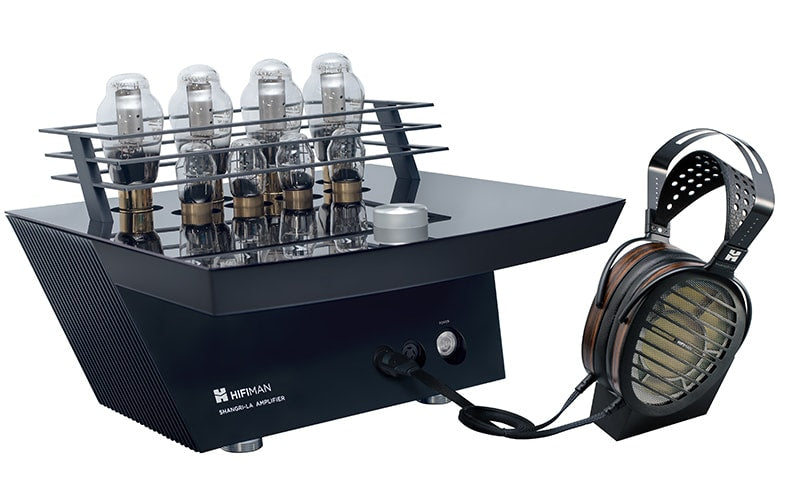
Cost-no-object headphone listening: the HIFIMAN Shangri-La.
Obtaining a private listening appointment, I was able to meet with Dr. Bian to listen to his SHANGRI-LA Jr. electrostatic headphones and tube amp package unit ($8,000). With a range of classical and jazz SACD files from which to choose, the smoothness, detail and sense of presence from the SHANGRI-LA Jr. system was stunning. Every note was articulated and the three dimensionality of the space was natural and free of DSP artifacts. Perhaps even more remarkable was HIFIMAN’s latest product, the DEVA planar-magnetic over-ear Bluetooth headphones at $299. Designed as HIFIMAN’s entry-level audiophile headphones, its bang for the buck quality impressed me in the same way as the AME Custom J1-U IEM (see Part One of the CanJam NYC 2020 show report). Punching way above their weight class, the open-backed DEVA comes with a 6.5mm cable connection and a dedicated Bluetooth dongle for wireless use. The DEVA easily rivaled comparable Bluetooth headphones from the more established European and American brands in sound quality, even those at higher prices. Listening to a mix of ambient rock from David Sylvian, solo jazz piano from Keith Jarrett and hard rock from the Foo Fighters, the DEVA complemented the music across all three genres with none of the sterility that some Bluetooth models sometimes exhibit due to signal compression or other factors. The dongle itself is a remarkable design. It supports hi-res LDAC and aptX HD and up to 24bit/192 kHz (via USB) and 24bit/96 kHz (from Bluetooth). Its built-in 2-channel DAC/filter and 1-watt per channel amp are probably a big part of its sonic excellence. Dr. Fang will have a likely winner on his hands with DEVA, given the popularity of Bluetooth and what I and others are seeing as a new trend back towards improved fidelity.
A DEVA that won't misbehave from HIFIMAN.
For high-end headphones in general one of the newer driver materials being touted for its sterling audio reproduction qualities is the rare earth metal beryllium. At roughly $50.00 per gram, it is a difficult and costly metal to shape, due to scarcity and associated toxicity in processing. Nevertheless, beryllium is yielding the results that many headphone designers are seeking: significantly reduced distortion due to the metal’s stiffness to thickness ratio, while having the potential to deliver superior sound reproduction over conventional driver materials. China’s global supremacy in the rare earth metals mining industry is unchallenged. Through its domestic deposits and exclusive international mining contracts in other countries, China controls close to 90% of the world’s rare earth metals deposits. This is a strategically enormous advantage for Chinese headphone manufacturers utilizing beryllium in their designs. While ZMF’s $2,500 Vérité headphones use vapor-deposited beryllium drivers and AME uses beryllium coated drivers on some of their IMEs, Head-Fi.org sponsor Dunu created a big buzz at CanJam with the release of their LUNA ($1,699) IEM. The LUNA contains a single sheet diaphragm made entirely of pure “acoustic grade” beryllium. Dunu’s past 17 years as an audiophile headphones manufacturer have established its reputation for excellent products. But it soon became clear to me that the LUNA was an engineering and design achievement comparable to the 1969 Apollo 11 moon landing.
Earthly companion: DUNU's new LUNA.
Dunu’s Executive Director of Global Strategy and Management Tom Tsai spoke in detail about the R&D work that contributed to the making of the LUNA. In addition to the beryllium diaphragm, the earpiece shell is constructed of titanium alloy. Tsai explained that the inspiration for the aesthetic design of LUNA came from the Apollo 11 moon landing. The asymmetric lip shape, circular faceplate, concentric topographic map-like swirls and coloring were all related to the “moon” theme, with even the colors selected to match NASA photos of phases of the moon. The LUNA sounded, not surprisingly, like an IEM version of the ZMF Vérité: lush, enhanced and richer sounds from familiar musical source content. If this is a common characteristic of beryllium (and not merely the result of design similarities between the two models), it is no wonder why the metal is so highly regarded for audiophile earphones design. The fact that Dunu can sell a pure beryllium driver-equipped LUNA IEM at $1,699 reflects, at least in part, the reduced access cost Chinese companies have to rare earth metals over their international rivals. The aggressive dedication to R&D from Chinese companies like Dunu and HIFIMAN may likely result in new industry standards, much like the way Samsung’s Galaxy phones set the Android standard. These advances should continue to prosper, even in the wake of international emergency setbacks like Covid-19 that can halt trade. CanJam NYC 2020 was an experience that certainly exceeded my expectations. It gave me a new and greater appreciation for how old and new tech can be combined for better listening experiences than what either old school tubes or cutting-edge digital might achieve individually.

More from Issue 107

View All Articles in Issue 107

Search Copper Magazine

#225 Capital Audiofest 2025: Must-See Stereo, Part One by Frank Doris Dec 01, 2025 #225 Otis Taylor and the Electrics Delivers a Powerful Set of Hypnotic Modern Blues by Frank Doris Dec 01, 2025 #225 A Christmas Miracle by B. Jan Montana Dec 01, 2025 #225 T.H.E. Show New York 2025, Part Two: Plenty to See, Hear, and Enjoy by Frank Doris Dec 01, 2025 #225 Underappreciated Artists, Part One: Martin Briley by Rich Isaacs Dec 01, 2025 #225 Rock and Roll is Here to Stay by Wayne Robins Dec 01, 2025 #225 A Lifetime of Holiday Record (and CD) Listening by Rudy Radelic Dec 01, 2025 #225 Little Feat: Not Saying Goodbye, Not Yet by Ray Chelstowski Dec 01, 2025 #225 How to Play in a Rock Band, Part 18: Dealing With Burnout by Frank Doris Dec 01, 2025 #225 The People Who Make Audio Happen: CanJam SoCal 2025 by Harris Fogel Dec 01, 2025 #225 Chicago’s Sonic Sanctuaries: Four Hi‑Fi Listening Bars Channeling the Jazz‑Kissa Spirit by Olivier Meunier-Plante Dec 01, 2025 #225 From The Audiophile’s Guide: Controlling Bass Frequencies Through Membrane Absorbers (and How to Build Your Own) by Paul McGowan Dec 01, 2025 #225 Your Editor’s Tips for Attending Audio Shows by Frank Doris Dec 01, 2025 #225 PS Audio in the News by Frank Doris Dec 01, 2025 #225 Back to My Reel-to-Reel Roots, Part 24 by Ken Kessler Dec 01, 2025 #225 Holiday Music by Frank Doris Dec 01, 2025 #225 Puppy Prognostication by Peter Xeni Dec 01, 2025 #225 How to Post Comments on Copper by Frank Doris Dec 01, 2025 #225 Living Color by Rudy Radelic Dec 01, 2025 #224 T.H.E. Show New York 2025, Part One: A New Beginning by Frank Doris Nov 03, 2025 #224 Fool’s Leap of Faith is the Extraordinary Octave Records Debut from Singer/Songwriter Tyler Burba and Visit by Frank Doris Nov 03, 2025 #224 The Beatles’ “Aeolian Cadences.” What? by Wayne Robins Nov 03, 2025 #224 Persona Non Grata by B. Jan Montana Nov 03, 2025 #224 Talking With Recording Engineer Barry Diament of Soundkeeper Recordings, Part Two by Frank Doris Nov 03, 2025 #224 B Sides, B Movies, and Beware of Zombies by Rudy Radelic Nov 03, 2025 #224 The Burn-In Chronicles: 1,000 Hours to Sonic Salvation by Olivier Meunier-Plante Nov 03, 2025 #224 A Conversation With Mat Weisfeld of VPI Industries by Joe Caplan Nov 03, 2025 #224 Blues-Rocker Kenny Wayne Shepherd Celebrates 30 Years of Ledbetter Heights by Ray Chelstowski Nov 03, 2025 #224 Playing in a Rock Band, 17: When Good Gigs Go Bad, Part Two by Frank Doris Nov 03, 2025 #224 From The Audiophile’s Guide: Dealing with Odd-Shaped Rooms by Paul McGowan Nov 03, 2025 #224 TEAC’s TN-3B-SE Turntable Plays Bob Dylan by Howard Kneller Nov 03, 2025 #224 PS Audio in the News by Frank Doris Nov 03, 2025 #224 Lost in Translation by Peter Xeni Nov 03, 2025 #224 Reel-to-Reel Roots, Part 23: Better Than Rice Krispies by Ken Kessler Nov 03, 2025 #224 I Bring Joy! by Frank Doris Nov 03, 2025 #224 Screen Test by Rich Isaacs Nov 03, 2025 #224 How to Post Comments on Copper by Frank Doris Nov 03, 2025 #132 Dr. Patrick Gleeson: The Interview, Part Two by Rich Isaacs Oct 07, 2025 #223 World Fusion Meets Flamenco in Gratitude from Steve Mullins and Rim of the Well by Frank Doris Oct 06, 2025 #223 Judging Albums by Their Covers by Rich Isaacs Oct 06, 2025 #223 Recent Arrivals and 12-inch Royalty by Rudy Radelic Oct 06, 2025 #223 Summer of Creem, Part Two by Wayne Robins Oct 06, 2025 #223 Recording Engineer Barry Diament of Soundkeeper Recordings: Striving for Natural Sound by Frank Doris Oct 06, 2025 #223 Tea on the Terrace by B. Jan Montana Oct 06, 2025 #223 How Good Can Car Audio Get? by Joe Caplan Oct 06, 2025 #223 The Advantages of a Dedicated Listening Room by Paul McGowan Oct 06, 2025 #223 1! 2! 3! 4! Surrounded by the Ramones in Dolby Atmos! by Frank Doris Oct 06, 2025

CanJam NYC 2020 Show Report, Part Two

CanJam NYC 2020 Show Report, Part Two
Part One of this report appeared in Issue 106. CanJam NYC 2020 took place on February 15 – 16 at New York’s Marriott Marquis and was well-attended by a diverse range of people young and old. The global CanJam shows are focused on headphones and associated gear – portable players, headphone amps, DACs, cables and accessories.
A whole lotta listenin' goin' on at the Focal exhibit.
The following are descriptions of some of the products that left the biggest impressions on me, along with a selection of product shots: Tube Amp Retro Chic While microprocessors and miniaturization of components has led to smaller DACs and headphone amplifiers, with some about the size of a pack of cigarettes, CanJam NYC 2020 had a surprisingly large number of exhibitors promoting dedicated tube amps for headphone listening. Hearkening back to the 1950s and 1960s, vacuum tubes were largely replaced by transistors, semiconductors, and op-amps by the 1970s. Among the few industries still using vacuum tubes are high-voltage RF, select military technology equipment, guitar and other musical instrument amplifier manufacturers, some pro audio gear, and some high-end audio companies like McIntosh, Audio Research, VAC, VTL and a number of others. Eastern Europe and China are the only two regions remaining with any large-scale tube manufacturing factories, as Communist countries kept much of their tube-powered equipment in circulation long after tubes were mostly phased out in the West.
Absolutely stunning: the Manley Labs Absolute Headphone Amplifier.
I’ll admit that the presence of tube-powered headphone amps at CanJam NYC 2020 was a surprise to me, as this was my first CanJam. But given the more focused listening demanded by wearing headphones, the desire for the warmer sound of tube amplification to counter the brittle sterility of some digital music sources makes logical sense. In addition to its headphones, ZMF’s Pendant Amp ($1,999.99), sporting EL-84 and 12AX7 power and preamp tubes similar to a Vox guitar amp, was a somewhat appropriate, rather than anachronistic complement to the furniture-quality hardwood ZMF headphones on exhibit. The Pendant seemed to have a relatively transparent sound with a nice dose of tube warmth. The Pendant served as a high quality neutral sound source reference, with its volume knob being the only variable control on the unit.
Th ZMF Pendant headphone amplifier.
Well known for their audiophile tube amps, Serbia’s Auris Audio showcased its latest product, the Euterpe ($1,699). A multi-functional unit that can serve as a pure tube headphone amp, a DAC, or a preamp, the nearly 1-watt Euterpe comes housed in an attractive wooden base that can also double as a headphone stand. With USB, RCA, and 6.3mm stereo input and output jacks, the Euterpe can connect to computers, other DACs or other sound sources.
Striking design, inviting sound: the Euterpe from Auris Audio.
The warmth of the tube-powered Euterpe was evident from the get go. The only criticism I had was that the sound source was a notebook computer with a jazz Muzak playlist, so listening to other genres of music for the basis of comparison was not possible. Auris also was promoting a new spinoff brand subsidiary: EarMen. Located in Chicago, EarMen is a marketing arm for Auris’ portable DACs and headphone amps in a more affordable price range. The EarMen $249 Tr-Amp (a headphone amp/DAC) and humorously named Donald DAC ($99) standalone DAC gathered a small crowd waiting to try them out.
Equinox had an attention-getting display.
Based in Maryland, Corsonus is the brainchild of young entrepreneur Justin Chow. A former youth orchestra violinist, Chow became interested in headphones while in high school and got his start in electronics and DIY audio customization while in college. He only started learning the craft of machining in 2018!
Justin Chow of Corsonus.
The Kodachi ($3,600) is a fully DC-coupled, tube/solid state hybrid amplifier. In the driver stage, it uses two 6SN7GTB tubes (and variants such as the Psvane CV181-Z). The power supplies including the tube heater supply are all fully-regulated, low-noise designs. The amp is available with a number of power tube, gain and other options.
The Corsonus Kodachi.
The chassis for both the amp and the seperate power supply are designed and milled by Chow out of a large block of billet aluminum. The power supply starts out at 15lb. and the amp is about 12lb. The separate chassis allow better thermal stability and heat dissipation. The Kodachi is designed with special consideration to being able to drive electrostatic headphones. Comparing the different tube configurations available for the amp yielded very discernable differences in the same music references, which included excerpts from orchestral recordings, jazz from Snarky Puppy, and Led Zeppelin’s “Achilles Last Stand.” Transparency in the highs, midrange depth, and bass response and impact were all refined but altered for different tastes, not unlike using a Pultec Tube EQ-1 graphic equalizer to shape the sound in a recording studio. Overall, a praiseworthy debut from a talented designer who clearly loves what he does. The Dragon in the Room One indication that a noticeable trend in an industry sector that has become too big to ignore is when it gets covered by conventional news outlets. In The Wall Street Journal’s February 22, 2020 “Gear & Gadgets” section, the entire article by Matthew Kronsberg was devoted to “Chi-Fi” - the constellation of Chinese-branded gearthat focuses on headphones, IEMs, DACs, headphone amps, and associated accessories. Although "Made in China" high quality levels are usually only associated with Western brand name electronics, CamJam featured many Chinese brands whose design, features, and performance easily rivalled those of their more expensive, better known competitors. CanJam NYC 2020 had several rooms that were managed by Chinese dealer reps who were fluent in Chinese and English. They literally had so many tables festooned with the latest gear from so many different Chinese manufacturers that even the reps got momentarily confused as to which information went with which of their brands, due to their similarities of some of the products in appearance and use. At least a dozen different smartphone-sized or smaller rechargeable DAC/headphone amps were on one table and they all looked like their chassis all came from the same factory, despite having different specs and subtly different sounds. No stranger to the audiophile arena, Head-Fi.org sponsor HIFIMAN was launched in New York 13 years ago by Dr. Fang Bian. HIFIMAN’s Reference line of audiophile products, including electrostatic and planar magnetic headphones, tube amps, and streaming audio devices, have been favorably reviewed in Stereophile, Forbes, HiFi+, WIRED, and TIME. The HIFIMAN product line also includes portable players, dynamic-driver closed- and open-back headphones, IEMs (in-ear monitors), digital-amplifier motherboard cards, and digital amps and DAC units in their Reference, Premium and Hi-Fi product lines. Prices range from $49 for the RE300i, RE300a and RE300h earbuds to $6,000 for the SUSVARA over-ear planar magnetic headphones. (The flagship SHANGRI-LA electrostatic headphone system, which includes headphones and a tube amplifier, doesn’t have a published price.)
Cost-no-object headphone listening: the HIFIMAN Shangri-La.
Obtaining a private listening appointment, I was able to meet with Dr. Bian to listen to his SHANGRI-LA Jr. electrostatic headphones and tube amp package unit ($8,000). With a range of classical and jazz SACD files from which to choose, the smoothness, detail and sense of presence from the SHANGRI-LA Jr. system was stunning. Every note was articulated and the three dimensionality of the space was natural and free of DSP artifacts. Perhaps even more remarkable was HIFIMAN’s latest product, the DEVA planar-magnetic over-ear Bluetooth headphones at $299. Designed as HIFIMAN’s entry-level audiophile headphones, its bang for the buck quality impressed me in the same way as the AME Custom J1-U IEM (see Part One of the CanJam NYC 2020 show report). Punching way above their weight class, the open-backed DEVA comes with a 6.5mm cable connection and a dedicated Bluetooth dongle for wireless use. The DEVA easily rivaled comparable Bluetooth headphones from the more established European and American brands in sound quality, even those at higher prices. Listening to a mix of ambient rock from David Sylvian, solo jazz piano from Keith Jarrett and hard rock from the Foo Fighters, the DEVA complemented the music across all three genres with none of the sterility that some Bluetooth models sometimes exhibit due to signal compression or other factors. The dongle itself is a remarkable design. It supports hi-res LDAC and aptX HD and up to 24bit/192 kHz (via USB) and 24bit/96 kHz (from Bluetooth). Its built-in 2-channel DAC/filter and 1-watt per channel amp are probably a big part of its sonic excellence. Dr. Fang will have a likely winner on his hands with DEVA, given the popularity of Bluetooth and what I and others are seeing as a new trend back towards improved fidelity.
A DEVA that won't misbehave from HIFIMAN.
For high-end headphones in general one of the newer driver materials being touted for its sterling audio reproduction qualities is the rare earth metal beryllium. At roughly $50.00 per gram, it is a difficult and costly metal to shape, due to scarcity and associated toxicity in processing. Nevertheless, beryllium is yielding the results that many headphone designers are seeking: significantly reduced distortion due to the metal’s stiffness to thickness ratio, while having the potential to deliver superior sound reproduction over conventional driver materials. China’s global supremacy in the rare earth metals mining industry is unchallenged. Through its domestic deposits and exclusive international mining contracts in other countries, China controls close to 90% of the world’s rare earth metals deposits. This is a strategically enormous advantage for Chinese headphone manufacturers utilizing beryllium in their designs. While ZMF’s $2,500 Vérité headphones use vapor-deposited beryllium drivers and AME uses beryllium coated drivers on some of their IMEs, Head-Fi.org sponsor Dunu created a big buzz at CanJam with the release of their LUNA ($1,699) IEM. The LUNA contains a single sheet diaphragm made entirely of pure “acoustic grade” beryllium. Dunu’s past 17 years as an audiophile headphones manufacturer have established its reputation for excellent products. But it soon became clear to me that the LUNA was an engineering and design achievement comparable to the 1969 Apollo 11 moon landing.
Earthly companion: DUNU's new LUNA.
Dunu’s Executive Director of Global Strategy and Management Tom Tsai spoke in detail about the R&D work that contributed to the making of the LUNA. In addition to the beryllium diaphragm, the earpiece shell is constructed of titanium alloy. Tsai explained that the inspiration for the aesthetic design of LUNA came from the Apollo 11 moon landing. The asymmetric lip shape, circular faceplate, concentric topographic map-like swirls and coloring were all related to the “moon” theme, with even the colors selected to match NASA photos of phases of the moon. The LUNA sounded, not surprisingly, like an IEM version of the ZMF Vérité: lush, enhanced and richer sounds from familiar musical source content. If this is a common characteristic of beryllium (and not merely the result of design similarities between the two models), it is no wonder why the metal is so highly regarded for audiophile earphones design. The fact that Dunu can sell a pure beryllium driver-equipped LUNA IEM at $1,699 reflects, at least in part, the reduced access cost Chinese companies have to rare earth metals over their international rivals. The aggressive dedication to R&D from Chinese companies like Dunu and HIFIMAN may likely result in new industry standards, much like the way Samsung’s Galaxy phones set the Android standard. These advances should continue to prosper, even in the wake of international emergency setbacks like Covid-19 that can halt trade. CanJam NYC 2020 was an experience that certainly exceeded my expectations. It gave me a new and greater appreciation for how old and new tech can be combined for better listening experiences than what either old school tubes or cutting-edge digital might achieve individually.

0 comments

Leave a comment

0 Comments

Your avatar

Loading comments...

🗑️ Delete Comment

Enter moderator password to delete this comment: