COPPER

A PS Audio Publication

Issue 47 • Free Online Magazine

Issue 47 TWISTED SYSTEMS

Brit Psychedelics

Brit Psychedelics

First a word about what/who is not on my Psychedelic Shootout  list:

Fever Tree—debut album

Yes, I had the album, and yes, I played it fairly often… but it did not make any kind of lasting impression.

Rotary Connection—debut album

See above.

These, and others, came and went. Such was this amazing year. Why any one album stands out is strictly in the ears of the listener. Just because it isn’t on my list doesn’t make the music from that year is any less relevant. I only had the time to digest what I digested. I do, however, want to thank everyone who reads my columns for their observations and opinions.

And now….

Jimi Hendrix, Are You Experienced
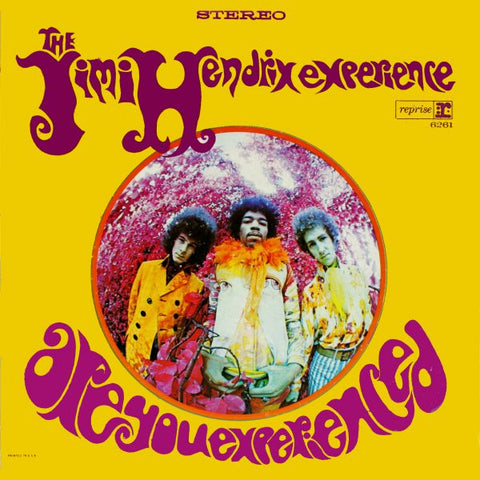
So, first off, is Jimi a US artist, or a British artist?

The world of experience (no pun intended) of both locations played equal parts in this story.

In terms of his debut album Are You Experienced, the album was created and recorded in the UK under the watchful eye of manager Chas Chandler, late of the Animals, who discovered Jimi in the summer of 1966, playing  in a house band called Jimi James & The Blue Flames at the Cafe Wha? in NY’s Greenwich Village. Another house band at the Wha? was The Glass Stairway. The Glass Stairway was from my neighborhood on the Upper West Side of Manhattan. I had auditioned in my own band, The Prophets for the Cafe Wha? gig 6 months earlier but didn’t get the gig; I did however keep the phone number of the owner, and got the Glass Stairway their audition in the spring of 1966. I was 14 years old at the time.

Frederick Rivera, a local drummer and friend to both the members of the Glass Stairway and me, remembers the day that Chas came in and sat with Hendrix at a corner table. Frederick was also sitting with Jimi shortly before Chas came in. Apparently the club was buzzing about it all day. It was a meeting that would change pop music forever.

Shortly after that meeting, Jimi left for England.

Chas put all the pieces together, including bassist Noel Redding and drummer Mitch Mitchell. He also brought in a young British engineer named Eddie Kramer. The relationship between Kramer and Hendrix has become legendary and Eddie, to this day, is the one person in charge of the musical legacy, in terms of being hired by Janie Hendrix to oversee the Hendrix tape archive.

I also hired Eddie Kramer to produce some of Twisted Sister’s earliest demos in NYC in 1979, recorded, in part, at the then-newly rebuilt Electric Lady Studios.

Eddie and I recently talked about the recording sessions of Are You Experienced.

Eddie remembers that Chas kept a very controlled atmosphere keeping his eye on the budget but, according to Kramer, in acknowledging Jimi’s extraordinary talent for playing and composing, Chandler  proclaimed the following:

“The rules are, there are no rules!”

And OMG, what an understatement.

Are You Experienced is such a marvel of guitar wizardry and sonic landscapes that, to this day, no one, and I mean no one, has come close to the mind-blowing sounds that Jimi (with Eddie Kramer) created.

Leo Fender had no idea that his Fender Stratocaster guitar, in the hands of this musical genius, could speak a language heretofore unheard of. For once, any hyperbole was, in reality, insufficient.  Married to a Marshall Amp (turned up to !!) and with a whammy bar, fuzztones and flangers, Jimi created a palette of aural interplanetary imagery.

As a 15 year old guitar player, I didn’t know what to make of it. It wasn’t blues based; it wasn’t rock as I knew it, either.

It was something else.

Guitar tones came out of my stereo that I just couldn’t fathom.

Yes there were songs with pretty melodies (‘Hey Joe”, “The Wind Cries Mary”). But songs like “Purple Haze”, “Manic Depression”, “Third Stone From The Sun”, “Foxey Lady”, and “Are You Experienced” were like nothing heard before.

This album was the opening salvo that brought the guitar into world and created millions of “air guitarists”.

This was sex with 6 strings.

This was what everything that could be forbidden would sound like if LSD were morphed into 6 metal strings!

Clapton knew it, Jeff Beck knew it, Pete Townshend knew it, Jimmy Page knew it.

This guy just made their lives miserable, and seemingly overnight, irrelevant.

The best story of Jimi’s effect on the entire British music “guitar hero” scene was a conversation between the singer Terry Reid and the Rolling Stones’ Brian Jones, overheard at the Bag O’ Nails club in London in early 1967. Jimi came and performed with his newly created band, The Jimi Hendrix Experience, one night at the behest of Chas Chandler.

John and Paul were there, as were Mick, Keith, and Brian. Y’know, just one of those legendary hip London nights in the mid sixties that we all drool over.

While passing Brian Jones, who was going to the bathroom, Terry said, “be careful that you don’t slip in the puddle near the stage when you go to your seat”. “Why?” asked Jones. “Did someone spill a drink?” “No,” replied Terry, “it’s from all the guitar players crying!”

Because the sounds of the album were so new, I was curious about the effect of LSD on the sessions.  Eddie Kramer told me that, as far as he remembers, acid did not come into Jimi’s world until after the Are You Experienced sessions.

Jack Bruce was asked to play with the Experience after Jimi came over and had jammed with him several times, but passed on it to join Cream— because in the Experience it was all Jimi, whereas with Cream, Jack would be singing lead, and writing nearly all of the material.

I had the opportunity several years ago to ask Jack what the difference was between playing with Eric and Jimi.

His response was among the best answers I have ever received, and when I recently told Eddie Kramer about this conversation, he agreed that it was incredibly perceptive on Jack’s part.

Jack said this to me:

“On any given night Eric was the more precise player, but Jimi was the only guitarist he ever played with that played the guitar like his brain was directly wired to his fretboard!”

That is the highest compliment that any musician can give to another one.

As far as its Psychedelic rating however, the combination of the cover art, the band’s clothing, the fact that a “brand of Owsley-created street LSD was named Purple Haze”, and most importantly, the extraordinary uniqueness of the music contained herein brings this album to a Psychedelic Factor:  9 out of 10

Next issue: Traffic’s Dear Mr. Fantasy Procol Harum’s debut, and Cream’s Disraeli Gears.

More from Issue 47

View All Articles in Issue 47

Search Copper Magazine

#227 Seth Lewis Gets in the Groove With Take a Look Around: a Tribute to the Meters by Frank Doris Feb 02, 2026 #227 Passport to Sound: May Anwar’s Audio Learning Experience for Young People by Frank Doris Feb 02, 2026 #227 Conjectures on Cosmic Consciousness by B. Jan Montana Feb 02, 2026 #227 The Big Takeover Turns 45 by Wayne Robins Feb 02, 2026 #227 Music and Chocolate: On the Sensory Connection by Joe Caplan Feb 02, 2026 #227 Singer/Songwriter Chris Berardo: Getting Wilder All the Time by Ray Chelstowski Feb 02, 2026 #227 The Earliest Stars of Country Music, Part One by Jeff Weiner Feb 02, 2026 #227 The Vinyl Beat Goes Down to Tijuana (By Way of Los Angeles), Part Two by Rudy Radelic Feb 02, 2026 #227 How to Play in a Rock Band, 20: On the Road With Blood, Sweat & Tears’ Guitarist Gabe Cummins by Frank Doris Feb 02, 2026 #227 From The Audiophile’s Guide: Audio Specs and Measuring by Paul McGowan Feb 02, 2026 #227 Our Brain is Always Listening by Peter Trübner Feb 02, 2026 #227 PS Audio in the News by PS Audio Staff Feb 02, 2026 #227 The Listening Chair: Sleek Style and Sound From the Luxman L3 by Howard Kneller Feb 02, 2026 #227 The Los Angeles and Orange County Audio Society Celebrates Its 32nd Anniversary, Honoring David and Sheryl Lee Wilson and Bernie Grundman by Harris Fogel Feb 02, 2026 #227 Back to My Reel-to-Reel Roots, Part 26: Half Full – Not Half Empty, Redux by Ken Kessler Feb 02, 2026 #227 That's What Puzzles Us... by Frank Doris Feb 02, 2026 #227 Record-Breaking by Peter Xeni Feb 02, 2026 #227 The Long and Winding Road by B. Jan Montana Feb 02, 2026 #226 JJ Murphy’s Sleep Paralysis is a Genre-Bending Musical Journey Through Jazz, Fusion and More by Frank Doris Jan 05, 2026 #226 Stewardship by Consent by B. Jan Montana Jan 05, 2026 #226 Food, Music, and Sensory Experience: An Interview With Professor Jonathan Zearfoss of the Culinary Institute of America by Joe Caplan Jan 05, 2026 #226 Studio Confidential: A Who’s Who of Recording Engineers Tell Their Stories by Frank Doris Jan 05, 2026 #226 Pilot Radio is Reborn, 50 Years Later: Talking With CEO Barak Epstein by Frank Doris Jan 05, 2026 #226 The Vinyl Beat Goes Down to Tijuana (By Way of Los Angeles), Part One by Rudy Radelic Jan 05, 2026 #226 Capital Audiofest 2025: Must-See Stereo, Part Two by Frank Doris Jan 05, 2026 #226 My Morning Jacket’s Carl Broemel and Tyler Ramsey Collaborate on Their Acoustic Guitar Album, Celestun by Ray Chelstowski Jan 05, 2026 #226 The People Who Make Audio Happen: CanJam SoCal 2025, Part Two by Harris Fogel Jan 05, 2026 #226 How to Play in a Rock Band, 19: Touring Can Make You Crazy, Part One by Frank Doris Jan 05, 2026 #226 Linda Ronstadt Goes Bigger by Wayne Robins Jan 05, 2026 #226 From The Audiophile’s Guide: Active Room Correction and Digital Signal Processing by Paul McGowan Jan 05, 2026 #226 PS Audio in the News by Frank Doris Jan 05, 2026 #226 Back to My Reel-to-Reel Roots, Part 25: Half-Full, Not Empty by Ken Kessler Jan 05, 2026 #226 Happy New Year! by Frank Doris Jan 05, 2026 #226 Turn It Down! by Peter Xeni Jan 05, 2026 #226 Ghost Riders by James Schrimpf Jan 05, 2026 #226 A Factory Tour of Audio Manufacturer German Physiks by Markus "Marsu" Manthey Jan 04, 2026 #225 Capital Audiofest 2025: Must-See Stereo, Part One by Frank Doris Dec 01, 2025 #225 Otis Taylor and the Electrics Delivers a Powerful Set of Hypnotic Modern Blues by Frank Doris Dec 01, 2025 #225 A Christmas Miracle by B. Jan Montana Dec 01, 2025 #225 T.H.E. Show New York 2025, Part Two: Plenty to See, Hear, and Enjoy by Frank Doris Dec 01, 2025 #225 Underappreciated Artists, Part One: Martin Briley by Rich Isaacs Dec 01, 2025 #225 Rock and Roll is Here to Stay by Wayne Robins Dec 01, 2025 #225 A Lifetime of Holiday Record (and CD) Listening by Rudy Radelic Dec 01, 2025 #225 Little Feat: Not Saying Goodbye, Not Yet by Ray Chelstowski Dec 01, 2025 #225 How to Play in a Rock Band, Part 18: Dealing With Burnout by Frank Doris Dec 01, 2025 #225 The People Who Make Audio Happen: CanJam SoCal 2025 by Harris Fogel Dec 01, 2025 #225 Chicago’s Sonic Sanctuaries: Four Hi‑Fi Listening Bars Channeling the Jazz‑Kissa Spirit by Olivier Meunier-Plante Dec 01, 2025

Brit Psychedelics

Brit Psychedelics

First a word about what/who is not on my Psychedelic Shootout  list:

Fever Tree—debut album

Yes, I had the album, and yes, I played it fairly often… but it did not make any kind of lasting impression.

Rotary Connection—debut album

See above.

These, and others, came and went. Such was this amazing year. Why any one album stands out is strictly in the ears of the listener. Just because it isn’t on my list doesn’t make the music from that year is any less relevant. I only had the time to digest what I digested. I do, however, want to thank everyone who reads my columns for their observations and opinions.

And now….

Jimi Hendrix, Are You Experienced

So, first off, is Jimi a US artist, or a British artist?

The world of experience (no pun intended) of both locations played equal parts in this story.

In terms of his debut album Are You Experienced, the album was created and recorded in the UK under the watchful eye of manager Chas Chandler, late of the Animals, who discovered Jimi in the summer of 1966, playing  in a house band called Jimi James & The Blue Flames at the Cafe Wha? in NY’s Greenwich Village. Another house band at the Wha? was The Glass Stairway. The Glass Stairway was from my neighborhood on the Upper West Side of Manhattan. I had auditioned in my own band, The Prophets for the Cafe Wha? gig 6 months earlier but didn’t get the gig; I did however keep the phone number of the owner, and got the Glass Stairway their audition in the spring of 1966. I was 14 years old at the time.

Frederick Rivera, a local drummer and friend to both the members of the Glass Stairway and me, remembers the day that Chas came in and sat with Hendrix at a corner table. Frederick was also sitting with Jimi shortly before Chas came in. Apparently the club was buzzing about it all day. It was a meeting that would change pop music forever.

Shortly after that meeting, Jimi left for England.

Chas put all the pieces together, including bassist Noel Redding and drummer Mitch Mitchell. He also brought in a young British engineer named Eddie Kramer. The relationship between Kramer and Hendrix has become legendary and Eddie, to this day, is the one person in charge of the musical legacy, in terms of being hired by Janie Hendrix to oversee the Hendrix tape archive.

I also hired Eddie Kramer to produce some of Twisted Sister’s earliest demos in NYC in 1979, recorded, in part, at the then-newly rebuilt Electric Lady Studios.

Eddie and I recently talked about the recording sessions of Are You Experienced.

Eddie remembers that Chas kept a very controlled atmosphere keeping his eye on the budget but, according to Kramer, in acknowledging Jimi’s extraordinary talent for playing and composing, Chandler  proclaimed the following:

“The rules are, there are no rules!”

And OMG, what an understatement.

Are You Experienced is such a marvel of guitar wizardry and sonic landscapes that, to this day, no one, and I mean no one, has come close to the mind-blowing sounds that Jimi (with Eddie Kramer) created.

Leo Fender had no idea that his Fender Stratocaster guitar, in the hands of this musical genius, could speak a language heretofore unheard of. For once, any hyperbole was, in reality, insufficient.  Married to a Marshall Amp (turned up to !!) and with a whammy bar, fuzztones and flangers, Jimi created a palette of aural interplanetary imagery.

As a 15 year old guitar player, I didn’t know what to make of it. It wasn’t blues based; it wasn’t rock as I knew it, either.

It was something else.

Guitar tones came out of my stereo that I just couldn’t fathom.

Yes there were songs with pretty melodies (‘Hey Joe”, “The Wind Cries Mary”). But songs like “Purple Haze”, “Manic Depression”, “Third Stone From The Sun”, “Foxey Lady”, and “Are You Experienced” were like nothing heard before.

This album was the opening salvo that brought the guitar into world and created millions of “air guitarists”.

This was sex with 6 strings.

This was what everything that could be forbidden would sound like if LSD were morphed into 6 metal strings!

Clapton knew it, Jeff Beck knew it, Pete Townshend knew it, Jimmy Page knew it.

This guy just made their lives miserable, and seemingly overnight, irrelevant.

The best story of Jimi’s effect on the entire British music “guitar hero” scene was a conversation between the singer Terry Reid and the Rolling Stones’ Brian Jones, overheard at the Bag O’ Nails club in London in early 1967. Jimi came and performed with his newly created band, The Jimi Hendrix Experience, one night at the behest of Chas Chandler.

John and Paul were there, as were Mick, Keith, and Brian. Y’know, just one of those legendary hip London nights in the mid sixties that we all drool over.

While passing Brian Jones, who was going to the bathroom, Terry said, “be careful that you don’t slip in the puddle near the stage when you go to your seat”. “Why?” asked Jones. “Did someone spill a drink?” “No,” replied Terry, “it’s from all the guitar players crying!”

Because the sounds of the album were so new, I was curious about the effect of LSD on the sessions.  Eddie Kramer told me that, as far as he remembers, acid did not come into Jimi’s world until after the Are You Experienced sessions.

Jack Bruce was asked to play with the Experience after Jimi came over and had jammed with him several times, but passed on it to join Cream— because in the Experience it was all Jimi, whereas with Cream, Jack would be singing lead, and writing nearly all of the material.

I had the opportunity several years ago to ask Jack what the difference was between playing with Eric and Jimi.

His response was among the best answers I have ever received, and when I recently told Eddie Kramer about this conversation, he agreed that it was incredibly perceptive on Jack’s part.

Jack said this to me:

“On any given night Eric was the more precise player, but Jimi was the only guitarist he ever played with that played the guitar like his brain was directly wired to his fretboard!”

That is the highest compliment that any musician can give to another one.

As far as its Psychedelic rating however, the combination of the cover art, the band’s clothing, the fact that a “brand of Owsley-created street LSD was named Purple Haze”, and most importantly, the extraordinary uniqueness of the music contained herein brings this album to a Psychedelic Factor:  9 out of 10

Next issue: Traffic’s Dear Mr. Fantasy Procol Harum’s debut, and Cream’s Disraeli Gears.

0 comments

Leave a comment

0 Comments

Your avatar

Loading comments...

🗑️ Delete Comment

Enter moderator password to delete this comment:

✏️ Edit Comment

Enter your email to verify ownership: