COPPER

A PS Audio Publication

Issue 40 • Free Online Magazine

Issue 40 VINTAGE WHINE

Bang & Olufsen, Part 1

Bang & Olufsen, Part 1

In 2013 I was fortunate to have a consulting gig with Bang & Olufsen, in Denmark. Drawing upon that experience, this piece will be partly travelogue, partly the usual brand  history, taking advantage of a unique collection of B & O products.

Struer is a small town of 10,000 or so in the Jutland peninsula of Denmark, located about as far away from Copenhagen as one can get and still be in Denmark. The first lesson learned by English-speakers visiting Denmark: those words in Danish may look similar to many words in English, but they are pronounced nothing like you’d expect. “Jutland”, for example, is pronounced something like “Yoolund”, with the last syllable simultaneously spat and hiccupped. There are swallows and gulps and plosives in unexpected places, the effect being like a more laid-back form of German. Sub-lesson #1: don’t ever say that to a Dane. They won’t like the comparison.

The second lesson learned by English-speakers visiting Denmark: nearly everyone speaks English. Thank God.

For an American traveling to Struer, the likeliest route is to fly into Frankfurt, and then take a puddle-jumper to Billund, in Denmark. The reason most folks fly into Billund is to visit the nearby Lego factory and the Legoland resort. Don’t laugh:  Lego’s business may be the business of fun, but it’s the world’s largest toy company, with revenues of over $5 billion. With a “b”.

The second reason travelers fly into Billund was my reason: to visit Bang & Olufsen in Struer, about 100 kilometers away. The drive meanders through a pastoral countryside, green meadows filled with herds of spotted cows, boundaries marked by tall fir trees. It was gray and overcast upon my arrival, and it finally hit me why the countryside seemed intensely familiar:  it looked just like southern Minnesota, where I grew up.

Aside from the windmills, it could be Minnesota. En route to Struer from Billund.

And that of course begs the question: how did Danes travel halfway around the world to find a place that looked just like home? Very weird.

Bang & Olufsen was founded in 1925 by Peter Bang and Svend Olufsen. One of their first products was a mains-power source for radio sets, designed to eliminate bulky, acid-filled batteries. In the 90+ years since then, B&O has become synonymous with elegant design. Though the factory employs fewer townsfolk than it once did, evidence of the company’s history in Struer can be seen everywhere. You’ll even see old B&O products in shop windows downtown.

A swoopy Beolit radio from the late '30's, in a shop window in downtown Struer.

…and an old Beocord disc-cutter in another shop window.

Given B&O’s long presence in Struer, it makes sense that the town museum houses a permanent exhibit of Bang & Olufsen products. It’s evident that right from the company’s beginnings, appearance and functionality of products was extremely important. Early products featured ornate detailing, while the ’30’s brought streamlined Deco styling, and even the occasional severe-looking Bauhaus design.
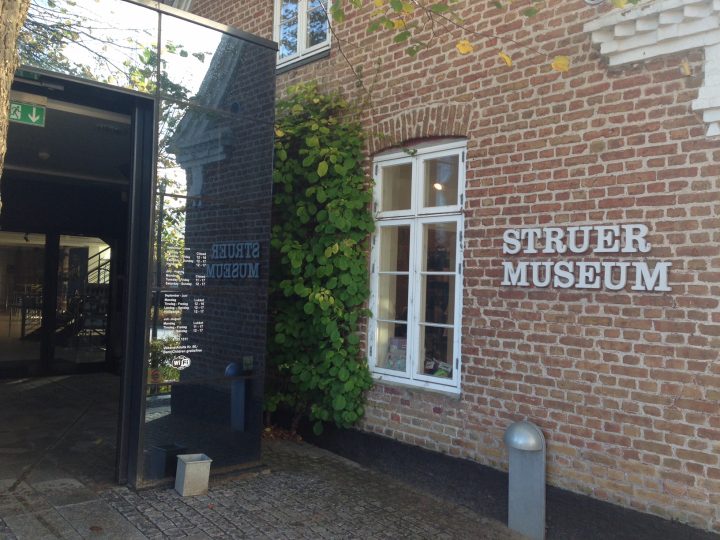
The town museum in Struer, home of the B&O historical collection.
"Radio and television factory that put Struer on the world map."
Entering the museum, a variety of B&O radios, large and small.
An early console phono-radio, with styling reminiscent of the American tombstone radios.
Cleaner styling, but still wood-y and warm.

This chrome and leather Bauhaus console was a sales failure—too austere for the market.

Early on, B&O produced a little of everything, including cinema systems including projectors, amplifiers, and loudspeakers with compression drivers and horns.

Even the projector was sleek and stylish.
Amplification for the cinema system. I think.
Compression driver and horn, also seen atop the page.

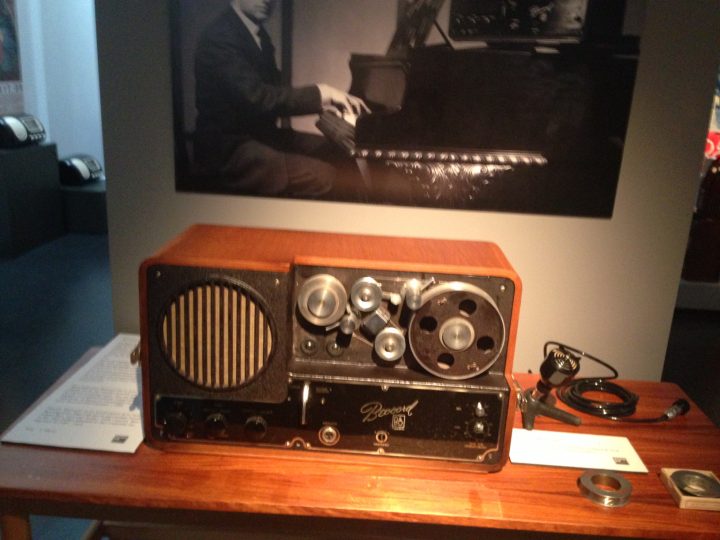
A beautiful Beocord wire recorder. A step towards the hi-fi era…sorta.

In the next Vintage Whine, we’ll follow B&O’s products  into the hi-fi age, and talk more about the company’s history.

[Apologies for the quality of photography: that was a couple of generations of iPhone ago, and the shots are fuzzier than expected. Mea culpa. —-Ed.]

More from Issue 40

View All Articles in Issue 40

Search Copper Magazine

#227 Seth Lewis Gets in the Groove With Take a Look Around: a Tribute to the Meters by Frank Doris Feb 02, 2026 #227 Passport to Sound: May Anwar’s Audio Learning Experience for Young People by Frank Doris Feb 02, 2026 #227 Conjectures on Cosmic Consciousness by B. Jan Montana Feb 02, 2026 #227 The Big Takeover Turns 45 by Wayne Robins Feb 02, 2026 #227 Music and Chocolate: On the Sensory Connection by Joe Caplan Feb 02, 2026 #227 Singer/Songwriter Chris Berardo: Getting Wilder All the Time by Ray Chelstowski Feb 02, 2026 #227 The Earliest Stars of Country Music, Part One by Jeff Weiner Feb 02, 2026 #227 The Vinyl Beat Goes Down to Tijuana (By Way of Los Angeles), Part Two by Rudy Radelic Feb 02, 2026 #227 How to Play in a Rock Band, 20: On the Road With Blood, Sweat & Tears’ Guitarist Gabe Cummins by Frank Doris Feb 02, 2026 #227 From The Audiophile’s Guide: Audio Specs and Measuring by Paul McGowan Feb 02, 2026 #227 Our Brain is Always Listening by Peter Trübner Feb 02, 2026 #227 PS Audio in the News by PS Audio Staff Feb 02, 2026 #227 The Listening Chair: Sleek Style and Sound From the Luxman L3 by Howard Kneller Feb 02, 2026 #227 The Los Angeles and Orange County Audio Society Celebrates Its 32nd Anniversary, Honoring David and Sheryl Lee Wilson and Bernie Grundman by Harris Fogel Feb 02, 2026 #227 Back to My Reel-to-Reel Roots, Part 26: Half Full – Not Half Empty, Redux by Ken Kessler Feb 02, 2026 #227 That's What Puzzles Us... by Frank Doris Feb 02, 2026 #227 Record-Breaking by Peter Xeni Feb 02, 2026 #227 The Long and Winding Road by B. Jan Montana Feb 02, 2026 #226 JJ Murphy’s Sleep Paralysis is a Genre-Bending Musical Journey Through Jazz, Fusion and More by Frank Doris Jan 05, 2026 #226 Stewardship by Consent by B. Jan Montana Jan 05, 2026 #226 Food, Music, and Sensory Experience: An Interview With Professor Jonathan Zearfoss of the Culinary Institute of America by Joe Caplan Jan 05, 2026 #226 Studio Confidential: A Who’s Who of Recording Engineers Tell Their Stories by Frank Doris Jan 05, 2026 #226 Pilot Radio is Reborn, 50 Years Later: Talking With CEO Barak Epstein by Frank Doris Jan 05, 2026 #226 The Vinyl Beat Goes Down to Tijuana (By Way of Los Angeles), Part One by Rudy Radelic Jan 05, 2026 #226 Capital Audiofest 2025: Must-See Stereo, Part Two by Frank Doris Jan 05, 2026 #226 My Morning Jacket’s Carl Broemel and Tyler Ramsey Collaborate on Their Acoustic Guitar Album, Celestun by Ray Chelstowski Jan 05, 2026 #226 The People Who Make Audio Happen: CanJam SoCal 2025, Part Two by Harris Fogel Jan 05, 2026 #226 How to Play in a Rock Band, 19: Touring Can Make You Crazy, Part One by Frank Doris Jan 05, 2026 #226 Linda Ronstadt Goes Bigger by Wayne Robins Jan 05, 2026 #226 From The Audiophile’s Guide: Active Room Correction and Digital Signal Processing by Paul McGowan Jan 05, 2026 #226 PS Audio in the News by Frank Doris Jan 05, 2026 #226 Back to My Reel-to-Reel Roots, Part 25: Half-Full, Not Empty by Ken Kessler Jan 05, 2026 #226 Happy New Year! by Frank Doris Jan 05, 2026 #226 Turn It Down! by Peter Xeni Jan 05, 2026 #226 Ghost Riders by James Schrimpf Jan 05, 2026 #226 A Factory Tour of Audio Manufacturer German Physiks by Markus "Marsu" Manthey Jan 04, 2026 #225 Capital Audiofest 2025: Must-See Stereo, Part One by Frank Doris Dec 01, 2025 #225 Otis Taylor and the Electrics Delivers a Powerful Set of Hypnotic Modern Blues by Frank Doris Dec 01, 2025 #225 A Christmas Miracle by B. Jan Montana Dec 01, 2025 #225 T.H.E. Show New York 2025, Part Two: Plenty to See, Hear, and Enjoy by Frank Doris Dec 01, 2025 #225 Underappreciated Artists, Part One: Martin Briley by Rich Isaacs Dec 01, 2025 #225 Rock and Roll is Here to Stay by Wayne Robins Dec 01, 2025 #225 A Lifetime of Holiday Record (and CD) Listening by Rudy Radelic Dec 01, 2025 #225 Little Feat: Not Saying Goodbye, Not Yet by Ray Chelstowski Dec 01, 2025 #225 How to Play in a Rock Band, Part 18: Dealing With Burnout by Frank Doris Dec 01, 2025 #225 The People Who Make Audio Happen: CanJam SoCal 2025 by Harris Fogel Dec 01, 2025 #225 Chicago’s Sonic Sanctuaries: Four Hi‑Fi Listening Bars Channeling the Jazz‑Kissa Spirit by Olivier Meunier-Plante Dec 01, 2025

Bang & Olufsen, Part 1

Bang & Olufsen, Part 1

In 2013 I was fortunate to have a consulting gig with Bang & Olufsen, in Denmark. Drawing upon that experience, this piece will be partly travelogue, partly the usual brand  history, taking advantage of a unique collection of B & O products.

Struer is a small town of 10,000 or so in the Jutland peninsula of Denmark, located about as far away from Copenhagen as one can get and still be in Denmark. The first lesson learned by English-speakers visiting Denmark: those words in Danish may look similar to many words in English, but they are pronounced nothing like you’d expect. “Jutland”, for example, is pronounced something like “Yoolund”, with the last syllable simultaneously spat and hiccupped. There are swallows and gulps and plosives in unexpected places, the effect being like a more laid-back form of German. Sub-lesson #1: don’t ever say that to a Dane. They won’t like the comparison.

The second lesson learned by English-speakers visiting Denmark: nearly everyone speaks English. Thank God.

For an American traveling to Struer, the likeliest route is to fly into Frankfurt, and then take a puddle-jumper to Billund, in Denmark. The reason most folks fly into Billund is to visit the nearby Lego factory and the Legoland resort. Don’t laugh:  Lego’s business may be the business of fun, but it’s the world’s largest toy company, with revenues of over $5 billion. With a “b”.

The second reason travelers fly into Billund was my reason: to visit Bang & Olufsen in Struer, about 100 kilometers away. The drive meanders through a pastoral countryside, green meadows filled with herds of spotted cows, boundaries marked by tall fir trees. It was gray and overcast upon my arrival, and it finally hit me why the countryside seemed intensely familiar:  it looked just like southern Minnesota, where I grew up.

Aside from the windmills, it could be Minnesota. En route to Struer from Billund.

And that of course begs the question: how did Danes travel halfway around the world to find a place that looked just like home? Very weird.

Bang & Olufsen was founded in 1925 by Peter Bang and Svend Olufsen. One of their first products was a mains-power source for radio sets, designed to eliminate bulky, acid-filled batteries. In the 90+ years since then, B&O has become synonymous with elegant design. Though the factory employs fewer townsfolk than it once did, evidence of the company’s history in Struer can be seen everywhere. You’ll even see old B&O products in shop windows downtown.

A swoopy Beolit radio from the late '30's, in a shop window in downtown Struer.

…and an old Beocord disc-cutter in another shop window.

Given B&O’s long presence in Struer, it makes sense that the town museum houses a permanent exhibit of Bang & Olufsen products. It’s evident that right from the company’s beginnings, appearance and functionality of products was extremely important. Early products featured ornate detailing, while the ’30’s brought streamlined Deco styling, and even the occasional severe-looking Bauhaus design.

The town museum in Struer, home of the B&O historical collection.
"Radio and television factory that put Struer on the world map."
Entering the museum, a variety of B&O radios, large and small.
An early console phono-radio, with styling reminiscent of the American tombstone radios.
Cleaner styling, but still wood-y and warm.

This chrome and leather Bauhaus console was a sales failure—too austere for the market.

Early on, B&O produced a little of everything, including cinema systems including projectors, amplifiers, and loudspeakers with compression drivers and horns.
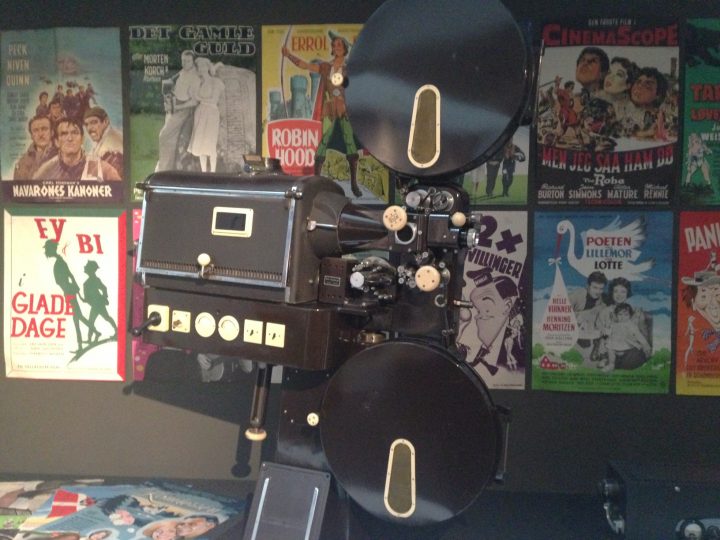
Even the projector was sleek and stylish.
Amplification for the cinema system. I think.
Compression driver and horn, also seen atop the page.

A beautiful Beocord wire recorder. A step towards the hi-fi era…sorta.

In the next Vintage Whine, we’ll follow B&O’s products  into the hi-fi age, and talk more about the company’s history.

[Apologies for the quality of photography: that was a couple of generations of iPhone ago, and the shots are fuzzier than expected. Mea culpa. —-Ed.]

0 comments

Leave a comment

0 Comments

Your avatar

Loading comments...

🗑️ Delete Comment

Enter moderator password to delete this comment:

✏️ Edit Comment

Enter your email to verify ownership: