COPPER

A PS Audio Publication

Issue 72 • Free Online Magazine

Issue 72 IN MY ROOM

5400 Hours of Fun

5400 Hours of Fun

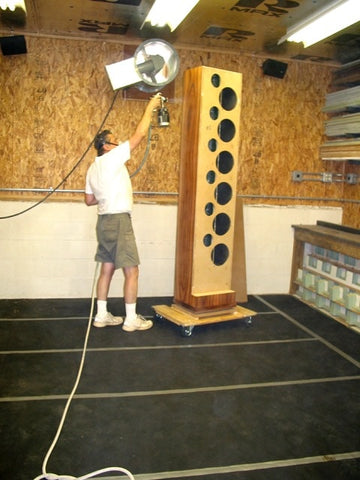
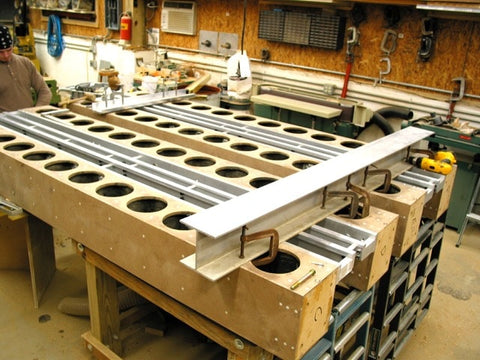
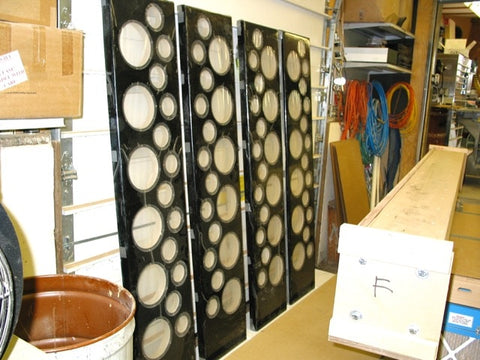
[Ken Fritz has abilities and ambition that put most of us to shame. Ken decided to build his own speakers—and the listening room for them. As you’ll see, he did everything in a big way. Having  produced tooling for the cast polymer baffle for the Thiel CS5, Ken says, ” I thought I’d cast baffles for this system also.” As one would. ;->

The scope of the work required to build both speakers and room will take at least two articles to convey—maybe three. Meanwhile: take a look, and be amazed. —-Ed.]

Building loudspeakers has always been a hobby. Back in my high school days, 1956 and on, I built a pair of ElectroVoice Patricians which I used for 25 years—and I still have all the drivers. After hearing an Infinity Quantum Line Source at Stereo Exchange, I realized Line Arrays were the way to go. Since then, I’ve built three iterations of line sources until I finally decided upon the system I now have.

Before embarking on the project, I spoke at a CES show with Igor Levitsky, who did design work for Bohlender Graebener. I asked him if I was making a mistake in design, and was relieved when he told me I was on the right track, and furthermore,  suggested the crossover points for the BG  RD50 drivers I chose to use. I also asked for a personal meeting with speaker designers Joe D’Appolito and Vance Dickason, together. I was concerned that my choice of drivers wouldn’t integrate properly; luckily, both were more than familiar with my choices and told me I couldn’t have made better ones. They did tell me, however, that I’d need to sit at least 16 feet from the speakers so that the cylindrical waveforms would integrate properly. In the finished room, the listening position is 26 feet from the speakers.

I used 16 15-inch metal cone drivers, sourced from Krell, from 60Hz on down. They were built for me by Thilo Stompler, who suggested using a surround with an Xmax of 2 inches rather than the 3 1/4-inch surrounds they used for Krell. Dan D’Agostino was gracious enough to allow me to purchase them directly from TC Sounds. I also used: 24 7-inch ScanSpeak kevlar cone mid-bass drivers per channel, going from 60Hz to 200Hz; four BG RD50 drivers from 200Hz up to 6500Hz; 40 Panasonic EAS-10TH 400A leaf tweeters from 6500Hz up, 30 tweeters to the front and 10 to the rear, out of phase from the front, for a dipolar pattern.

The surround speakers use six 8-inch ScanSpeak Revelator bass drivers up to 500Hz, six 3 1/2-inch ScanSpeak Revelator mids up to 3500Hz, and six ScanSpeak Revelator dome tweeters from 3500Hz on up.

The electronics are from Krell: five KBX active crossovers, three FPB 600s, four FPB 300s, and one EVO 403. I’m using four Crest Audio 6500 watt stereo amps to drive the 16 bass drivers, as they require that amount of power to perform properly.

Before finishing the room, I had Acoustics First, a Richmond company that specializes in room design for commercial projects, come out and do ETF measurements of the room. They then had Owens Corning manufacture 4ft x 5ft sound panels, according to their patented algorithm, that I integrated throughout the walls in the room.

I must say that the help and suggestions I got from well-known industry experts were instrumental in the success of my project.

[In the next issue of Copper, we’ll go more into the fine points of Ken’s amazing speaker project—Ed.]

More from Issue 72

View All Articles in Issue 72

Search Copper Magazine

#231 Piano Prodigy Jude Kofie Releases His Debut Album On Octave Records by Frank Doris Jun 01, 2026 #231 Underappreciated Artists, Part Two: City Boy by Rich Isaacs Jun 01, 2026 #231 Music and the Art of Creation: Talking With Saxophonist Rob Scheps by Joe Caplan Jun 01, 2026 #231 How to Play in a Rock Band, 24: Further Adventures at the 2026 Montauk Music Festival by Frank Doris Jun 01, 2026 #231 Courtney Barnett: Creature of Habit by Wayne Robins Jun 01, 2026 #231 Angine de Poitrine: Interstellar Guitar Rock Saviors Headed for Late-Night TV Pop Stardom? by Mark Lepage Jun 01, 2026 #231 My Impressions of AXPONA 2026, Part One by Frank Doris Jun 01, 2026 #231 2026 La Jolla Concours d'Elegance: Another Aesthetic Feast by B. Jan Montana Jun 01, 2026 #231 Country Music Icon Jo Dee Messina’s Bridges: A New Beginning by Ray Chelstowski Jun 01, 2026 #231 The Luxury Dispatch Hosts a Video Podcast With Ken Kessler by Ken Kessler Jun 01, 2026 #231 The Vinyl Beat: Tracking in the Motor City by Rudy Radelic Jun 01, 2026 #231 Lots of Fun With DSP: The Ferrum Audio WANDLA DAC and Its Tube Mode by Frank Doris Jun 01, 2026 #231 From The Audiophile's Guide: Digital Source Components and Streaming Audio by Paul McGowan Jun 01, 2026 #231 Onkyo’s Monster M-510 power amplifier by The Staff at Just Audio Jun 01, 2026 #231 PS Audio in the News by PS Audio Staff Jun 01, 2026 #231 Naming Convention by Peter Xeni Jun 01, 2026 #231 Les Invisibles by Frank Doris Jun 01, 2026 #231 Wildlife Scene by James Schrimpf Jun 01, 2026 #230 Camaraderie by B. Jan Montana May 04, 2026 #230 AXPONA 2026: A Family Gathering by Paul McGowan May 04, 2026 #230 Pianist Ryan Benthall Explores Jazz Realms and Far Beyond With Divine Sky by Frank Doris May 04, 2026 #230 The Vinyl Beat in AXPONA-Land by Rudy Radelic May 04, 2026 #230 Teddy Thompson’s Musical Growth Deepens With Never Be the Same by Ray Chelstowski May 04, 2026 #230 More Fun in the Sun: Florida Audio Expo, Part Two by Frank Doris May 04, 2026 #230 CanJam NYC 2026 Show Report: Heady Sound, Part Two by Frank Doris and Harris Fogel May 04, 2026 #230 Sonic Youth On Murray Street by Wayne Robins May 04, 2026 #230 Graffeo Coffee: A Symphony of Sensory Experience by Joe Caplan May 04, 2026 #230 The Saul Authority: The Story of Hi-Fi Pioneer Saul Marantz by Olivier Meunier-Plante May 04, 2026 #230 How to Play in a Rock Band, 23: Encounters With Famous Musicians, Part Two by Frank Doris May 04, 2026 #230 An Outlier in the Rack: A Vintage BIC Beam Box by The Staff at Just Audio May 04, 2026 #230 PS Audio in the News by PS Audio Staff May 04, 2026 #230 A Cautionary Tale by Rich Isaacs May 04, 2026 #230 Reel-to-Reel Roots, Part 33 (Revised): Ken Kessler Reports On the 2026 (British) AudioJumble by Ken Kessler May 04, 2026 #230 Text Messaging by Frank Doris May 04, 2026 #230 The Audiophile Rat Race by Peter Xeni May 04, 2026 #230 On the Rocks by Rich Isaacs May 04, 2026 #229 The Earliest Stars of Country Music, Part Three by Jeff Weiner Apr 06, 2026 #229 The Healing Power of Music and Sound at the Omega Institute by Joe Caplan Apr 06, 2026 #229 CanJam NYC 2026 Show Report: Heady Sound, Part One by Frank Doris Apr 06, 2026 #229 Florida Audio Expo 2026: Warming Up to High-End Audio, Part One by Frank Doris Apr 06, 2026 #229 Quick Takes: Anne Bisson, Sam Morrison, The Velvet Underground, and the Stooges by Frank Doris Apr 06, 2026 #229 The Vinyl Beat: New Arrivals, and Old Audio Show Demo Scores to Settle by Rudy Radelic Apr 06, 2026 #229 Harvard Gets a High-End Audio Education by Frank Doris Apr 06, 2026 #229 No Country for Old Knees by B. Jan Montana Apr 06, 2026 #229 How To Play in A Rock Band, 22: Encounters With Famous Musicians, Part 1 by Frank Doris Apr 06, 2026 #229 The Soulful Grooves of Guinea-Bissau by Steve Kindig Apr 06, 2026 #229 Four-Hand Piano Performance at Its Finest by Stephan Haberthür Apr 06, 2026

5400 Hours of Fun

5400 Hours of Fun

[Ken Fritz has abilities and ambition that put most of us to shame. Ken decided to build his own speakers—and the listening room for them. As you’ll see, he did everything in a big way. Having  produced tooling for the cast polymer baffle for the Thiel CS5, Ken says, ” I thought I’d cast baffles for this system also.” As one would. ;->

The scope of the work required to build both speakers and room will take at least two articles to convey—maybe three. Meanwhile: take a look, and be amazed. —-Ed.]

Building loudspeakers has always been a hobby. Back in my high school days, 1956 and on, I built a pair of ElectroVoice Patricians which I used for 25 years—and I still have all the drivers. After hearing an Infinity Quantum Line Source at Stereo Exchange, I realized Line Arrays were the way to go. Since then, I’ve built three iterations of line sources until I finally decided upon the system I now have.

Before embarking on the project, I spoke at a CES show with Igor Levitsky, who did design work for Bohlender Graebener. I asked him if I was making a mistake in design, and was relieved when he told me I was on the right track, and furthermore,  suggested the crossover points for the BG  RD50 drivers I chose to use. I also asked for a personal meeting with speaker designers Joe D’Appolito and Vance Dickason, together. I was concerned that my choice of drivers wouldn’t integrate properly; luckily, both were more than familiar with my choices and told me I couldn’t have made better ones. They did tell me, however, that I’d need to sit at least 16 feet from the speakers so that the cylindrical waveforms would integrate properly. In the finished room, the listening position is 26 feet from the speakers.

I used 16 15-inch metal cone drivers, sourced from Krell, from 60Hz on down. They were built for me by Thilo Stompler, who suggested using a surround with an Xmax of 2 inches rather than the 3 1/4-inch surrounds they used for Krell. Dan D’Agostino was gracious enough to allow me to purchase them directly from TC Sounds. I also used: 24 7-inch ScanSpeak kevlar cone mid-bass drivers per channel, going from 60Hz to 200Hz; four BG RD50 drivers from 200Hz up to 6500Hz; 40 Panasonic EAS-10TH 400A leaf tweeters from 6500Hz up, 30 tweeters to the front and 10 to the rear, out of phase from the front, for a dipolar pattern.

The surround speakers use six 8-inch ScanSpeak Revelator bass drivers up to 500Hz, six 3 1/2-inch ScanSpeak Revelator mids up to 3500Hz, and six ScanSpeak Revelator dome tweeters from 3500Hz on up.

The electronics are from Krell: five KBX active crossovers, three FPB 600s, four FPB 300s, and one EVO 403. I’m using four Crest Audio 6500 watt stereo amps to drive the 16 bass drivers, as they require that amount of power to perform properly.

Before finishing the room, I had Acoustics First, a Richmond company that specializes in room design for commercial projects, come out and do ETF measurements of the room. They then had Owens Corning manufacture 4ft x 5ft sound panels, according to their patented algorithm, that I integrated throughout the walls in the room.

I must say that the help and suggestions I got from well-known industry experts were instrumental in the success of my project.

[In the next issue of Copper, we’ll go more into the fine points of Ken’s amazing speaker project—Ed.]

0 comments

Leave a comment

0 Comments

Your avatar

Loading comments...

🗑️ Delete Comment

Enter moderator password to delete this comment:

✏️ Edit Comment

Enter your email to verify ownership: